







Copy in clipboard...
Minister: Iran to reshape cultural governance through reform, structural upgrade
Iran’s Minister of Cultural Heritage, Tourism and Handicrafts Reza Salehi-Amiri on Sunday stressed the need to reinforce transformation-driven approaches, update institutional structures and better leverage human capital to improve performance in the new year, as the ministry advances a broad reform agenda, according to remarks carried by state media.
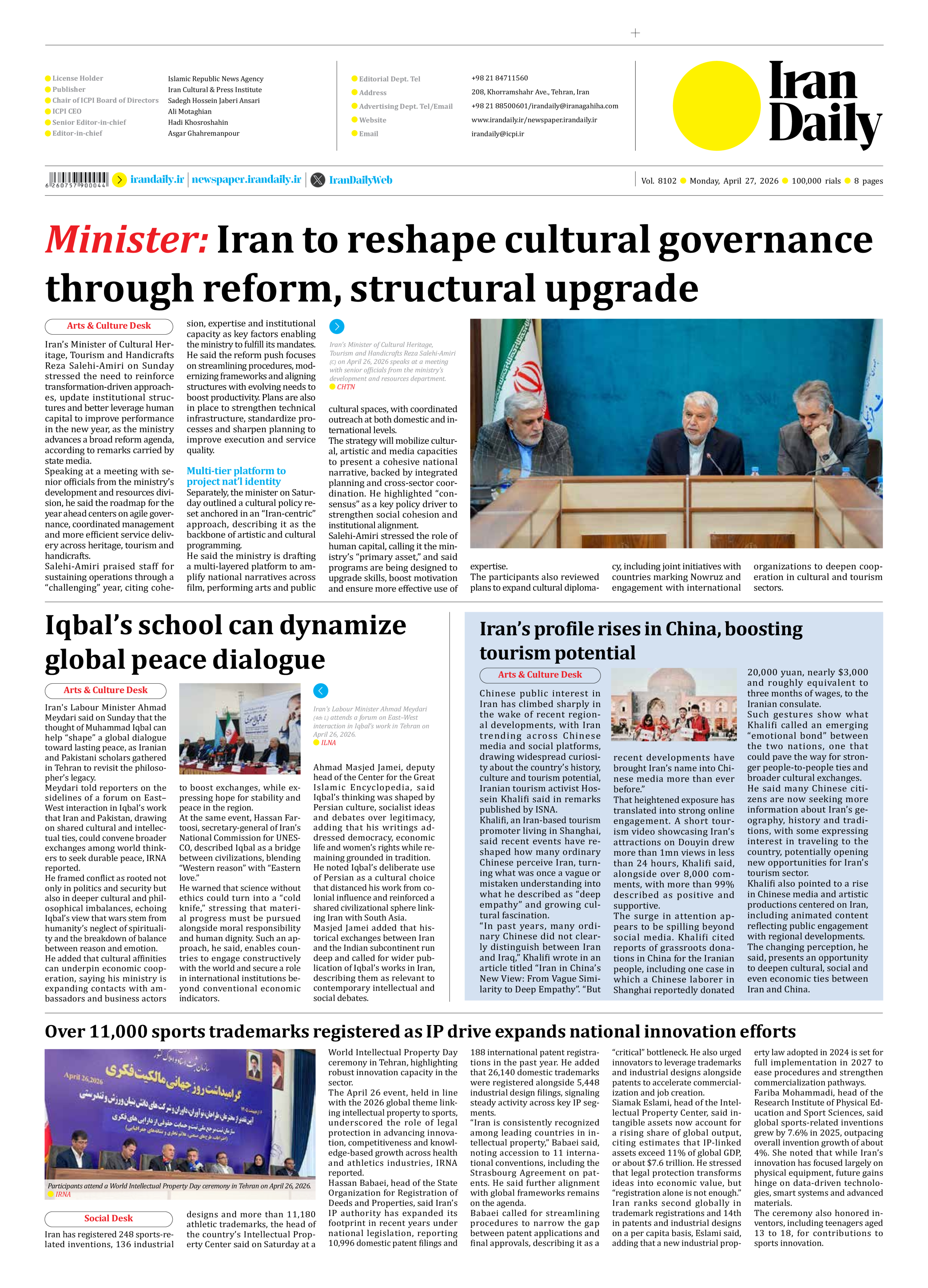
Speaking at a meeting with senior officials from the ministry’s development and resources division, he said the roadmap for the year ahead centers on agile governance, coordinated management and more efficient service delivery across heritage, tourism and handicrafts.
Salehi-Amiri praised staff for sustaining operations through a “challenging” year, citing cohesion, expertise and institutional capacity as key factors enabling the ministry to fulfill its mandates.
He said the reform push focuses on streamlining procedures, modernizing frameworks and aligning structures with evolving needs to boost productivity. Plans are also in place to strengthen technical infrastructure, standardize processes and sharpen planning to improve execution and service quality.
Multi-tier platform to project nat’l identity
Separately, the minister on Saturday outlined a cultural policy reset anchored in an “Iran-centric” approach, describing it as the backbone of artistic and cultural programming.
He said the ministry is drafting a multi-layered platform to amplify national narratives across film, performing arts and public cultural spaces, with coordinated outreach at both domestic and international levels.
The strategy will mobilize cultural, artistic and media capacities to present a cohesive national narrative, backed by integrated planning and cross-sector coordination. He highlighted “consensus” as a key policy driver to strengthen social cohesion and institutional alignment.
Salehi-Amiri stressed the role of human capital, calling it the ministry’s “primary asset,” and said programs are being designed to upgrade skills, boost motivation and ensure more effective use of expertise.
The participants also reviewed plans to expand cultural diplomacy, including joint initiatives with countries marking Nowruz and engagement with international organizations to deepen cooperation in cultural and tourism sectors.