







Chakavir Canyon; Qeshm Island’s natural wonder
Chakavir Canyon, one of the natural marvels of Qeshm Island, captivates visitors with its towering rock walls, intricate erosional formations, and layered geological structures. Located in the southwest of the island near the village of Guran, the canyon is part of the Qeshm Geopark, the first geopark in the Middle East, which plays a crucial role in promoting and preserving the island’s geological heritage. With its blend of visual beauty and scientific significance, Chakavir has become one of Qeshm’s prime geotourism destinations.
The canyon lies approximately 90 kilometers from Qeshm and is accessible by car, followed by a walk along a dirt path. Visitors are advised to travel with a local guide or an experienced group, as the trails can be confusing and challenging. Nestled in pristine nature, Chakavir offers a tranquil setting, and its relative inaccessibility preserves its serene atmosphere, offering a unique experience for travelers, IRNA wrote.
Geologically, the canyon is composed of alternating layers of marl, limestone, and sandstone, reflecting millions of years of sediment deposition and climatic changes. These layers erode at different rates — softer layers wear away faster than harder ones — resulting in a variety of shapes along the canyon walls.
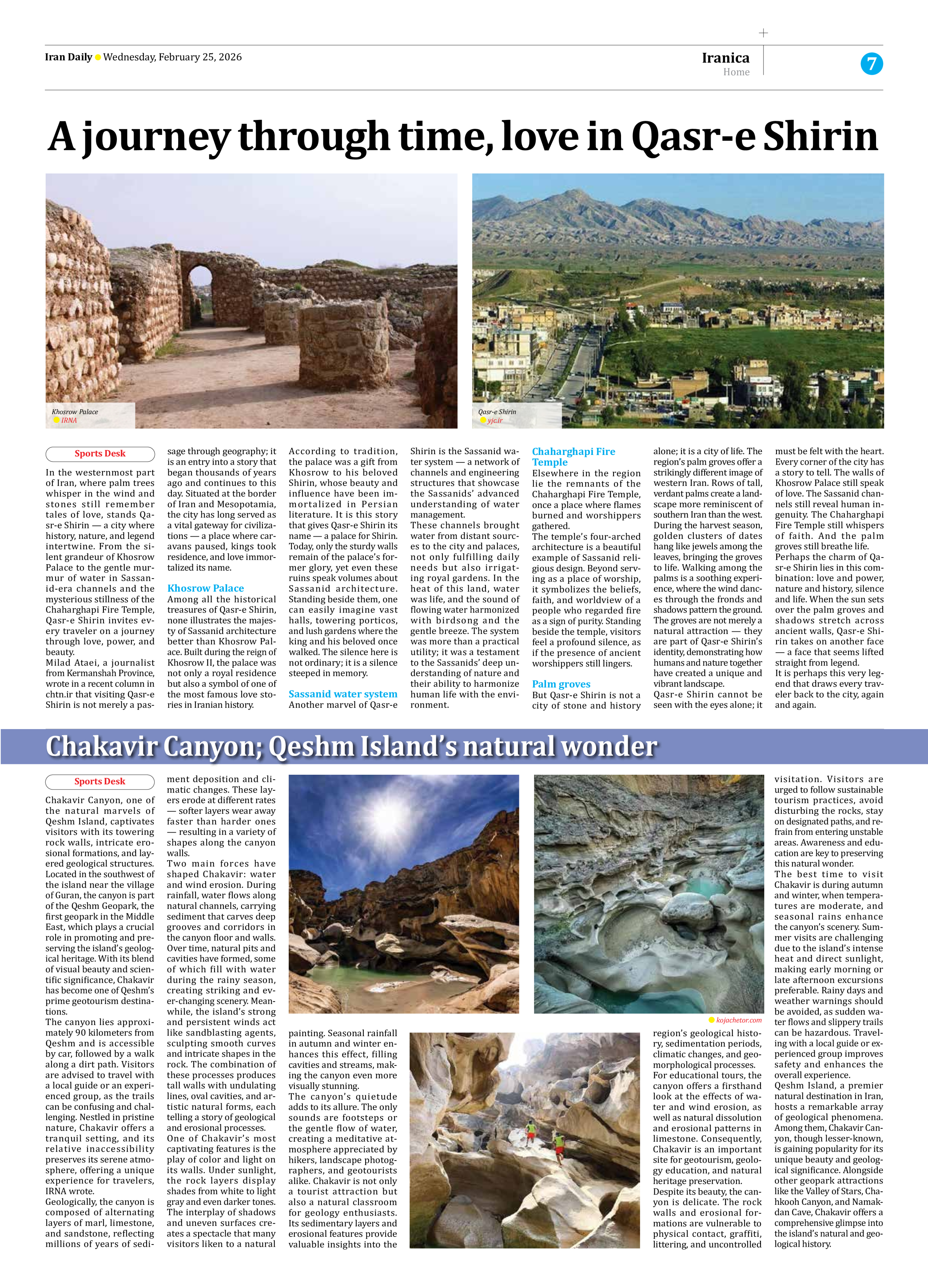
Two main forces have shaped Chakavir: water and wind erosion. During rainfall, water flows along natural channels, carrying sediment that carves deep grooves and corridors in the canyon floor and walls. Over time, natural pits and cavities have formed, some of which fill with water during the rainy season, creating striking and ever-changing scenery. Meanwhile, the island’s strong and persistent winds act like sandblasting agents, sculpting smooth curves and intricate shapes in the rock. The combination of these processes produces tall walls with undulating lines, oval cavities, and artistic natural forms, each telling a story of geological and erosional processes.
One of Chakavir’s most captivating features is the play of color and light on its walls. Under sunlight, the rock layers display shades from white to light gray and even darker tones. The interplay of shadows and uneven surfaces creates a spectacle that many visitors liken to a natural painting. Seasonal rainfall in autumn and winter enhances this effect, filling cavities and streams, making the canyon even more visually stunning.
The canyon’s quietude adds to its allure. The only sounds are footsteps or the gentle flow of water, creating a meditative atmosphere appreciated by hikers, landscape photographers, and geotourists alike. Chakavir is not only a tourist attraction but also a natural classroom for geology enthusiasts. Its sedimentary layers and erosional features provide valuable insights into the region’s geological history, sedimentation periods, climatic changes, and geomorphological processes.
For educational tours, the canyon offers a firsthand look at the effects of water and wind erosion, as well as natural dissolution and erosional patterns in limestone. Consequently, Chakavir is an important site for geotourism, geology education, and natural heritage preservation.
Despite its beauty, the canyon is delicate. The rock walls and erosional formations are vulnerable to physical contact, graffiti, littering, and uncontrolled visitation. Visitors are urged to follow sustainable tourism practices, avoid disturbing the rocks, stay on designated paths, and refrain from entering unstable areas. Awareness and education are key to preserving this natural wonder.
The best time to visit Chakavir is during autumn and winter, when temperatures are moderate, and seasonal rains enhance the canyon’s scenery. Summer visits are challenging due to the island’s intense heat and direct sunlight, making early morning or late afternoon excursions preferable. Rainy days and weather warnings should be avoided, as sudden water flows and slippery trails can be hazardous. Traveling with a local guide or experienced group improves safety and enhances the overall experience.
Qeshm Island, a premier natural destination in Iran, hosts a remarkable array of geological phenomena. Among them, Chakavir Canyon, though lesser-known, is gaining popularity for its unique beauty and geological significance. Alongside other geopark attractions like the Valley of Stars, Chahkooh Canyon, and Namakdan Cave, Chakavir offers a comprehensive glimpse into the island’s natural and geological history.