







Anbaran kilim weaving draws national support, global attention
Kilim weaving in the city of Anbaran boasts a long history and strong economic vitality, with many local families engaged in the craft. Seasonal and permanent handicrafts exhibitions have become a major attraction for tourists and travelers from across Ardabil Province and beyond.
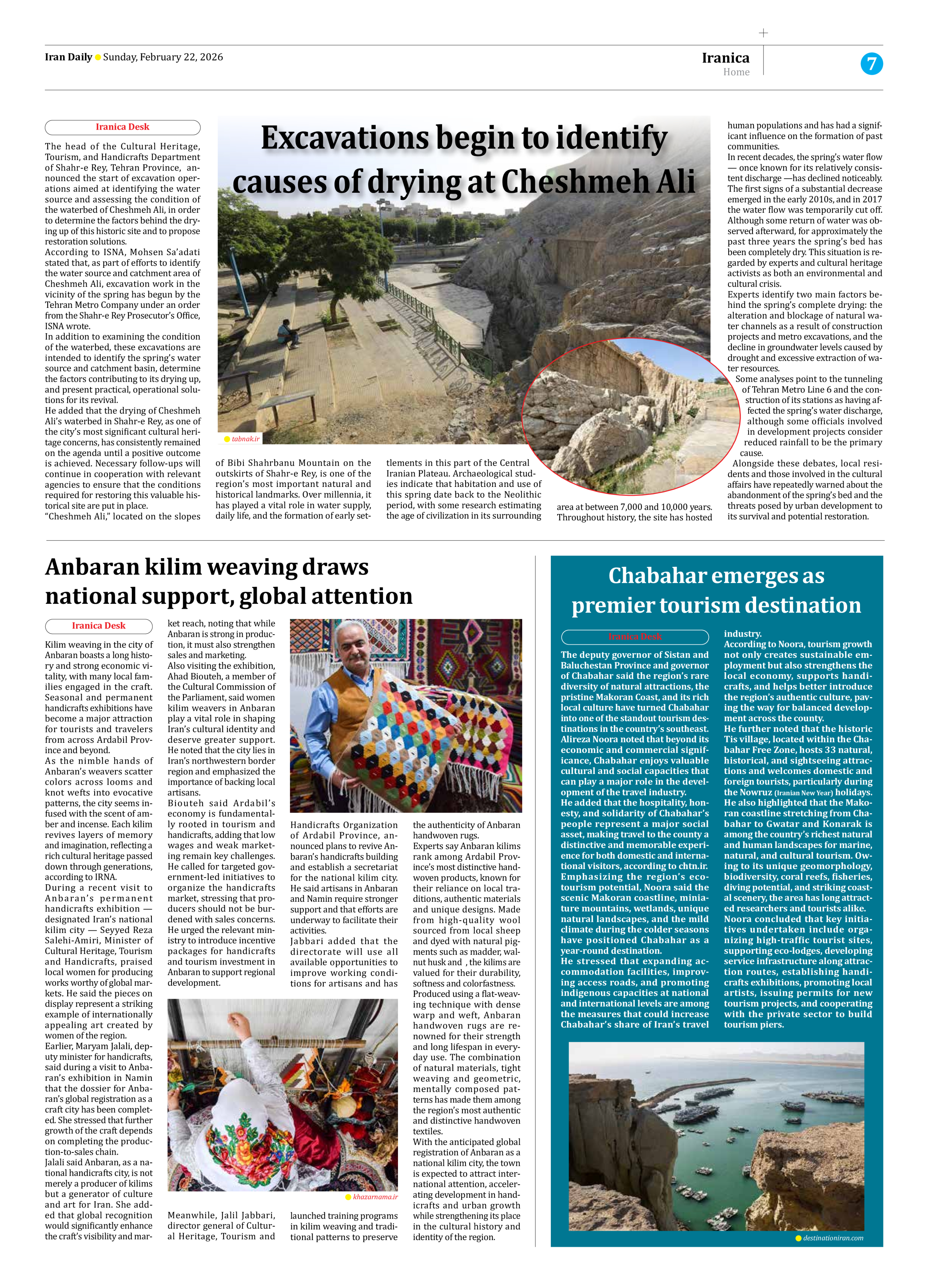
As the nimble hands of Anbaran’s weavers scatter colors across looms and knot wefts into evocative patterns, the city seems infused with the scent of amber and incense. Each kilim revives layers of memory and imagination, reflecting a rich cultural heritage passed down through generations, according to IRNA.
During a recent visit to Anbaran’s permanent handicrafts exhibition — designated Iran’s national kilim city — Seyyed Reza Salehi-Amiri, Minister of Cultural Heritage, Tourism and Handicrafts, praised local women for producing works worthy of global markets. He said the pieces on display represent a striking example of internationally appealing art created by women of the region.
Earlier, Maryam Jalali, deputy minister for handicrafts, said during a visit to Anbaran’s exhibition in Namin that the dossier for Anbaran’s global registration as a craft city has been completed. She stressed that further growth of the craft depends on completing the production-to-sales chain.
Jalali said Anbaran, as a national handicrafts city, is not merely a producer of kilims but a generator of culture and art for Iran. She added that global recognition would significantly enhance the craft’s visibility and market reach, noting that while Anbaran is strong in production, it must also strengthen sales and marketing.
Also visiting the exhibition, Ahad Biouteh, a member of the Cultural Commission of the Parliament, said women kilim weavers in Anbaran play a vital role in shaping Iran’s cultural identity and deserve greater support. He noted that the city lies in Iran’s northwestern border region and emphasized the importance of backing local artisans.
Biouteh said Ardabil’s economy is fundamentally rooted in tourism and handicrafts, adding that low wages and weak marketing remain key challenges. He called for targeted government-led initiatives to organize the handicrafts market, stressing that producers should not be burdened with sales concerns. He urged the relevant ministry to introduce incentive packages for handicrafts and tourism investment in Anbaran to support regional development.
Meanwhile, Jalil Jabbari, director general of Cultural Heritage, Tourism and Handicrafts Organization of Ardabil Province, announced plans to revive Anbaran’s handicrafts building and establish a secretariat for the national kilim city. He said artisans in Anbaran and Namin require stronger support and that efforts are underway to facilitate their activities.
Jabbari added that the directorate will use all available opportunities to improve working conditions for artisans and has launched training programs in kilim weaving and traditional patterns to preserve the authenticity of Anbaran handwoven rugs.
Experts say Anbaran kilims rank among Ardabil Province’s most distinctive handwoven products, known for their reliance on local traditions, authentic materials and unique designs. Made from high-quality wool sourced from local sheep and dyed with natural pigments such as madder, walnut husk and , the kilims are valued for their durability, softness and colorfastness.
Produced using a flat-weaving technique with dense warp and weft, Anbaran handwoven rugs are renowned for their strength and long lifespan in everyday use. The combination of natural materials, tight weaving and geometric, mentally composed patterns has made them among the region’s most authentic and distinctive handwoven textiles.
With the anticipated global registration of Anbaran as a national kilim city, the town is expected to attract international attention, accelerating development in handicrafts and urban growth while strengthening its place in the cultural history and identity of the region.