







Copy in clipboard...
Ex-traffic police chief says motorcycle licenses for women fully lawful
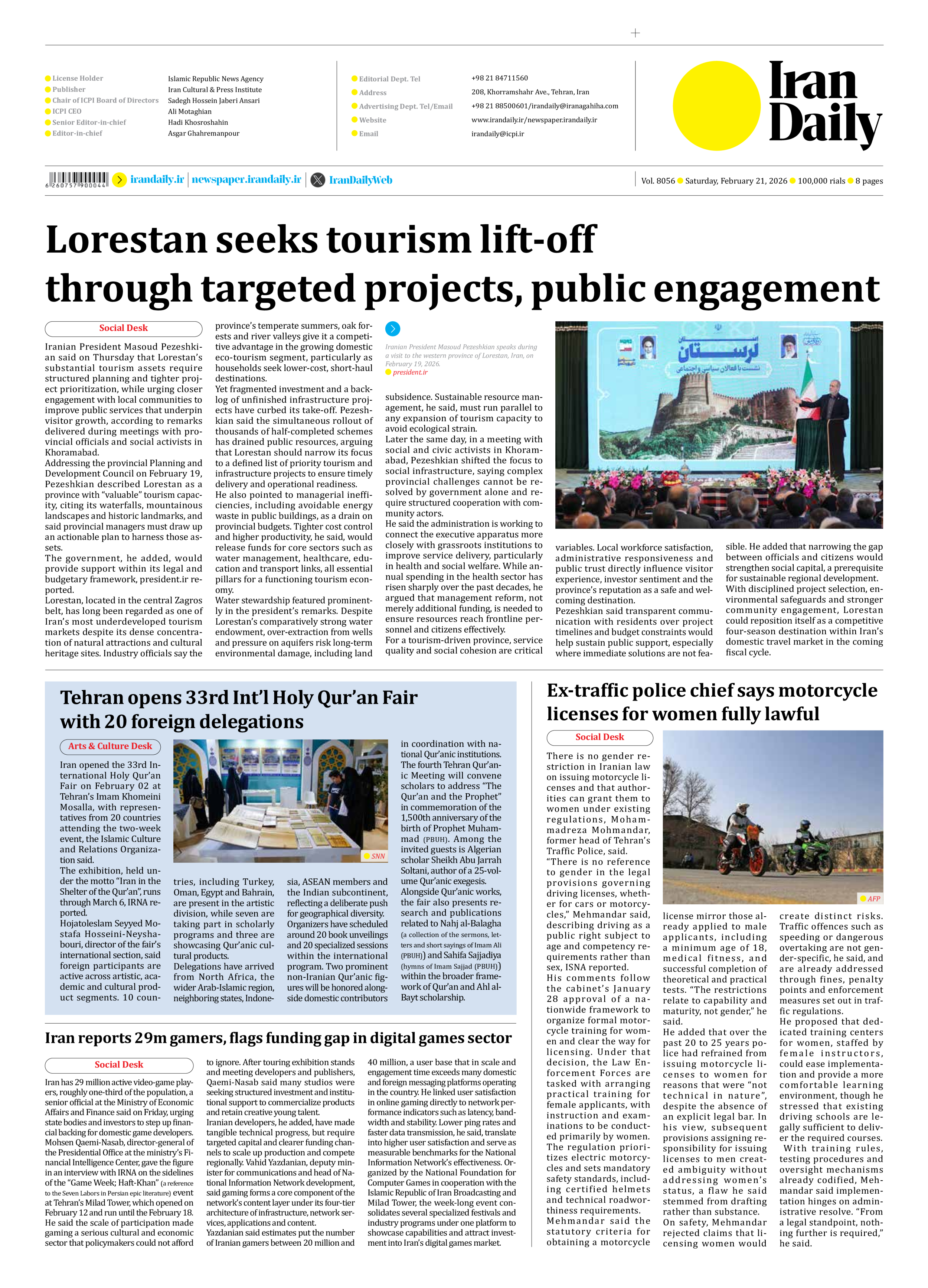
There is no gender restriction in Iranian law on issuing motorcycle licenses and that authorities can grant them to women under existing regulations, Mohammadreza Mohmandar, former head of Tehran’s Traffic Police, said.
“There is no reference to gender in the legal provisions governing driving licenses, whether for cars or motorcycles,” Mehmandar said, describing driving as a public right subject to age and competency requirements rather than sex, ISNA reported.
His comments follow the cabinet’s January 28 approval of a nationwide framework to organize formal motorcycle training for women and clear the way for licensing. Under that decision, the Law Enforcement Forces are tasked with arranging practical training for female applicants, with instruction and examinations to be conducted primarily by women.
The regulation prioritizes electric motorcycles and sets mandatory safety standards, including certified helmets and technical roadworthiness requirements.
Mehmandar said the statutory criteria for obtaining a motorcycle license mirror those already applied to male applicants, including a minimum age of 18, medical fitness, and successful completion of theoretical and practical tests. “The restrictions relate to capability and maturity, not gender,” he said.
He added that over the past 20 to 25 years police had refrained from issuing motorcycle licenses to women for reasons that were “not technical in nature”, despite the absence of an explicit legal bar. In his view, subsequent provisions assigning responsibility for issuing licenses to men created ambiguity without addressing women’s status, a flaw he said stemmed from drafting rather than substance.
On safety, Mehmandar rejected claims that licensing women would create distinct risks. Traffic offences such as speeding or dangerous overtaking are not gender-specific, he said, and are already addressed through fines, penalty points and enforcement measures set out in traffic regulations.
He proposed that dedicated training centers for women, staffed by female instructors, could ease implementation and provide a more comfortable learning environment, though he stressed that existing driving schools are legally sufficient to deliver the required courses.
With training rules, testing procedures and oversight mechanisms already codified, Mehmandar said implementation hinges on administrative resolve. “From a legal standpoint, nothing further is required,” he said.