







Lorestan seeks tourism lift-off through targeted projects, public engagement
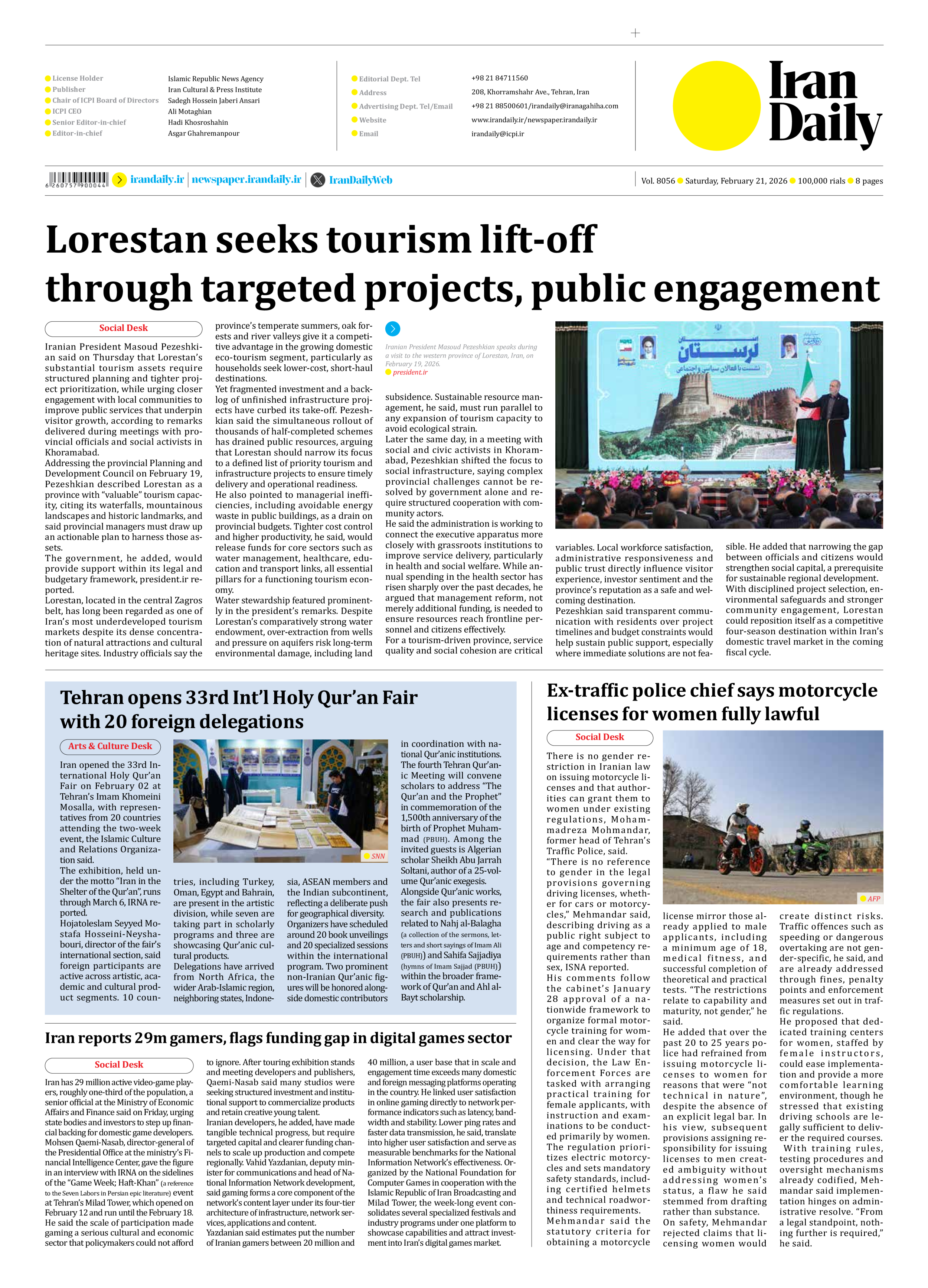
Iranian President Masoud Pezeshkian said on Thursday that Lorestan’s substantial tourism assets require structured planning and tighter project prioritization, while urging closer engagement with local communities to improve public services that underpin visitor growth, according to remarks delivered during meetings with provincial officials and social activists in Khoramabad.
Addressing the provincial Planning and Development Council on February 19, Pezeshkian described Lorestan as a province with “valuable” tourism capacity, citing its waterfalls, mountainous landscapes and historic landmarks, and said provincial managers must draw up an actionable plan to harness those assets.
The government, he added, would provide support within its legal and budgetary framework, president.ir reported.
Lorestan, located in the central Zagros belt, has long been regarded as one of Iran’s most underdeveloped tourism markets despite its dense concentration of natural attractions and cultural heritage sites. Industry officials say the province’s temperate summers, oak forests and river valleys give it a competitive advantage in the growing domestic eco-tourism segment, particularly as households seek lower-cost, short-haul destinations.
Yet fragmented investment and a backlog of unfinished infrastructure projects have curbed its take-off. Pezeshkian said the simultaneous rollout of thousands of half-completed schemes has drained public resources, arguing that Lorestan should narrow its focus to a defined list of priority tourism and infrastructure projects to ensure timely delivery and operational readiness.
He also pointed to managerial inefficiencies, including avoidable energy waste in public buildings, as a drain on provincial budgets. Tighter cost control and higher productivity, he said, would release funds for core sectors such as water management, healthcare, education and transport links, all essential pillars for a functioning tourism economy.
Water stewardship featured prominently in the president’s remarks. Despite Lorestan’s comparatively strong water endowment, over-extraction from wells and pressure on aquifers risk long-term environmental damage, including land subsidence. Sustainable resource management, he said, must run parallel to any expansion of tourism capacity to avoid ecological strain.
Later the same day, in a meeting with social and civic activists in Khoramabad, Pezeshkian shifted the focus to social infrastructure, saying complex provincial challenges cannot be resolved by government alone and require structured cooperation with community actors.
He said the administration is working to connect the executive apparatus more closely with grassroots institutions to improve service delivery, particularly in health and social welfare. While annual spending in the health sector has risen sharply over the past decades, he argued that management reform, not merely additional funding, is needed to ensure resources reach frontline personnel and citizens effectively.
For a tourism-driven province, service quality and social cohesion are critical variables. Local workforce satisfaction, administrative responsiveness and public trust directly influence visitor experience, investor sentiment and the province’s reputation as a safe and welcoming destination.
Pezeshkian said transparent communication with residents over project timelines and budget constraints would help sustain public support, especially where immediate solutions are not feasible. He added that narrowing the gap between officials and citizens would strengthen social capital, a prerequisite for sustainable regional development.
With disciplined project selection, environmental safeguards and stronger community engagement, Lorestan could reposition itself as a competitive four-season destination within Iran’s domestic travel market in the coming fiscal cycle.