







Excavations show prehistoric occupation of Sarcham Hill
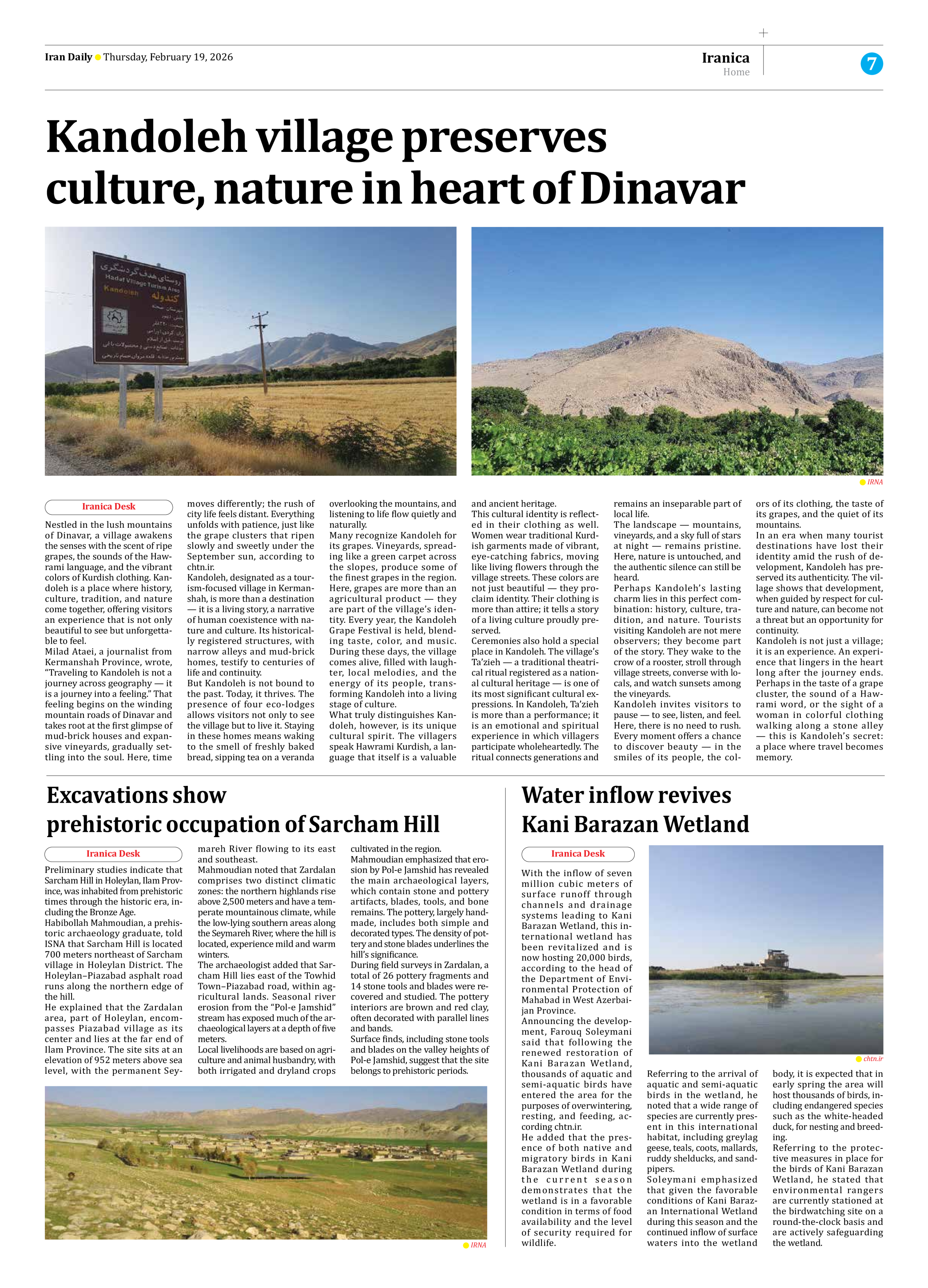
Preliminary studies indicate that Sarcham Hill in Holeylan, Ilam Province, was inhabited from prehistoric times through the historic era, including the Bronze Age.
Habibollah Mahmoudian, a prehistoric archaeology graduate, told ISNA that Sarcham Hill is located 700 meters northeast of Sarcham village in Holeylan District. The Holeylan–Piazabad asphalt road runs along the northern edge of the hill.
He explained that the Zardalan area, part of Holeylan, encompasses Piazabad village as its center and lies at the far end of Ilam Province. The site sits at an elevation of 952 meters above sea level, with the permanent Seymareh River flowing to its east and southeast.
Mahmoudian noted that Zardalan comprises two distinct climatic zones: the northern highlands rise above 2,500 meters and have a temperate mountainous climate, while the low-lying southern areas along the Seymareh River, where the hill is located, experience mild and warm winters.
The archaeologist added that Sarcham Hill lies east of the Towhid Town–Piazabad road, within agricultural lands. Seasonal river erosion from the “Pol-e Jamshid” stream has exposed much of the archaeological layers at a depth of five meters.
Local livelihoods are based on agriculture and animal husbandry, with both irrigated and dryland crops cultivated in the region.
Mahmoudian emphasized that erosion by Pol-e Jamshid has revealed the main archaeological layers, which contain stone and pottery artifacts, blades, tools, and bone remains. The pottery, largely handmade, includes both simple and decorated types. The density of pottery and stone blades underlines the hill’s significance.
During field surveys in Zardalan, a total of 26 pottery fragments and 14 stone tools and blades were recovered and studied. The pottery interiors are brown and red clay, often decorated with parallel lines and bands.
Surface finds, including stone tools and blades on the valley heights of Pol-e Jamshid, suggest that the site belongs to prehistoric periods.