







Kandoleh village preserves culture, nature in heart of Dinavar
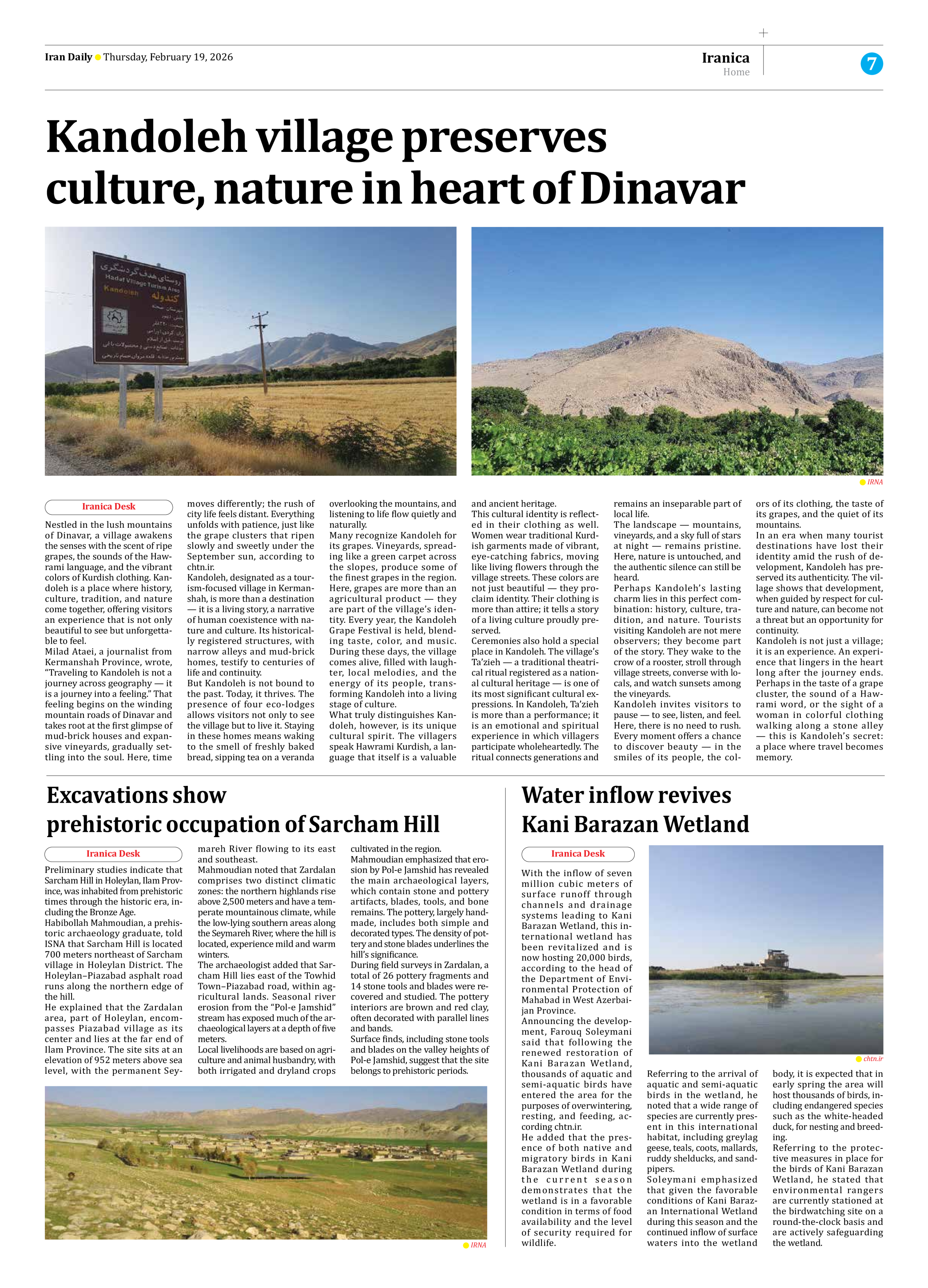
Nestled in the lush mountains of Dinavar, a village awakens the senses with the scent of ripe grapes, the sounds of the Hawrami language, and the vibrant colors of Kurdish clothing. Kandoleh is a place where history, culture, tradition, and nature come together, offering visitors an experience that is not only beautiful to see but unforgettable to feel.
Milad Ataei, a journalist from Kermanshah Province, wrote, “Traveling to Kandoleh is not a journey across geography — it is a journey into a feeling.” That feeling begins on the winding mountain roads of Dinavar and takes root at the first glimpse of mud-brick houses and expansive vineyards, gradually settling into the soul. Here, time moves differently; the rush of city life feels distant. Everything unfolds with patience, just like the grape clusters that ripen slowly and sweetly under the September sun, according to chtn.ir.
Kandoleh, designated as a tourism-focused village in Kermanshah, is more than a destination — it is a living story, a narrative of human coexistence with nature and culture. Its historically registered structures, with narrow alleys and mud-brick homes, testify to centuries of life and continuity.
But Kandoleh is not bound to the past. Today, it thrives. The presence of four eco-lodges allows visitors not only to see the village but to live it. Staying in these homes means waking to the smell of freshly baked bread, sipping tea on a veranda overlooking the mountains, and listening to life flow quietly and naturally.
Many recognize Kandoleh for its grapes. Vineyards, spreading like a green carpet across the slopes, produce some of the finest grapes in the region. Here, grapes are more than an agricultural product — they are part of the village’s identity. Every year, the Kandoleh Grape Festival is held, blending taste, color, and music. During these days, the village comes alive, filled with laughter, local melodies, and the energy of its people, transforming Kandoleh into a living stage of culture.
What truly distinguishes Kandoleh, however, is its unique cultural spirit. The villagers speak Hawrami Kurdish, a language that itself is a valuable and ancient heritage.
This cultural identity is reflected in their clothing as well. Women wear traditional Kurdish garments made of vibrant, eye-catching fabrics, moving like living flowers through the village streets. These colors are not just beautiful — they proclaim identity. Their clothing is more than attire; it tells a story of a living culture proudly preserved.
Ceremonies also hold a special place in Kandoleh. The village’s Ta’zieh — a traditional theatrical ritual registered as a national cultural heritage — is one of its most significant cultural expressions. In Kandoleh, Ta’zieh is more than a performance; it is an emotional and spiritual experience in which villagers participate wholeheartedly. The ritual connects generations and remains an inseparable part of local life.
The landscape — mountains, vineyards, and a sky full of stars at night — remains pristine. Here, nature is untouched, and the authentic silence can still be heard.
Perhaps Kandoleh’s lasting charm lies in this perfect combination: history, culture, tradition, and nature. Tourists visiting Kandoleh are not mere observers; they become part of the story. They wake to the crow of a rooster, stroll through village streets, converse with locals, and watch sunsets among the vineyards.
Kandoleh invites visitors to pause — to see, listen, and feel. Here, there is no need to rush. Every moment offers a chance to discover beauty — in the smiles of its people, the colors of its clothing, the taste of its grapes, and the quiet of its mountains.
In an era when many tourist destinations have lost their identity amid the rush of development, Kandoleh has preserved its authenticity. The village shows that development, when guided by respect for culture and nature, can become not a threat but an opportunity for continuity.
Kandoleh is not just a village; it is an experience. An experience that lingers in the heart long after the journey ends. Perhaps in the taste of a grape cluster, the sound of a Hawrami word, or the sight of a woman in colorful clothing walking along a stone alley — this is Kandoleh’s secret: a place where travel becomes memory.