







Sang-e Sefid village showcasing natural beauty, tourism potential
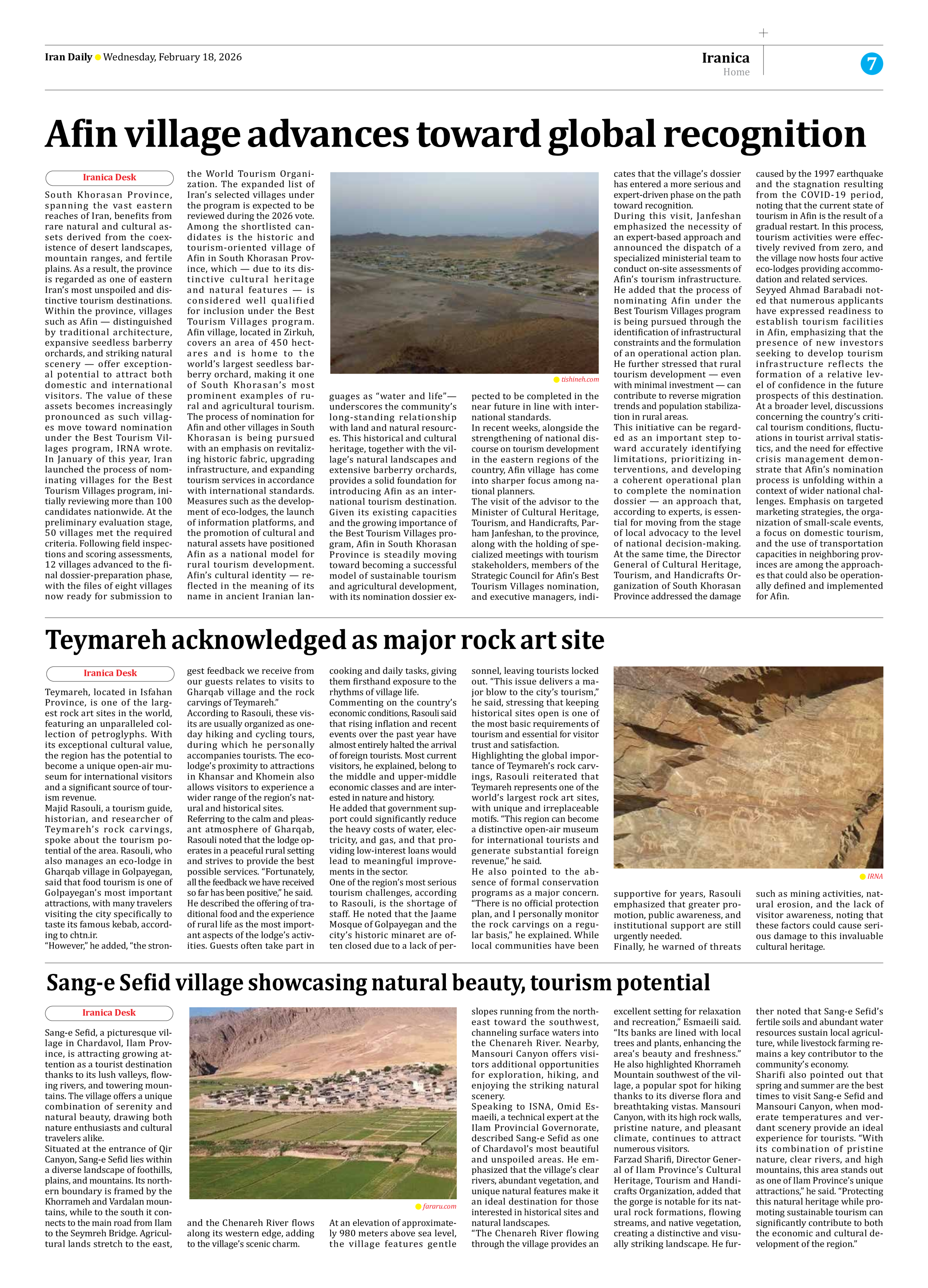
Sang-e Sefid, a picturesque village in Chardavol, Ilam Province, is attracting growing attention as a tourist destination thanks to its lush valleys, flowing rivers, and towering mountains. The village offers a unique combination of serenity and natural beauty, drawing both nature enthusiasts and cultural travelers alike.
Situated at the entrance of Qir Canyon, Sang-e Sefid lies within a diverse landscape of foothills, plains, and mountains. Its northern boundary is framed by the Khorrameh and Vardalan mountains, while to the south it connects to the main road from Ilam to the Seymreh Bridge. Agricultural lands stretch to the east, and the Chenareh River flows along its western edge, adding to the village’s scenic charm.
At an elevation of approximately 980 meters above sea level, the village features gentle slopes running from the northeast toward the southwest, channeling surface waters into the Chenareh River. Nearby, Mansouri Canyon offers visitors additional opportunities for exploration, hiking, and enjoying the striking natural scenery.
Speaking to ISNA, Omid Esmaeili, a technical expert at the Ilam Provincial Governorate, described Sang-e Sefid as one of Chardavol’s most beautiful and unspoiled areas. He emphasized that the village’s clear rivers, abundant vegetation, and unique natural features make it an ideal destination for those interested in historical sites and natural landscapes.
“The Chenareh River flowing through the village provides an excellent setting for relaxation and recreation,” Esmaeili said. “Its banks are lined with local trees and plants, enhancing the area’s beauty and freshness.” He also highlighted Khorrameh Mountain southwest of the village, a popular spot for hiking thanks to its diverse flora and breathtaking vistas. Mansouri Canyon, with its high rock walls, pristine nature, and pleasant climate, continues to attract numerous visitors.
Farzad Sharifi, Director General of Ilam Province’s Cultural Heritage, Tourism and Handicrafts Organization, added that the gorge is notable for its natural rock formations, flowing streams, and native vegetation, creating a distinctive and visually striking landscape. He further noted that Sang-e Sefid’s fertile soils and abundant water resources sustain local agriculture, while livestock farming remains a key contributor to the community’s economy.
Sharifi also pointed out that spring and summer are the best times to visit Sang-e Sefid and Mansouri Canyon, when moderate temperatures and verdant scenery provide an ideal experience for tourists. “With its combination of pristine nature, clear rivers, and high mountains, this area stands out as one of Ilam Province’s unique attractions,” he said. “Protecting this natural heritage while promoting sustainable tourism can significantly contribute to both the economic and cultural development of the region.”