







Copy in clipboard...
4,000-year-old Elamite mounds unearthed in western Iran
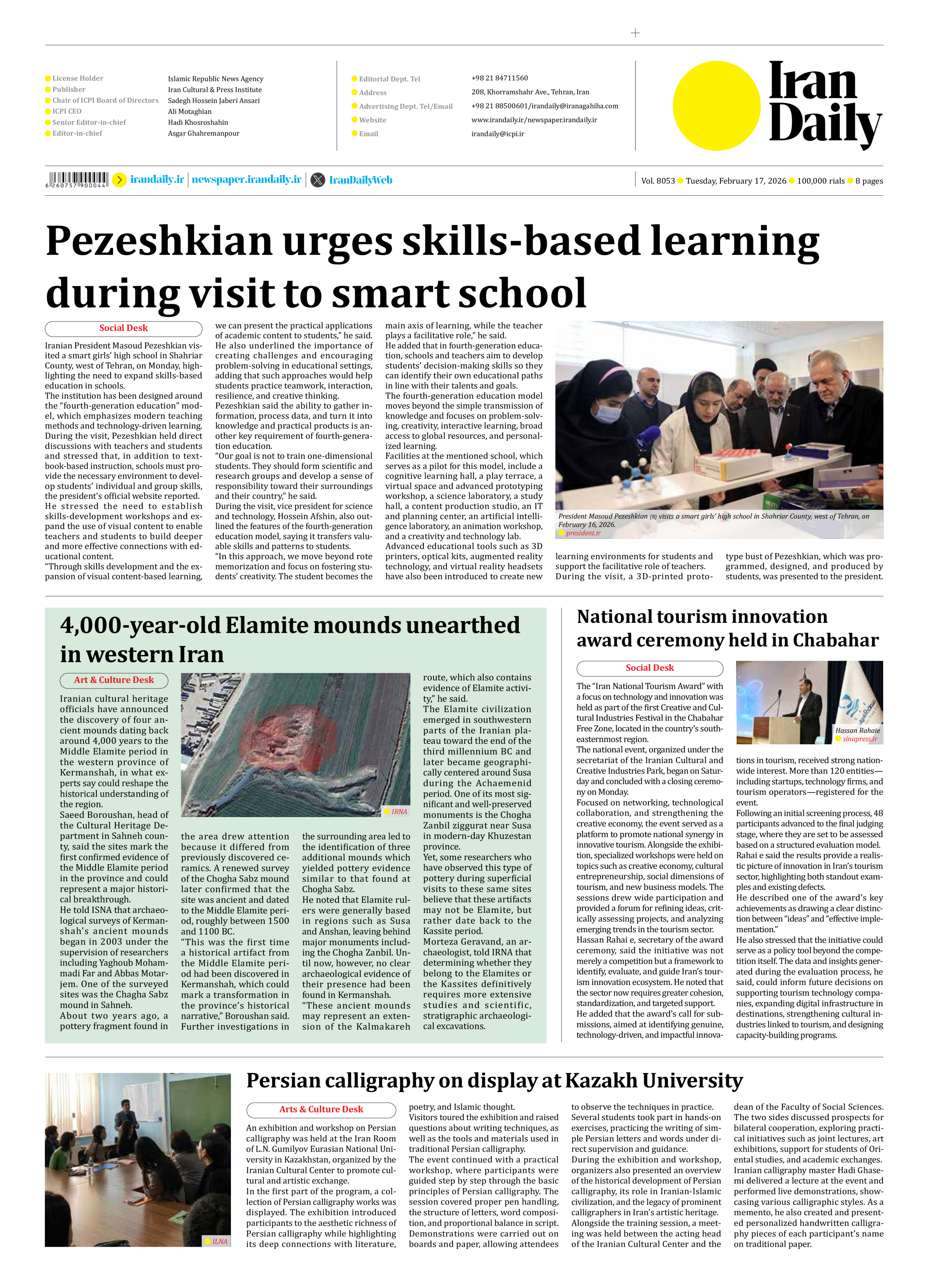
Iranian cultural heritage officials have announced the discovery of four ancient mounds dating back around 4,000 years to the Middle Elamite period in the western province of Kermanshah, in what experts say could reshape the historical understanding of the region.
Saeed Boroushan, head of the Cultural Heritage Department in Sahneh county, said the sites mark the first confirmed evidence of the Middle Elamite period in the province and could represent a major historical breakthrough.
He told ISNA that archaeological surveys of Kermanshah’s ancient mounds began in 2003 under the supervision of researchers including Yaghoub Mohammadi Far and Abbas Motarjem. One of the surveyed sites was the Chagha Sabz mound in Sahneh.
About two years ago, a pottery fragment found in the area drew attention because it differed from previously discovered ceramics. A renewed survey of the Chogha Sabz mound later confirmed that the site was ancient and dated to the Middle Elamite period, roughly between 1500 and 1100 BC.
“This was the first time a historical artifact from the Middle Elamite period had been discovered in Kermanshah, which could mark a transformation in the province’s historical narrative,” Boroushan said.
Further investigations in the surrounding area led to the identification of three additional mounds which yielded pottery evidence similar to that found at Chogha Sabz.
He noted that Elamite rulers were generally based in regions such as Susa and Anshan, leaving behind major monuments including the Chogha Zanbil. Until now, however, no clear archaeological evidence of their presence had been found in Kermanshah.
“These ancient mounds may represent an extension of the Kalmakareh route, which also contains evidence of Elamite activity,” he said.
The Elamite civilization emerged in southwestern parts of the Iranian plateau toward the end of the third millennium BC and later became geographically centered around Susa during the Achaemenid period. One of its most significant and well-preserved monuments is the Chogha Zanbil ziggurat near Susa in modern-day Khuzestan province.
Yet, some researchers who have observed this type of pottery during superficial visits to these same sites believe that these artifacts may not be Elamite, but rather date back to the Kassite period.
Morteza Geravand, an archaeologist, told IRNA that determining whether they belong to the Elamites or the Kassites definitively requires more extensive studies and scientific, stratigraphic archaeological excavations.