







Historic Safavid bathhouse in Asadabad awaits new life
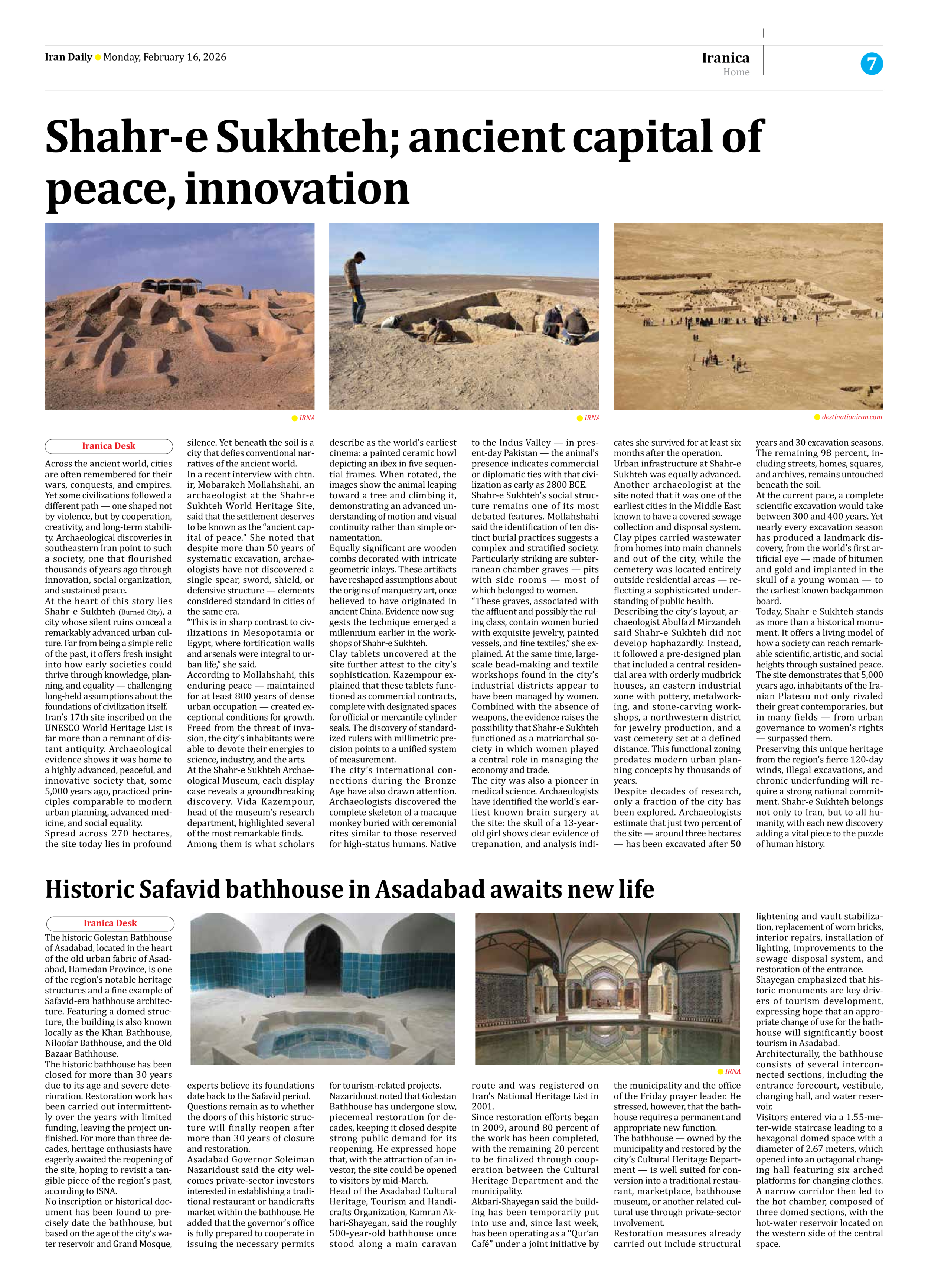
The historic Golestan Bathhouse of Asadabad, located in the heart of the old urban fabric of Asadabad, Hamedan Province, is one of the region’s notable heritage structures and a fine example of Safavid-era bathhouse architecture. Featuring a domed structure, the building is also known locally as the Khan Bathhouse, Niloofar Bathhouse, and the Old Bazaar Bathhouse.
The historic bathhouse has been closed for more than 30 years due to its age and severe deterioration. Restoration work has been carried out intermittently over the years with limited funding, leaving the project unfinished. For more than three decades, heritage enthusiasts have eagerly awaited the reopening of the site, hoping to revisit a tangible piece of the region’s past, according to ISNA.
No inscription or historical document has been found to precisely date the bathhouse, but based on the age of the city’s water reservoir and Grand Mosque, experts believe its foundations date back to the Safavid period.
Questions remain as to whether the doors of this historic structure will finally reopen after more than 30 years of closure and restoration.
Asadabad Governor Soleiman Nazaridoust said the city welcomes private-sector investors interested in establishing a traditional restaurant or handicrafts market within the bathhouse. He added that the governor’s office is fully prepared to cooperate in issuing the necessary permits for tourism-related projects.
Nazaridoust noted that Golestan Bathhouse has undergone slow, piecemeal restoration for decades, keeping it closed despite strong public demand for its reopening. He expressed hope that, with the attraction of an investor, the site could be opened to visitors by mid-March.
Head of the Asadabad Cultural Heritage, Tourism and Handicrafts Organization, Kamran Akbari-Shayegan, said the roughly 500-year-old bathhouse once stood along a main caravan route and was registered on Iran’s National Heritage List in 2001.
Since restoration efforts began in 2009, around 80 percent of the work has been completed, with the remaining 20 percent to be finalized through cooperation between the Cultural Heritage Department and the municipality.
Akbari-Shayegan said the building has been temporarily put into use and, since last week, has been operating as a “Qur’an Café” under a joint initiative by the municipality and the office of the Friday prayer leader. He stressed, however, that the bathhouse requires a permanent and appropriate new function.
The bathhouse — owned by the municipality and restored by the city’s Cultural Heritage Department — is well suited for conversion into a traditional restaurant, marketplace, bathhouse museum, or another related cultural use through private-sector involvement.
Restoration measures already carried out include structural lightening and vault stabilization, replacement of worn bricks, interior repairs, installation of lighting, improvements to the sewage disposal system, and restoration of the entrance.
Shayegan emphasized that historic monuments are key drivers of tourism development, expressing hope that an appropriate change of use for the bathhouse will significantly boost tourism in Asadabad.
Architecturally, the bathhouse consists of several interconnected sections, including the entrance forecourt, vestibule, changing hall, and water reservoir.
Visitors entered via a 1.55-meter-wide staircase leading to a hexagonal domed space with a diameter of 2.67 meters, which opened into an octagonal changing hall featuring six arched platforms for changing clothes. A narrow corridor then led to the hot chamber, composed of three domed sections, with the hot-water reservoir located on the western side of the central space.