







Copy in clipboard...
Minister outlines people-centered heritage policy in Semnan
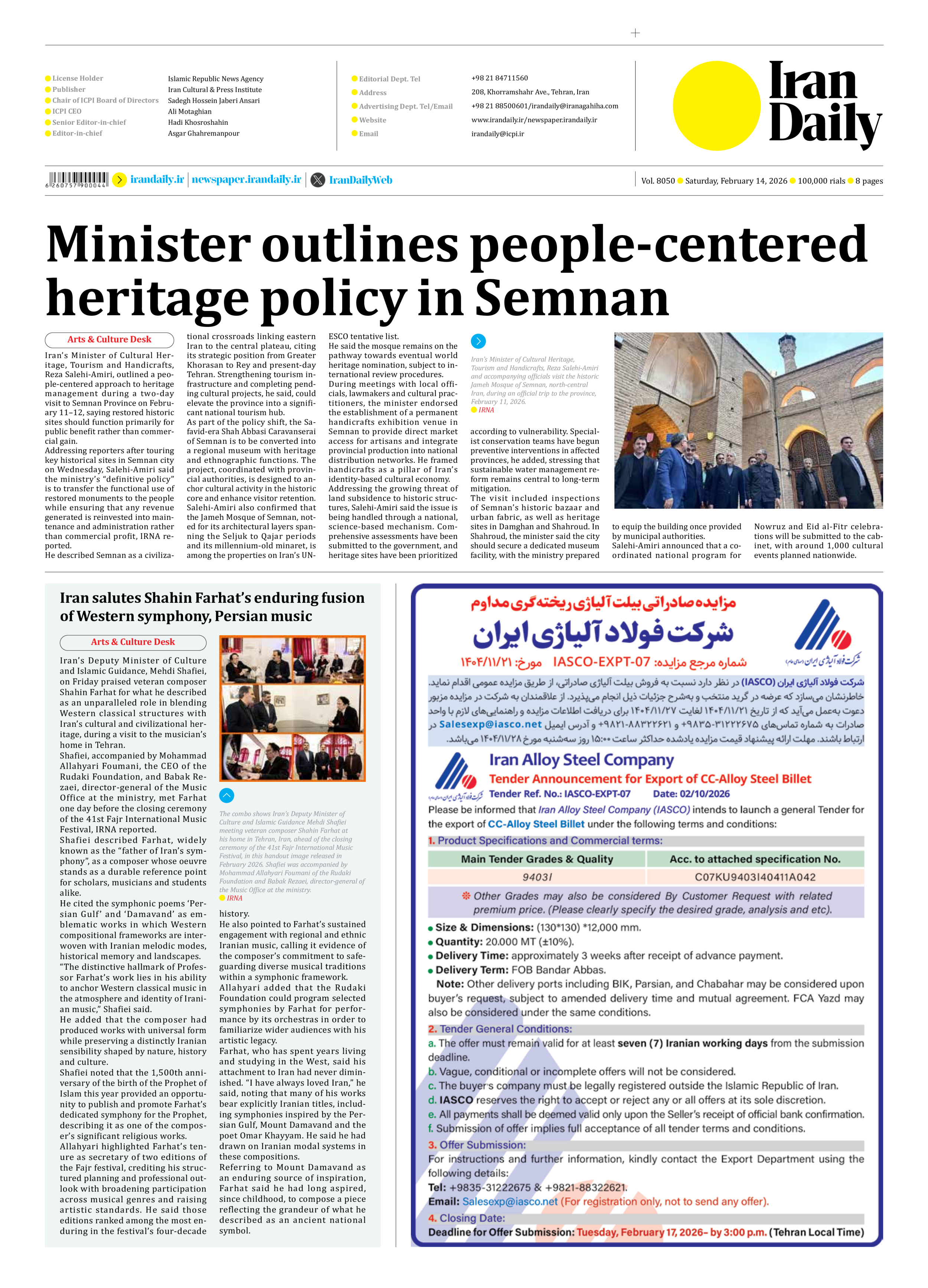
Addressing reporters after touring key historical sites in Semnan city on Wednesday, Salehi-Amiri said the ministry’s “definitive policy” is to transfer the functional use of restored monuments to the people while ensuring that any revenue generated is reinvested into maintenance and administration rather than commercial profit, IRNA reported.
He described Semnan as a civilizational crossroads linking eastern Iran to the central plateau, citing its strategic position from Greater Khorasan to Rey and present-day Tehran. Strengthening tourism infrastructure and completing pending cultural projects, he said, could elevate the province into a significant national tourism hub.
As part of the policy shift, the Safavid-era Shah Abbasi Caravanserai of Semnan is to be converted into a regional museum with heritage and ethnographic functions. The project, coordinated with provincial authorities, is designed to anchor cultural activity in the historic core and enhance visitor retention.
Salehi-Amiri also confirmed that the Jameh Mosque of Semnan, noted for its architectural layers spanning the Seljuk to Qajar periods and its millennium-old minaret, is among the properties on Iran’s UNESCO tentative list.
He said the mosque remains on the pathway towards eventual world heritage nomination, subject to international review procedures.
During meetings with local officials, lawmakers and cultural practitioners, the minister endorsed the establishment of a permanent handicrafts exhibition venue in Semnan to provide direct market access for artisans and integrate provincial production into national distribution networks. He framed handicrafts as a pillar of Iran’s identity-based cultural economy.
Addressing the growing threat of land subsidence to historic structures, Salehi-Amiri said the issue is being handled through a national, science-based mechanism. Comprehensive assessments have been submitted to the government, and heritage sites have been prioritized according to vulnerability. Specialist conservation teams have begun preventive interventions in affected provinces, he added, stressing that sustainable water management reform remains central to long-term mitigation.
The visit included inspections of Semnan’s historic bazaar and urban fabric, as well as heritage sites in Damghan and Shahroud. In Shahroud, the minister said the city should secure a dedicated museum facility, with the ministry prepared to equip the building once provided by municipal authorities.
Salehi-Amiri announced that a coordinated national program for Nowruz and Eid al-Fitr celebrations will be submitted to the cabinet, with around 1,000 cultural events planned nationwide.