







Kul-e Farah site brings ancient history to life in SW Iran
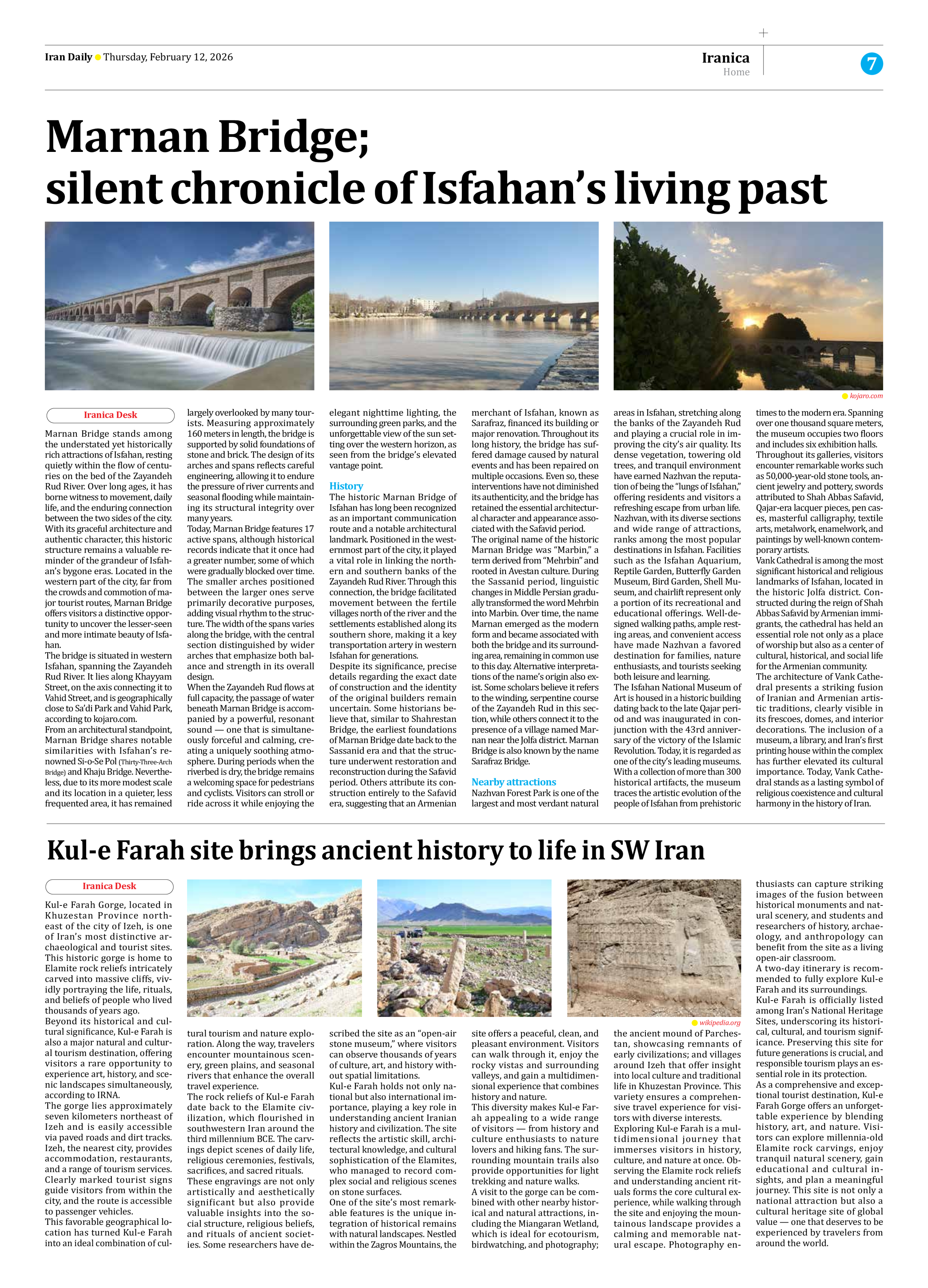
Kul-e Farah Gorge, located in Khuzestan Province northeast of the city of Izeh, is one of Iran’s most distinctive archaeological and tourist sites. This historic gorge is home to Elamite rock reliefs intricately carved into massive cliffs, vividly portraying the life, rituals, and beliefs of people who lived thousands of years ago.
Beyond its historical and cultural significance, Kul-e Farah is also a major natural and cultural tourism destination, offering visitors a rare opportunity to experience art, history, and scenic landscapes simultaneously, according to IRNA.
The gorge lies approximately seven kilometers northeast of Izeh and is easily accessible via paved roads and dirt tracks. Izeh, the nearest city, provides accommodation, restaurants, and a range of tourism services. Clearly marked tourist signs guide visitors from within the city, and the route is accessible to passenger vehicles.
This favorable geographical location has turned Kul-e Farah into an ideal combination of cultural tourism and nature exploration. Along the way, travelers encounter mountainous scenery, green plains, and seasonal rivers that enhance the overall travel experience.
The rock reliefs of Kul-e Farah date back to the Elamite civilization, which flourished in southwestern Iran around the third millennium BCE. The carvings depict scenes of daily life, religious ceremonies, festivals, sacrifices, and sacred rituals.
These engravings are not only artistically and aesthetically significant but also provide valuable insights into the social structure, religious beliefs, and rituals of ancient societies. Some researchers have described the site as an “open-air stone museum,” where visitors can observe thousands of years of culture, art, and history without spatial limitations.
Kul-e Farah holds not only national but also international importance, playing a key role in understanding ancient Iranian history and civilization. The site reflects the artistic skill, architectural knowledge, and cultural sophistication of the Elamites, who managed to record complex social and religious scenes on stone surfaces.
One of the site’s most remarkable features is the unique integration of historical remains with natural landscapes. Nestled within the Zagros Mountains, the site offers a peaceful, clean, and pleasant environment. Visitors can walk through it, enjoy the rocky vistas and surrounding valleys, and gain a multidimensional experience that combines history and nature.
This diversity makes Kul-e Farah appealing to a wide range of visitors — from history and culture enthusiasts to nature lovers and hiking fans. The surrounding mountain trails also provide opportunities for light trekking and nature walks.
A visit to the gorge can be combined with other nearby historical and natural attractions, including the Miangaran Wetland, which is ideal for ecotourism, birdwatching, and photography; the ancient mound of Parchestan, showcasing remnants of early civilizations; and villages around Izeh that offer insight into local culture and traditional life in Khuzestan Province. This variety ensures a comprehensive travel experience for visitors with diverse interests.
Exploring Kul-e Farah is a multidimensional journey that immerses visitors in history, culture, and nature at once. Observing the Elamite rock reliefs and understanding ancient rituals forms the core cultural experience, while walking through the site and enjoying the mountainous landscape provides a calming and memorable natural escape. Photography enthusiasts can capture striking images of the fusion between historical monuments and natural scenery, and students and researchers of history, archaeology, and anthropology can benefit from the site as a living open-air classroom.
A two-day itinerary is recommended to fully explore Kul-e Farah and its surroundings.
Kul-e Farah is officially listed among Iran’s National Heritage Sites, underscoring its historical, cultural, and tourism significance. Preserving this site for future generations is crucial, and responsible tourism plays an essential role in its protection.
As a comprehensive and exceptional tourist destination, Kul-e Farah Gorge offers an unforgettable experience by blending history, art, and nature. Visitors can explore millennia-old Elamite rock carvings, enjoy tranquil natural scenery, gain educational and cultural insights, and plan a meaningful journey. This site is not only a national attraction but also a cultural heritage site of global value — one that deserves to be experienced by travelers from around the world.