







Virtual space as living environment, need for digital life literacy
By Ali Saberi
Member of Iran’s Nat’l Association Media Literacy
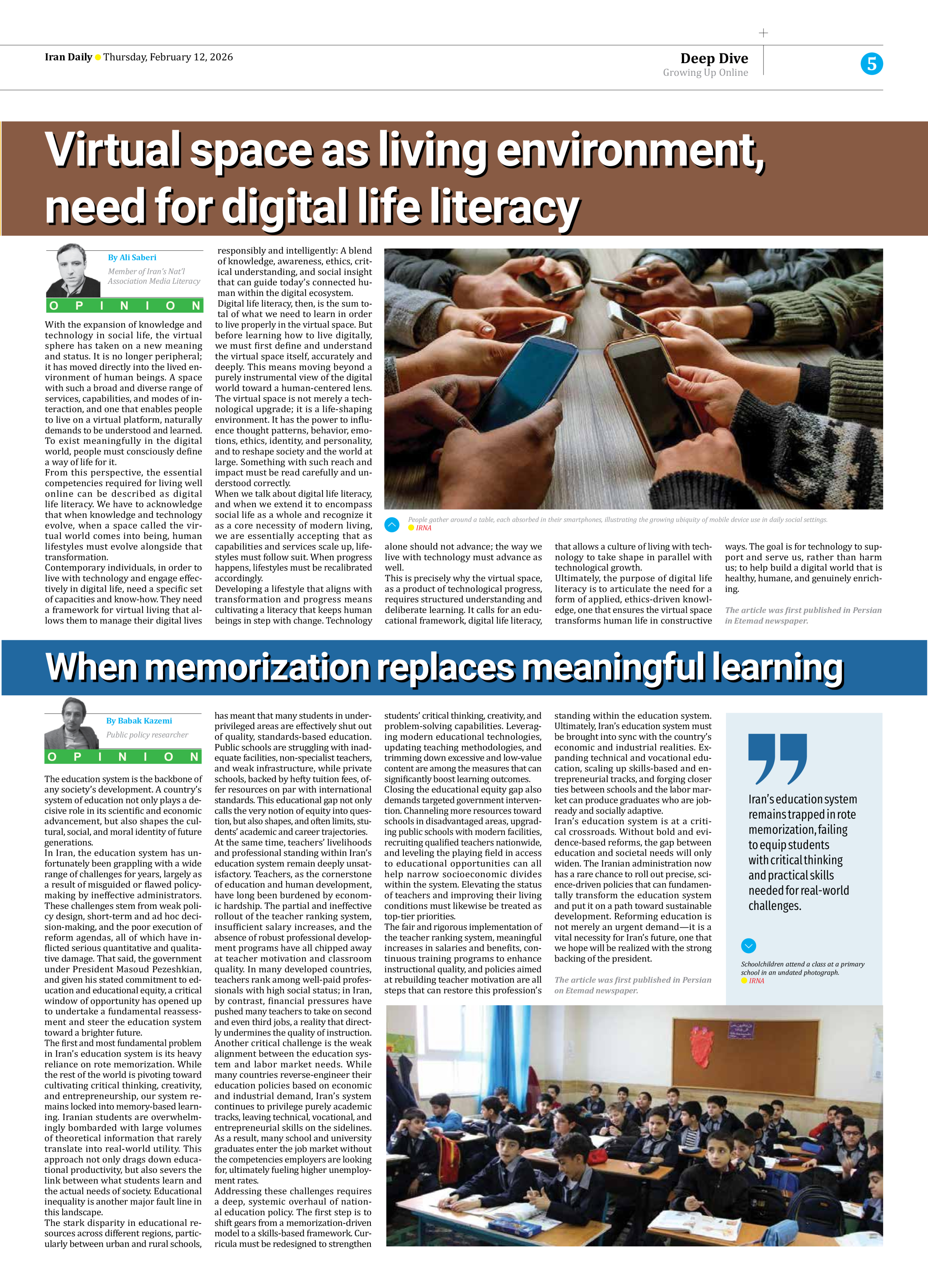
With the expansion of knowledge and technology in social life, the virtual sphere has taken on a new meaning and status. It is no longer peripheral; it has moved directly into the lived environment of human beings. A space with such a broad and diverse range of services, capabilities, and modes of interaction, and one that enables people to live on a virtual platform, naturally demands to be understood and learned. To exist meaningfully in the digital world, people must consciously define a way of life for it.
From this perspective, the essential competencies required for living well online can be described as digital life literacy. We have to acknowledge that when knowledge and technology evolve, when a space called the virtual world comes into being, human lifestyles must evolve alongside that transformation.
Contemporary individuals, in order to live with technology and engage effectively in digital life, need a specific set of capacities and know-how. They need a framework for virtual living that allows them to manage their digital lives responsibly and intelligently: A blend of knowledge, awareness, ethics, critical understanding, and social insight that can guide today’s connected human within the digital ecosystem.
Digital life literacy, then, is the sum total of what we need to learn in order to live properly in the virtual space. But before learning how to live digitally, we must first define and understand the virtual space itself, accurately and deeply. This means moving beyond a purely instrumental view of the digital world toward a human-centered lens. The virtual space is not merely a technological upgrade; it is a life-shaping environment. It has the power to influence thought patterns, behavior, emotions, ethics, identity, and personality, and to reshape society and the world at large. Something with such reach and impact must be read carefully and understood correctly.
When we talk about digital life literacy, and when we extend it to encompass social life as a whole and recognize it as a core necessity of modern living, we are essentially accepting that as capabilities and services scale up, lifestyles must follow suit. When progress happens, lifestyles must be recalibrated accordingly.
Developing a lifestyle that aligns with transformation and progress means cultivating a literacy that keeps human beings in step with change. Technology alone should not advance; the way we live with technology must advance as well.
This is precisely why the virtual space, as a product of technological progress, requires structured understanding and deliberate learning. It calls for an educational framework, digital life literacy, that allows a culture of living with technology to take shape in parallel with technological growth.
Ultimately, the purpose of digital life literacy is to articulate the need for a form of applied, ethics-driven knowledge, one that ensures the virtual space transforms human life in constructive ways. The goal is for technology to support and serve us, rather than harm us; to help build a digital world that is healthy, humane, and genuinely enriching.
The article was first published in Persian in Etemad newspaper.