







Iran posts €224m in annual handicrafts exports
Anbaran kilim drive underpins push towards €1b target
Iran exported €224 million worth of handicrafts over the past year, with an equal volume carried out through so-called suitcase trade, lifting the sector’s total overseas sales to nearly €500 million, the tourism minister said on Saturday during a provincial visit to northwest Iran.
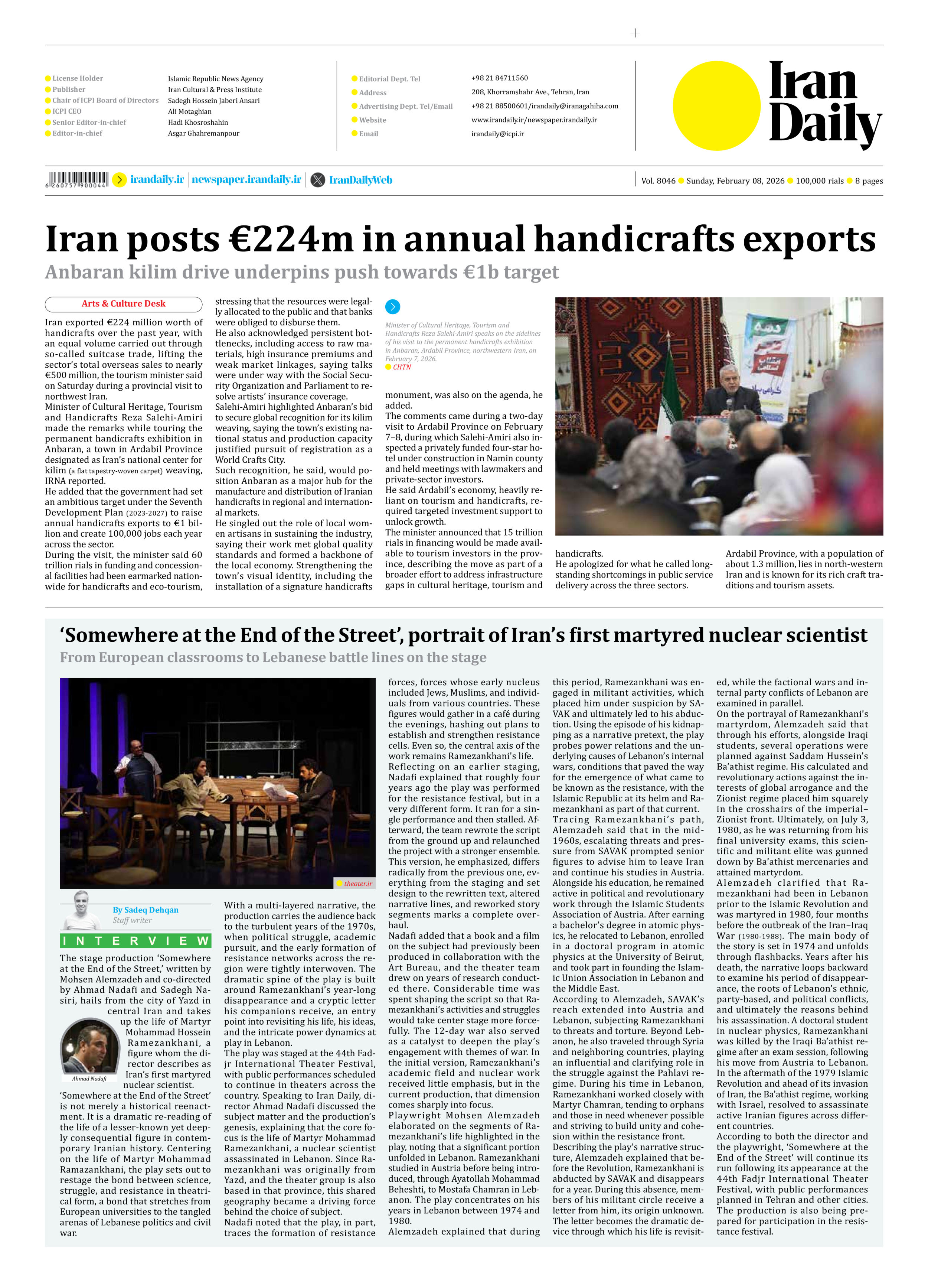
Minister of Cultural Heritage, Tourism and Handicrafts Reza Salehi-Amiri made the remarks while touring the permanent handicrafts exhibition in Anbaran, a town in Ardabil Province designated as Iran’s national center for kilim (a flat tapestry-woven carpet) weaving, IRNA reported.
He added that the government had set an ambitious target under the Seventh Development Plan (2023-2027) to raise annual handicrafts exports to €1 billion and create 100,000 jobs each year across the sector.
During the visit, the minister said 60 trillion rials in funding and concessional facilities had been earmarked nationwide for handicrafts and eco-tourism, stressing that the resources were legally allocated to the public and that banks were obliged to disburse them.
He also acknowledged persistent bottlenecks, including access to raw materials, high insurance premiums and weak market linkages, saying talks were under way with the Social Security Organization and Parliament to resolve artists’ insurance coverage.
Salehi-Amiri highlighted Anbaran’s bid to secure global recognition for its kilim weaving, saying the town’s existing national status and production capacity justified pursuit of registration as a World Crafts City.
Such recognition, he said, would position Anbaran as a major hub for the manufacture and distribution of Iranian handicrafts in regional and international markets.
He singled out the role of local women artisans in sustaining the industry, saying their work met global quality standards and formed a backbone of the local economy. Strengthening the town’s visual identity, including the installation of a signature handicrafts monument, was also on the agenda, he added.
The comments came during a two-day visit to Ardabil Province on February 7–8, during which Salehi-Amiri also inspected a privately funded four-star hotel under construction in Namin county and held meetings with lawmakers and private-sector investors.
He said Ardabil’s economy, heavily reliant on tourism and handicrafts, required targeted investment support to unlock growth.
The minister announced that 15 trillion rials in financing would be made available to tourism investors in the province, describing the move as part of a broader effort to address infrastructure gaps in cultural heritage, tourism and handicrafts.
He apologized for what he called longstanding shortcomings in public service delivery across the three sectors.
Ardabil Province, with a population of about 1.3 million, lies in north-western Iran and is known for its rich craft traditions and tourism assets.