







Qasemabad preserves Iran’s Chadorshab tradition
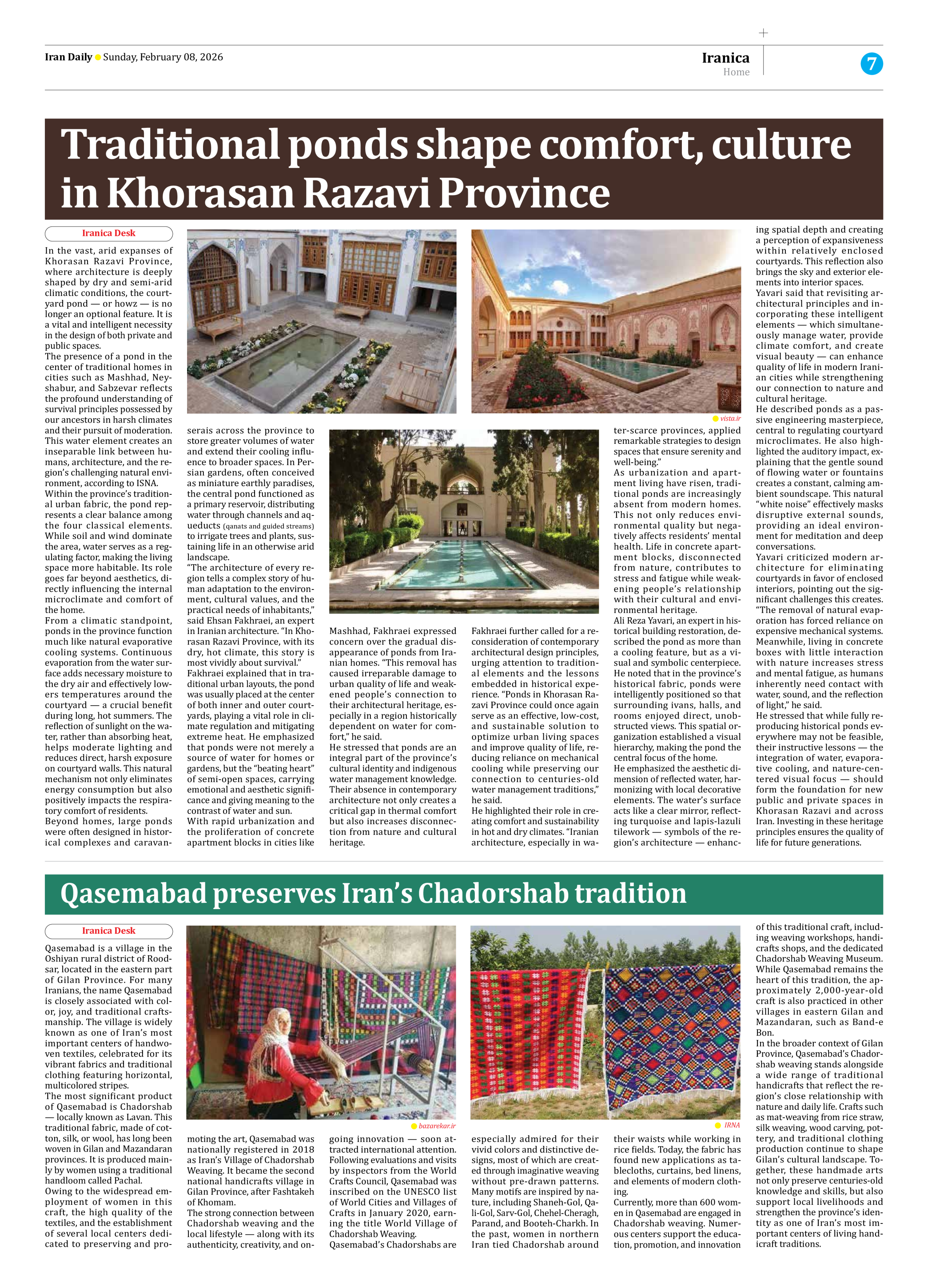
Qasemabad is a village in the Oshiyan rural district of Roodsar, located in the eastern part of Gilan Province. For many Iranians, the name Qasemabad is closely associated with color, joy, and traditional craftsmanship. The village is widely known as one of Iran’s most important centers of handwoven textiles, celebrated for its vibrant fabrics and traditional clothing featuring horizontal, multicolored stripes.
The most significant product of Qasemabad is Chadorshab — locally known as Lavan. This traditional fabric, made of cotton, silk, or wool, has long been woven in Gilan and Mazandaran provinces. It is produced mainly by women using a traditional handloom called Pachal.
Owing to the widespread employment of women in this craft, the high quality of the textiles, and the establishment of several local centers dedicated to preserving and promoting the art, Qasemabad was nationally registered in 2018 as Iran’s Village of Chadorshab Weaving. It became the second national handicrafts village in Gilan Province, after Fashtakeh of Khomam.
The strong connection between Chadorshab weaving and the local lifestyle — along with its authenticity, creativity, and ongoing innovation — soon attracted international attention. Following evaluations and visits by inspectors from the World Crafts Council, Qasemabad was inscribed on the UNESCO list of World Cities and Villages of Crafts in January 2020, earning the title World Village of Chadorshab Weaving.
Qasemabad’s Chadorshabs are especially admired for their vivid colors and distinctive designs, most of which are created through imaginative weaving without pre-drawn patterns. Many motifs are inspired by nature, including Shaneh-Gol, Qali-Gol, Sarv-Gol, Chehel-Cheragh, Parand, and Booteh-Charkh. In the past, women in northern Iran tied Chadorshab around their waists while working in rice fields. Today, the fabric has found new applications as tablecloths, curtains, bed linens, and elements of modern clothing.
Currently, more than 600 women in Qasemabad are engaged in Chadorshab weaving. Numerous centers support the education, promotion, and innovation of this traditional craft, including weaving workshops, handicrafts shops, and the dedicated Chadorshab Weaving Museum. While Qasemabad remains the heart of this tradition, the approximately 2,000-year-old craft is also practiced in other villages in eastern Gilan and Mazandaran, such as Band-e Bon.
In the broader context of Gilan Province, Qasemabad’s Chadorshab weaving stands alongside a wide range of traditional handicrafts that reflect the region’s close relationship with nature and daily life. Crafts such as mat-weaving from rice straw, silk weaving, wood carving, pottery, and traditional clothing production continue to shape Gilan’s cultural landscape. Together, these handmade arts not only preserve centuries-old knowledge and skills, but also support local livelihoods and strengthen the province’s identity as one of Iran’s most important centers of living handicraft traditions.