







Pol-e Dokhtar set to host archaeology, anthropology museum
The Director General of the Cultural Heritage, Tourism and Handicrafts Organization of Lorestan Province announced the start of studies for the construction of an archaeology and anthropology museum in Pol-e Dokhtar, Lorestan Province, in the current year, stating that construction operations for the museum will begin in the coming months.
Ata Hassanpour said that during the visit of the Minister of Cultural Heritage, Tourism and Handicrafts to Pol-e Dokhtar, and in view of the presence of historical artifacts from Kalmakareh Cave as well as the city’s ethnographic capacities, it was decided that, in cooperation with the municipality and the city council, studies for the construction of the museum would commence this year, ISNA wrote.
He noted that the land required for the project has been acquired by the municipality and the city council.
Referring to the region’s tourism and geotourism potentials, Hassanpour said that given attractions such as gorges and wetlands, the necessary funding will be allocated to the province to develop tourism infrastructure, thereby creating the conditions for the participation of private sector investors.
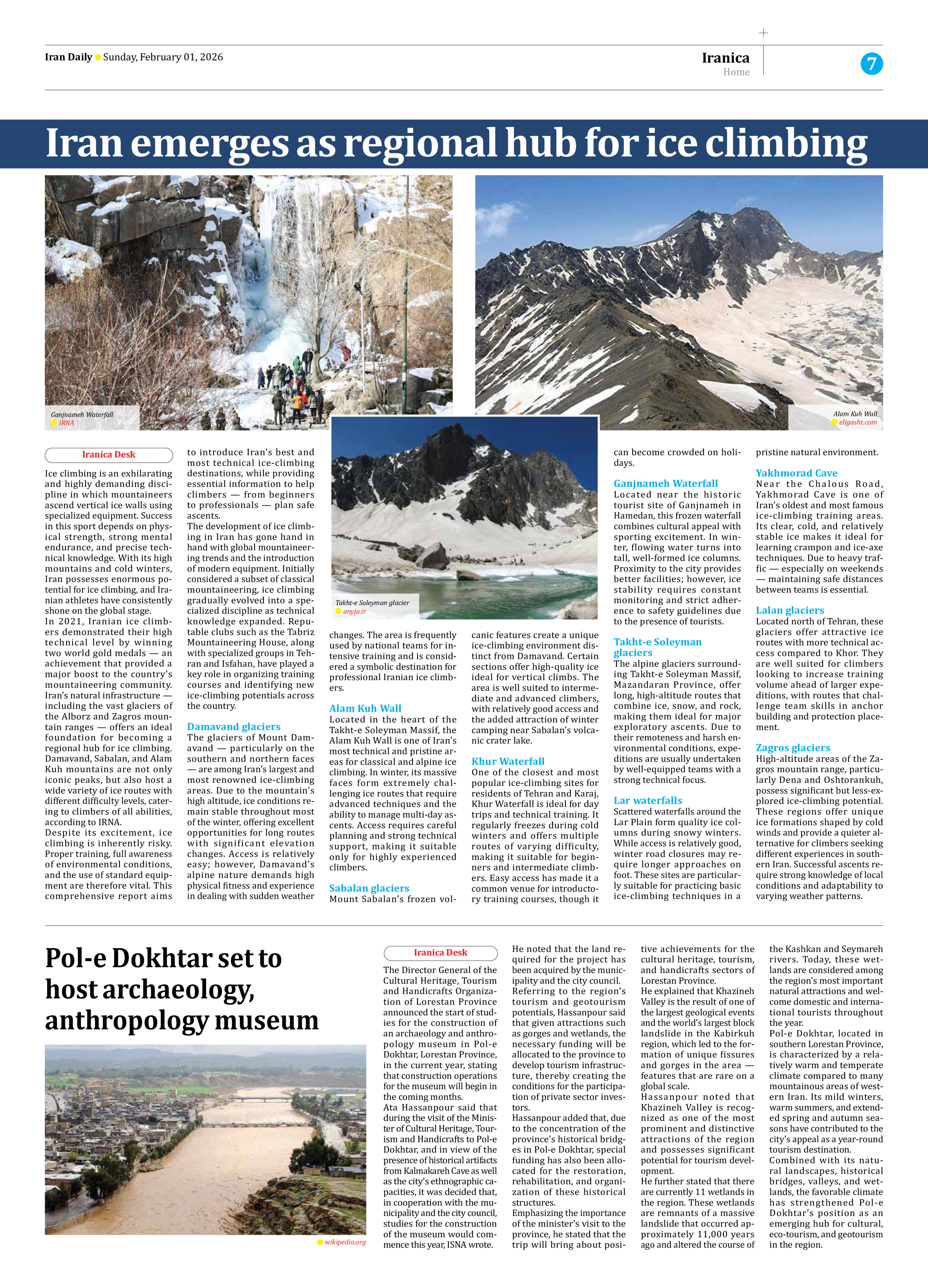
Hassanpour added that, due to the concentration of the province’s historical bridges in Pol-e Dokhtar, special funding has also been allocated for the restoration, rehabilitation, and organization of these historical structures.
Emphasizing the importance of the minister’s visit to the province, he stated that the trip will bring about positive achievements for the cultural heritage, tourism, and handicrafts sectors of Lorestan Province.
He explained that Khazineh Valley is the result of one of the largest geological events and the world’s largest block landslide in the Kabirkuh region, which led to the formation of unique fissures and gorges in the area — features that are rare on a global scale.
Hassanpour noted that Khazineh Valley is recognized as one of the most prominent and distinctive attractions of the region and possesses significant potential for tourism development.
He further stated that there are currently 11 wetlands in the region. These wetlands are remnants of a massive landslide that occurred approximately 11,000 years ago and altered the course of the Kashkan and Seymareh rivers. Today, these wetlands are considered among the region’s most important natural attractions and welcome domestic and international tourists throughout the year.
Pol-e Dokhtar, located in southern Lorestan Province, is characterized by a relatively warm and temperate climate compared to many mountainous areas of western Iran. Its mild winters, warm summers, and extended spring and autumn seasons have contributed to the city’s appeal as a year-round tourism destination.
Combined with its natural landscapes, historical bridges, valleys, and wetlands, the favorable climate has strengthened Pol-e Dokhtar’s position as an emerging hub for cultural, eco-tourism, and geotourism in the region.