







Iran emerges as regional hub for ice climbing
Ice climbing is an exhilarating and highly demanding discipline in which mountaineers ascend vertical ice walls using specialized equipment. Success in this sport depends on physical strength, strong mental endurance, and precise technical knowledge. With its high mountains and cold winters, Iran possesses enormous potential for ice climbing, and Iranian athletes have consistently shone on the global stage.
In 2021, Iranian ice climbers demonstrated their high technical level by winning two world gold medals — an achievement that provided a major boost to the country’s mountaineering community. Iran’s natural infrastructure — including the vast glaciers of the Alborz and Zagros mountain ranges — offers an ideal foundation for becoming a regional hub for ice climbing. Damavand, Sabalan, and Alam Kuh mountains are not only iconic peaks, but also host a wide variety of ice routes with different difficulty levels, catering to climbers of all abilities, according to IRNA.
Despite its excitement, ice climbing is inherently risky. Proper training, full awareness of environmental conditions, and the use of standard equipment are therefore vital. This comprehensive report aims to introduce Iran’s best and most technical ice-climbing destinations, while providing essential information to help climbers — from beginners to professionals — plan safe ascents.
The development of ice climbing in Iran has gone hand in hand with global mountaineering trends and the introduction of modern equipment. Initially considered a subset of classical mountaineering, ice climbing gradually evolved into a specialized discipline as technical knowledge expanded. Reputable clubs such as the Tabriz Mountaineering House, along with specialized groups in Tehran and Isfahan, have played a key role in organizing training courses and identifying new ice-climbing potentials across the country.
Damavand glaciers
The glaciers of Mount Damavand — particularly on the southern and northern faces — are among Iran’s largest and most renowned ice-climbing areas. Due to the mountain’s high altitude, ice conditions remain stable throughout most of the winter, offering excellent opportunities for long routes with significant elevation changes. Access is relatively easy; however, Damavand’s alpine nature demands high physical fitness and experience in dealing with sudden weather changes. The area is frequently used by national teams for intensive training and is considered a symbolic destination for professional Iranian ice climbers.
Alam Kuh Wall
Located in the heart of the Takht-e Soleyman Massif, the Alam Kuh Wall is one of Iran’s most technical and pristine areas for classical and alpine ice climbing. In winter, its massive faces form extremely challenging ice routes that require advanced techniques and the ability to manage multi-day ascents. Access requires careful planning and strong technical support, making it suitable only for highly experienced climbers.
Sabalan glaciers
Mount Sabalan’s frozen volcanic features create a unique ice-climbing environment distinct from Damavand. Certain sections offer high-quality ice ideal for vertical climbs. The area is well suited to intermediate and advanced climbers, with relatively good access and the added attraction of winter camping near Sabalan’s volcanic crater lake.
Khur Waterfall
One of the closest and most popular ice-climbing sites for residents of Tehran and Karaj, Khur Waterfall is ideal for day trips and technical training. It regularly freezes during cold winters and offers multiple routes of varying difficulty, making it suitable for beginners and intermediate climbers. Easy access has made it a common venue for introductory training courses, though it can become crowded on holidays.
Ganjnameh Waterfall
Located near the historic tourist site of Ganjnameh in Hamedan, this frozen waterfall combines cultural appeal with sporting excitement. In winter, flowing water turns into tall, well-formed ice columns. Proximity to the city provides better facilities; however, ice stability requires constant monitoring and strict adherence to safety guidelines due to the presence of tourists.
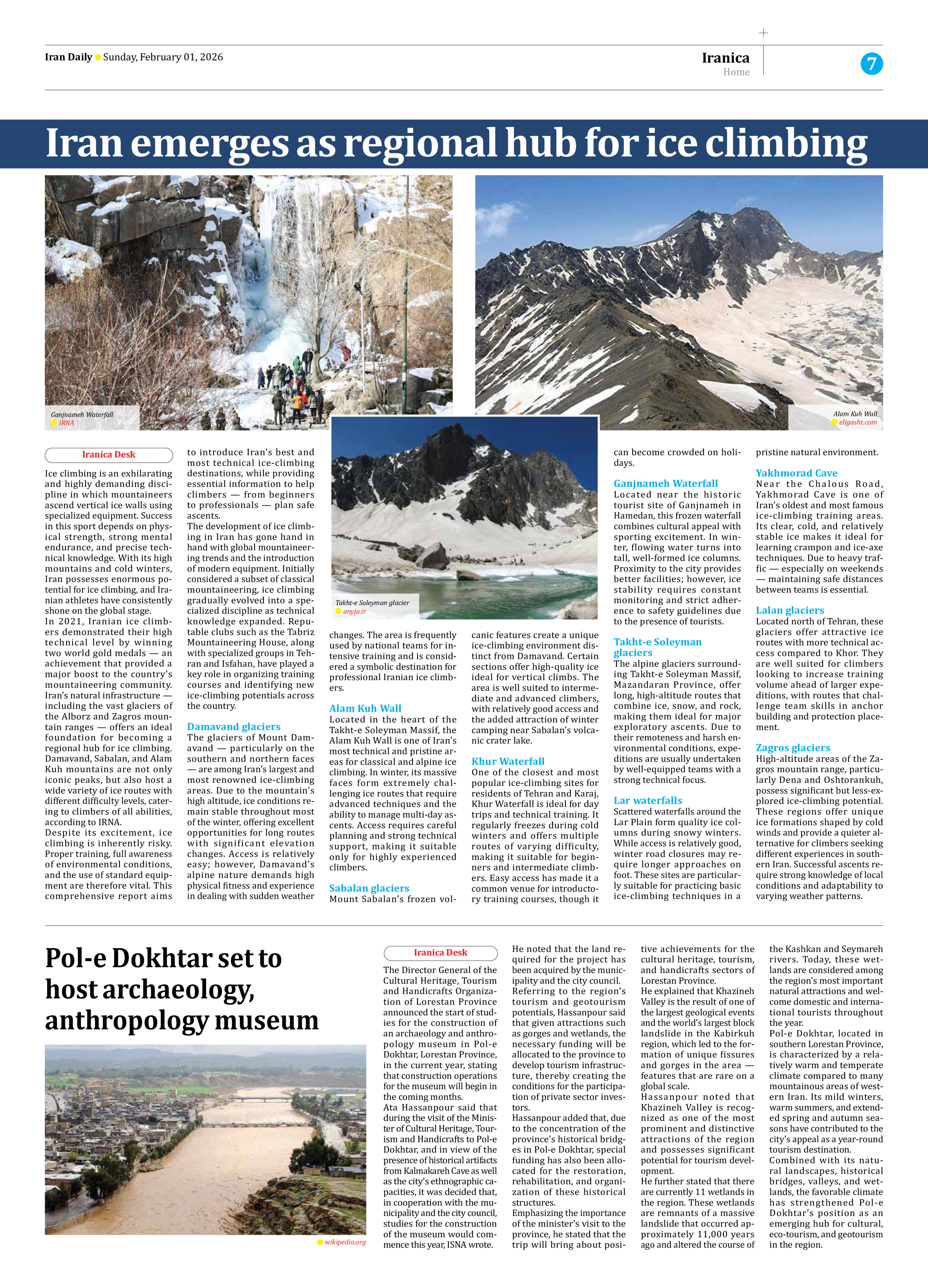
Takht-e Soleyman glaciers
The alpine glaciers surrounding Takht-e Soleyman Massif, Mazandaran Province, offer long, high-altitude routes that combine ice, snow, and rock, making them ideal for major exploratory ascents. Due to their remoteness and harsh environmental conditions, expeditions are usually undertaken by well-equipped teams with a strong technical focus.
Lar waterfalls
Scattered waterfalls around the Lar Plain form quality ice columns during snowy winters. While access is relatively good, winter road closures may require longer approaches on foot. These sites are particularly suitable for practicing basic ice-climbing techniques in a pristine natural environment.
Yakhmorad Cave
Near the Chalous Road, Yakhmorad Cave is one of Iran’s oldest and most famous ice-climbing training areas. Its clear, cold, and relatively stable ice makes it ideal for learning crampon and ice-axe techniques. Due to heavy traffic — especially on weekends — maintaining safe distances between teams is essential.
Lalan glaciers
Located north of Tehran, these glaciers offer attractive ice routes with more technical access compared to Khor. They are well suited for climbers looking to increase training volume ahead of larger expeditions, with routes that challenge team skills in anchor building and protection placement.
Zagros glaciers
High-altitude areas of the Zagros mountain range, particularly Dena and Oshtorankuh, possess significant but less-explored ice-climbing potential. These regions offer unique ice formations shaped by cold winds and provide a quieter alternative for climbers seeking different experiences in southern Iran. Successful ascents require strong knowledge of local conditions and adaptability to varying weather patterns.