





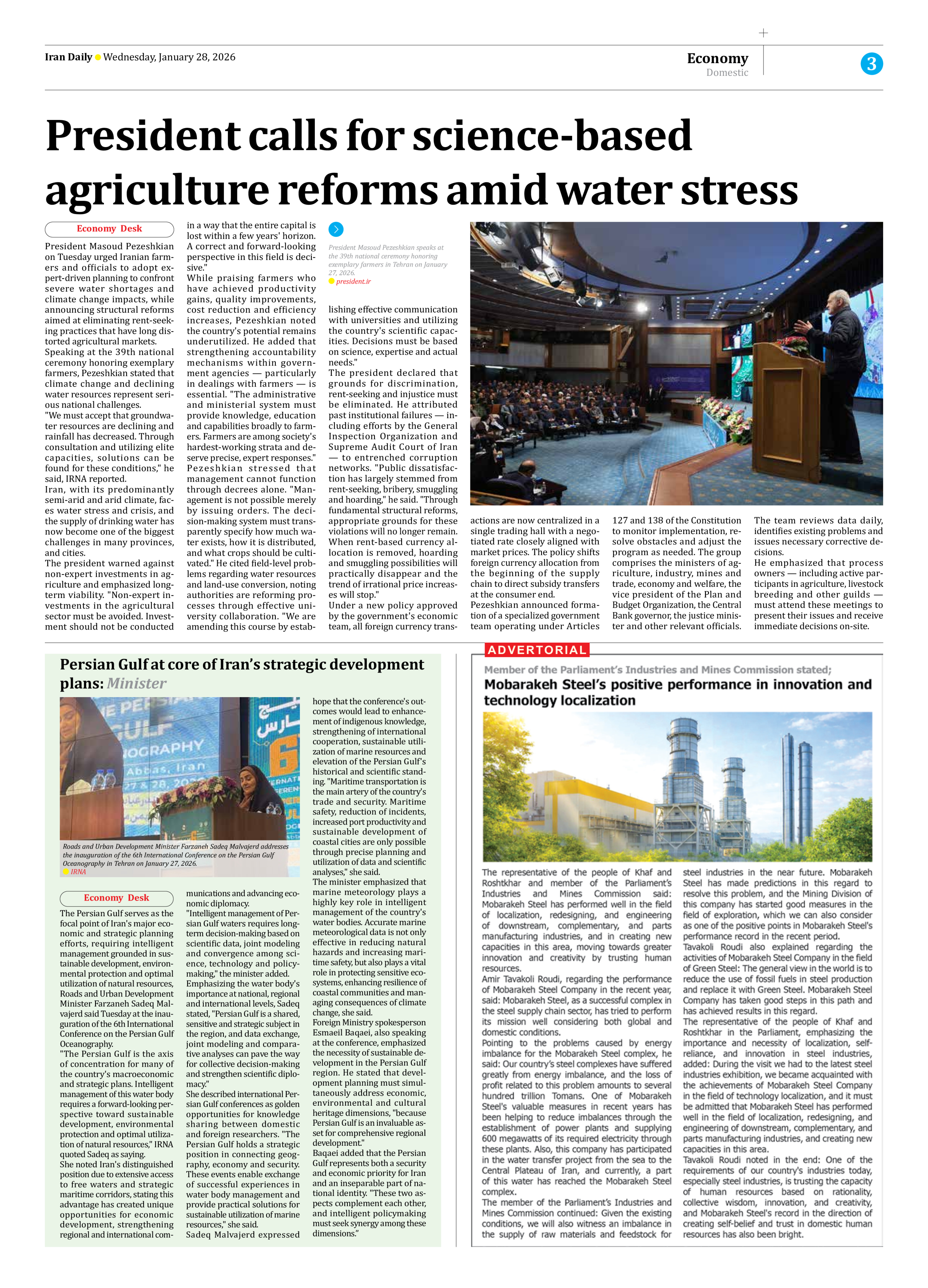


Persian Gulf at core of Iran’s strategic development plans: Minister
The Persian Gulf serves as the focal point of Iran's major economic and strategic planning efforts, requiring intelligent management grounded in sustainable development, environmental protection and optimal utilization of natural resources, Roads and Urban Development Minister Farzaneh Sadeq Malvajerd said Tuesday at the inauguration of the 6th International Conference on the Persian Gulf Oceanography.
"The Persian Gulf is the axis of concentration for many of the country's macroeconomic and strategic plans. Intelligent management of this water body requires a forward-looking perspective toward sustainable development, environmental protection and optimal utilization of natural resources," IRNA quoted Sadeq as saying.
She noted Iran's distinguished position due to extensive access to free waters and strategic maritime corridors, stating this advantage has created unique opportunities for economic development, strengthening regional and international communications and advancing economic diplomacy.
"Intelligent management of Persian Gulf waters requires long-term decision-making based on scientific data, joint modeling and convergence among science, technology and policymaking," the minister added.
Emphasizing the water body's importance at national, regional and international levels, Sadeq stated, "Persian Gulf is a shared, sensitive and strategic subject in the region, and data exchange, joint modeling and comparative analyses can pave the way for collective decision-making and strengthen scientific diplomacy."
She described international Persian Gulf conferences as golden opportunities for knowledge sharing between domestic and foreign researchers. "The Persian Gulf holds a strategic position in connecting geography, economy and security. These events enable exchange of successful experiences in water body management and provide practical solutions for sustainable utilization of marine resources," she said.
Sadeq Malvajerd expressed hope that the conference's outcomes would lead to enhancement of indigenous knowledge, strengthening of international cooperation, sustainable utilization of marine resources and elevation of the Persian Gulf's historical and scientific standing. "Maritime transportation is the main artery of the country's trade and security. Maritime safety, reduction of incidents, increased port productivity and sustainable development of coastal cities are only possible through precise planning and utilization of data and scientific analyses," she said.
The minister emphasized that marine meteorology plays a highly key role in intelligent management of the country's water bodies. Accurate marine meteorological data is not only effective in reducing natural hazards and increasing maritime safety, but also plays a vital role in protecting sensitive ecosystems, enhancing resilience of coastal communities and managing consequences of climate change, she said.
Foreign Ministry spokesperson Esmaeil Baqaei, also speaking at the conference, emphasized the necessity of sustainable development in the Persian Gulf region. He stated that development planning must simultaneously address economic, environmental and cultural heritage dimensions, "because Persian Gulf is an invaluable asset for comprehensive regional development."
Baqaei added that the Persian Gulf represents both a security and economic priority for Iran and an inseparable part of national identity. "These two aspects complement each other, and intelligent policymaking must seek synergy among these dimensions.”