







Ancient cisterns in Hormozgan continue to support water storage
The historic water cisterns of Hormozgan Province — known locally as Berkeh — stand as a striking example of the close link between vernacular architecture, traditional engineering knowledge, and the social culture of the region. During periods of rainfall, these structures once again demonstrate their original function and enduring relevance.
Hormozgan Province has long faced chronic shortages of fresh water. Its hot and arid climate, low and irregular rainfall, high evaporation rates, and limited surface and groundwater resources have historically made daily life challenging. Under such conditions, the collection and storage of rainwater emerged as a vital and intelligent solution among the inhabitants of southern Iran, with Berkeh serving as the most important infrastructure within this water management system. These structures not only met the everyday needs of local communities but also enabled sustained settlement, the formation of villages, and the flourishing of communication and trade routes across Hormozgan, according to chtn.ir.
Rainfall in the province during autumn showed that Berkeh, despite the passage of time and changes in modern water supply methods, continues to function efficiently. In many parts of the province, runoff from the rains was channeled through old waterways and passages into the cisterns, allowing significant volumes of rainwater to be stored in these reservoirs. This demonstrates that the placement of Berkeh was based on a precise understanding of land topography, water flow patterns, and the behavior of seasonal rainfall — evidence of the deep environmental knowledge possessed by past architects and builders.
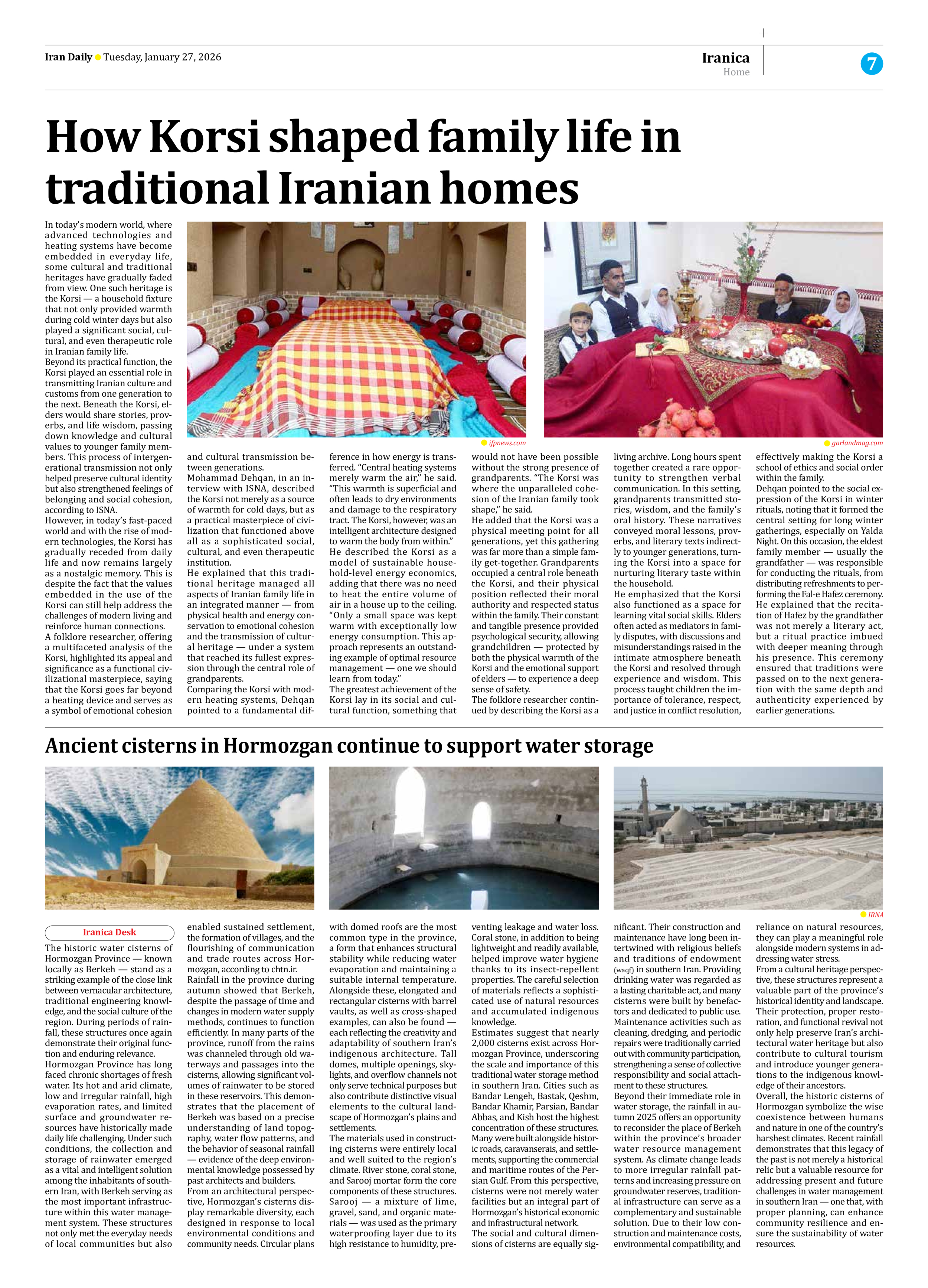
From an architectural perspective, Hormozgan’s cisterns display remarkable diversity, each designed in response to local environmental conditions and community needs. Circular plans with domed roofs are the most common type in the province, a form that enhances structural stability while reducing water evaporation and maintaining a suitable internal temperature. Alongside these, elongated and rectangular cisterns with barrel vaults, as well as cross-shaped examples, can also be found — each reflecting the creativity and adaptability of southern Iran’s indigenous architecture. Tall domes, multiple openings, skylights, and overflow channels not only serve technical purposes but also contribute distinctive visual elements to the cultural landscape of Hormozgan’s plains and settlements.
The materials used in constructing cisterns were entirely local and well suited to the region’s climate. River stone, coral stone, and Sarooj mortar form the core components of these structures. Sarooj — a mixture of lime, gravel, sand, and organic materials — was used as the primary waterproofing layer due to its high resistance to humidity, preventing leakage and water loss. Coral stone, in addition to being lightweight and readily available, helped improve water hygiene thanks to its insect-repellent properties. The careful selection of materials reflects a sophisticated use of natural resources and accumulated indigenous knowledge.
Estimates suggest that nearly 2,000 cisterns exist across Hormozgan Province, underscoring the scale and importance of this traditional water storage method in southern Iran. Cities such as Bandar Lengeh, Bastak, Qeshm, Bandar Khamir, Parsian, Bandar Abbas, and Kish host the highest concentration of these structures. Many were built alongside historic roads, caravanserais, and settlements, supporting the commercial and maritime routes of the Persian Gulf. From this perspective, cisterns were not merely water facilities but an integral part of Hormozgan’s historical economic and infrastructural network.
The social and cultural dimensions of cisterns are equally significant. Their construction and maintenance have long been intertwined with religious beliefs and traditions of endowment (waqf) in southern Iran. Providing drinking water was regarded as a lasting charitable act, and many cisterns were built by benefactors and dedicated to public use. Maintenance activities such as cleaning, dredging, and periodic repairs were traditionally carried out with community participation, strengthening a sense of collective responsibility and social attachment to these structures.
Beyond their immediate role in water storage, the rainfall in autumn 2025 offers an opportunity to reconsider the place of Berkeh within the province’s broader water resource management system. As climate change leads to more irregular rainfall patterns and increasing pressure on groundwater reserves, traditional infrastructure can serve as a complementary and sustainable solution. Due to their low construction and maintenance costs, environmental compatibility, and reliance on natural resources, they can play a meaningful role alongside modern systems in addressing water stress.
From a cultural heritage perspective, these structures represent a valuable part of the province’s historical identity and landscape. Their protection, proper restoration, and functional revival not only help preserve Iran’s architectural water heritage but also contribute to cultural tourism and introduce younger generations to the indigenous knowledge of their ancestors.
Overall, the historic cisterns of Hormozgan symbolize the wise coexistence between humans and nature in one of the country’s harshest climates. Recent rainfall demonstrates that this legacy of the past is not merely a historical relic but a valuable resource for addressing present and future challenges in water management in southern Iran — one that, with proper planning, can enhance community resilience and ensure the sustainability of water resources.