





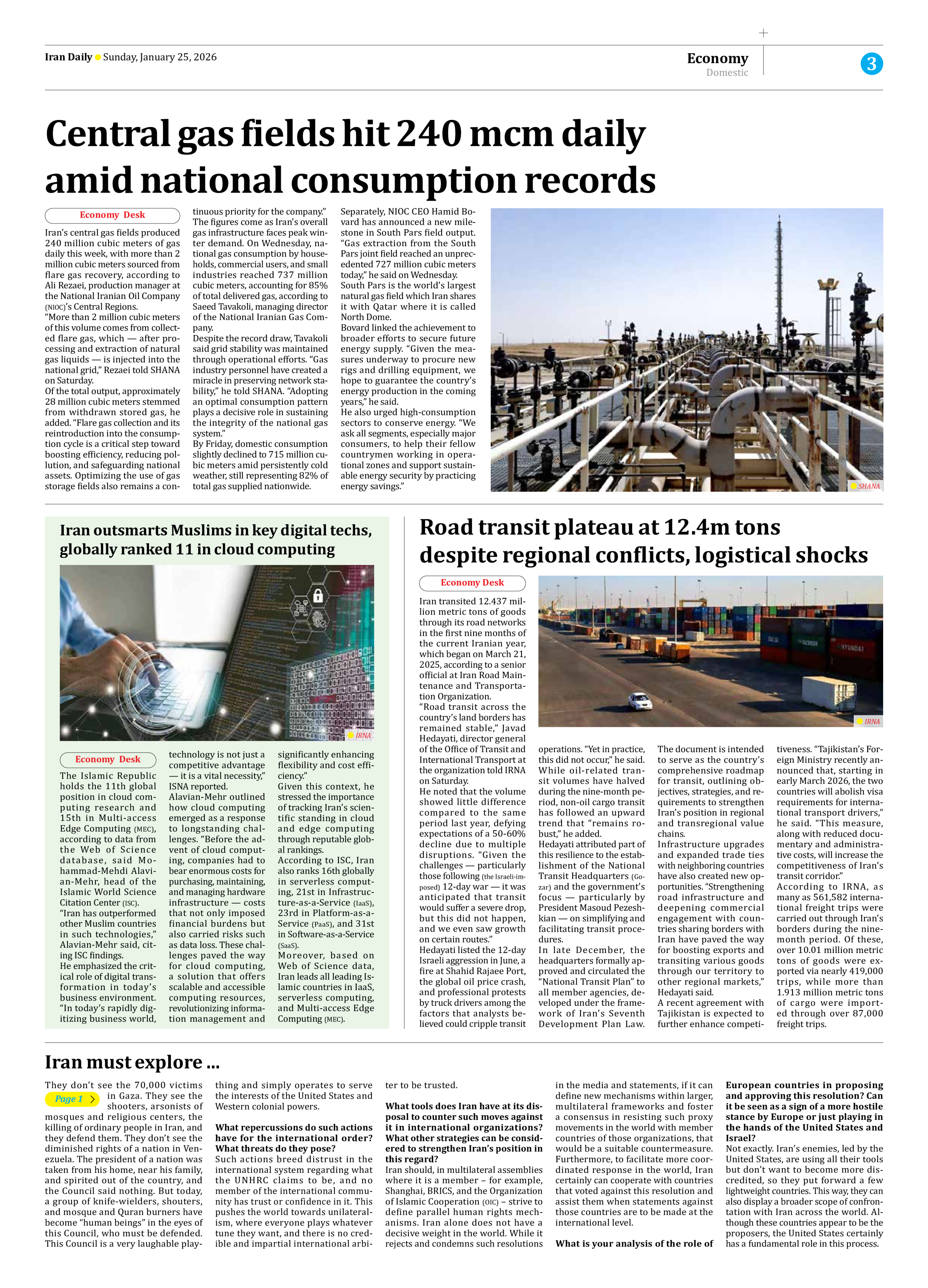


Road transit plateau at 12.4m tons despite regional conflicts, logistical shocks
Iran transited 12.437 million metric tons of goods through its road networks in the first nine months of the current Iranian year, which began on March 21, 2025, according to a senior official at Iran Road Maintenance and Transportation Organization.
“Road transit across the country’s land borders has remained stable,” Javad Hedayati, director general of the Office of Transit and International Transport at the organization told IRNA on Saturday.
He noted that the volume showed little difference compared to the same period last year, defying expectations of a 50-60% decline due to multiple disruptions. “Given the challenges — particularly those following (the Israeli-imposed) 12-day war — it was anticipated that transit would suffer a severe drop, but this did not happen, and we even saw growth on certain routes.”
Hedayati listed the 12-day Israeli aggression in June, a fire at Shahid Rajaee Port, the global oil price crash, and professional protests by truck drivers among the factors that analysts believed could cripple transit operations. “Yet in practice, this did not occur,” he said.
While oil-related transit volumes have halved during the nine-month period, non-oil cargo transit has followed an upward trend that “remains robust,” he added.
Hedayati attributed part of this resilience to the establishment of the National Transit Headquarters (Gozar) and the government’s focus — particularly by President Masoud Pezeshkian — on simplifying and facilitating transit procedures.
In late December, the headquarters formally approved and circulated the “National Transit Plan” to all member agencies, developed under the framework of Iran’s Seventh Development Plan Law. The document is intended to serve as the country’s comprehensive roadmap for transit, outlining objectives, strategies, and requirements to strengthen Iran’s position in regional and transregional value chains.
Infrastructure upgrades and expanded trade ties with neighboring countries have also created new opportunities. “Strengthening road infrastructure and deepening commercial engagement with countries sharing borders with Iran have paved the way for boosting exports and transiting various goods through our territory to other regional markets,” Hedayati said.
A recent agreement with Tajikistan is expected to further enhance competitiveness. “Tajikistan’s Foreign Ministry recently announced that, starting in early March 2026, the two countries will abolish visa requirements for international transport drivers,” he said. “This measure, along with reduced documentary and administrative costs, will increase the competitiveness of Iran’s transit corridor.”
According to IRNA, as many as 561,582 international freight trips were carried out through Iran’s borders during the nine-month period. Of these, over 10.01 million metric tons of goods were exported via nearly 419,000 trips, while more than 1.913 million metric tons of cargo were imported through over 87,000 freight trips.