







Central gas fields hit 240 mcm daily amid national consumption records
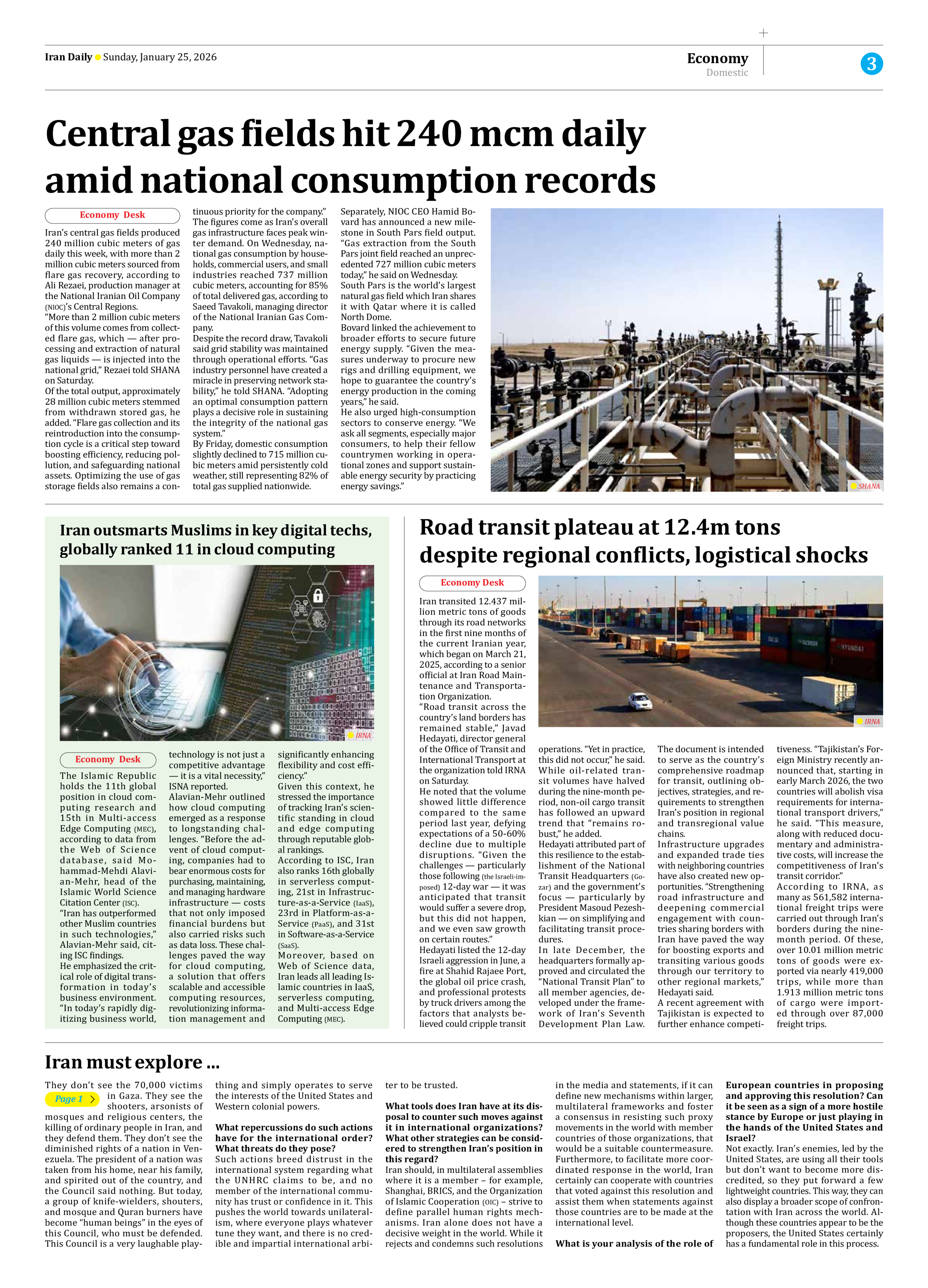
Iran’s central gas fields produced 240 million cubic meters of gas daily this week, with more than 2 million cubic meters sourced from flare gas recovery, according to Ali Rezaei, production manager at the National Iranian Oil Company (NIOC)’s Central Regions.
“More than 2 million cubic meters of this volume comes from collected flare gas, which — after processing and extraction of natural gas liquids — is injected into the national grid,” Rezaei told SHANA on Saturday.
Of the total output, approximately 28 million cubic meters stemmed from withdrawn stored gas, he added. “Flare gas collection and its reintroduction into the consumption cycle is a critical step toward boosting efficiency, reducing pollution, and safeguarding national assets. Optimizing the use of gas storage fields also remains a continuous priority for the company.”
The figures come as Iran’s overall gas infrastructure faces peak winter demand. On Wednesday, national gas consumption by households, commercial users, and small industries reached 737 million cubic meters, accounting for 85% of total delivered gas, according to Saeed Tavakoli, managing director of the National Iranian Gas Company.
Despite the record draw, Tavakoli said grid stability was maintained through operational efforts. “Gas industry personnel have created a miracle in preserving network stability,” he told SHANA. “Adopting an optimal consumption pattern plays a decisive role in sustaining the integrity of the national gas system.”
By Friday, domestic consumption slightly declined to 715 million cubic meters amid persistently cold weather, still representing 82% of total gas supplied nationwide.
Separately, NIOC CEO Hamid Bovard has announced a new milestone in South Pars field output. “Gas extraction from the South Pars joint field reached an unprecedented 727 million cubic meters today,” he said on Wednesday.
South Pars is the world’s largest natural gas field which Iran shares it with Qatar where it is called North Dome.
Bovard linked the achievement to broader efforts to secure future energy supply. “Given the measures underway to procure new rigs and drilling equipment, we hope to guarantee the country’s energy production in the coming years,” he said.
He also urged high-consumption sectors to conserve energy. “We ask all segments, especially major consumers, to help their fellow countrymen working in operational zones and support sustainable energy security by practicing energy savings.”