







Kilim weavers; guardians of tradition in Chaharmahal and Bakhtiari
Nestled in the heart of Iran, Chaharmahal and Bakhtiari Province, renowned for its rich cultural heritage, is home to over 90 distinct fields of handicrafts and traditional arts. This impressive portfolio solidifies its status as one of the nation’s foremost regions in producing a diverse and vibrant array of artisanal industries.
Among this wealth of craftsmanship, kilim weaving from Chaharmahal and Bakhtiari stands out as a cornerstone of its textile heritage. Recognized as one of the most significant crafts within the category of woven textiles, this venerable art form has been honored with the prestigious UNESCO Seal of Excellence for Handicrafts, a testament to its exceptional quality and cultural value, chtn.ir wrote.
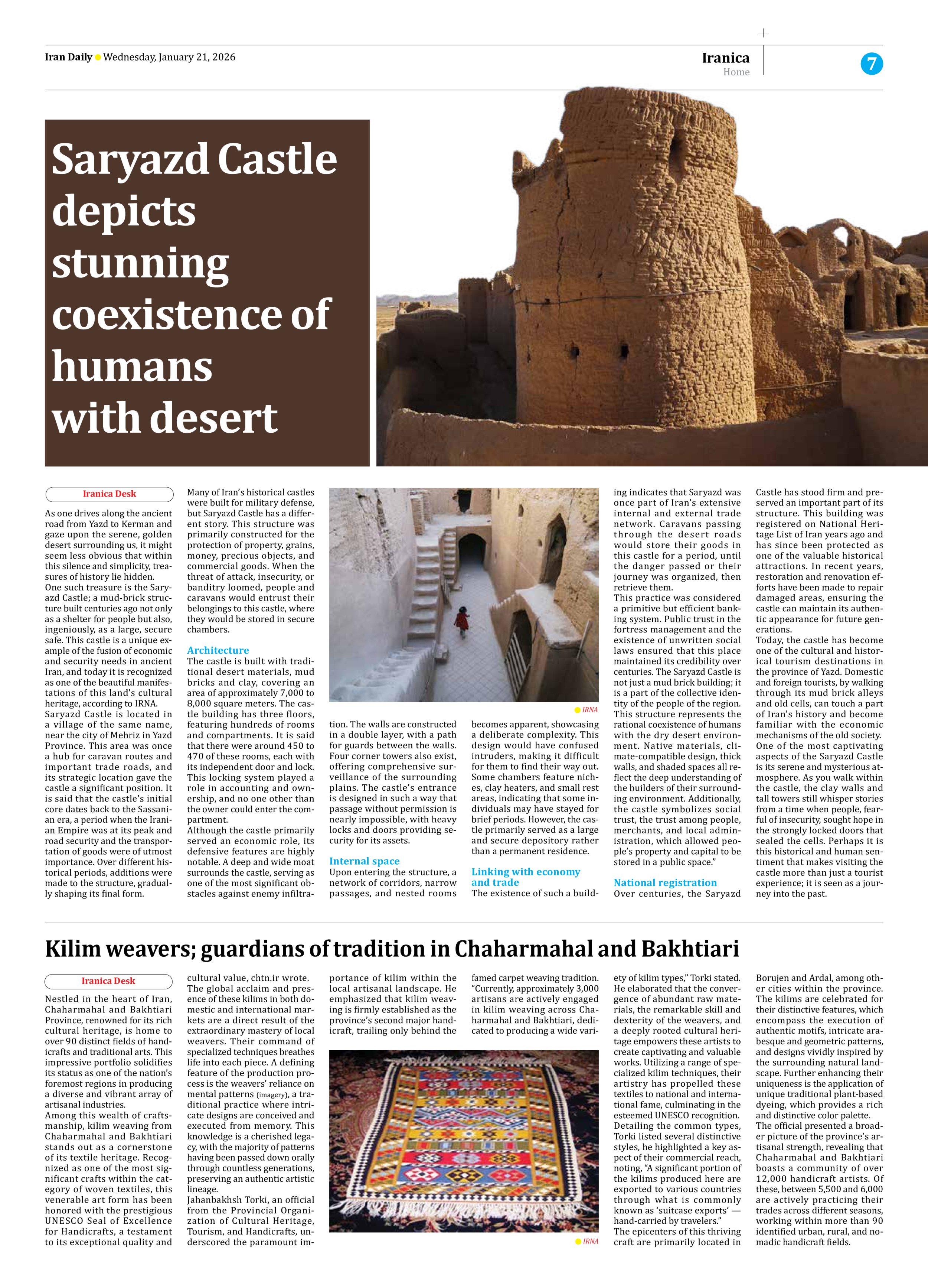
The global acclaim and presence of these kilims in both domestic and international markets are a direct result of the extraordinary mastery of local weavers. Their command of specialized techniques breathes life into each piece. A defining feature of the production process is the weavers’ reliance on mental patterns (imagery), a traditional practice where intricate designs are conceived and executed from memory. This knowledge is a cherished legacy, with the majority of patterns having been passed down orally through countless generations, preserving an authentic artistic lineage.
Jahanbakhsh Torki, an official from the Provincial Organization of Cultural Heritage, Tourism, and Handicrafts, underscored the paramount importance of kilim within the local artisanal landscape. He emphasized that kilim weaving is firmly established as the province’s second major handicraft, trailing only behind the famed carpet weaving tradition.
“Currently, approximately 3,000 artisans are actively engaged in kilim weaving across Chaharmahal and Bakhtiari, dedicated to producing a wide variety of kilim types,” Torki stated.
He elaborated that the convergence of abundant raw materials, the remarkable skill and dexterity of the weavers, and a deeply rooted cultural heritage empowers these artists to create captivating and valuable works. Utilizing a range of specialized kilim techniques, their artistry has propelled these textiles to national and international fame, culminating in the esteemed UNESCO recognition.
Detailing the common types, Torki listed several distinctive styles, he highlighted a key aspect of their commercial reach, noting, “A significant portion of the kilims produced here are exported to various countries through what is commonly known as ‘suitcase exports’ — hand-carried by travelers.”
The epicenters of this thriving craft are primarily located in Borujen and Ardal, among other cities within the province. The kilims are celebrated for their distinctive features, which encompass the execution of authentic motifs, intricate arabesque and geometric patterns, and designs vividly inspired by the surrounding natural landscape. Further enhancing their uniqueness is the application of unique traditional plant-based dyeing, which provides a rich and distinctive color palette.
The official presented a broader picture of the province’s artisanal strength, revealing that Chaharmahal and Bakhtiari boasts a community of over 12,000 handicraft artists. Of these, between 5,500 and 6,000 are actively practicing their trades across different seasons, working within more than 90 identified urban, rural, and nomadic handicraft fields.