







National Calligraphy Biennale held in Qazvin
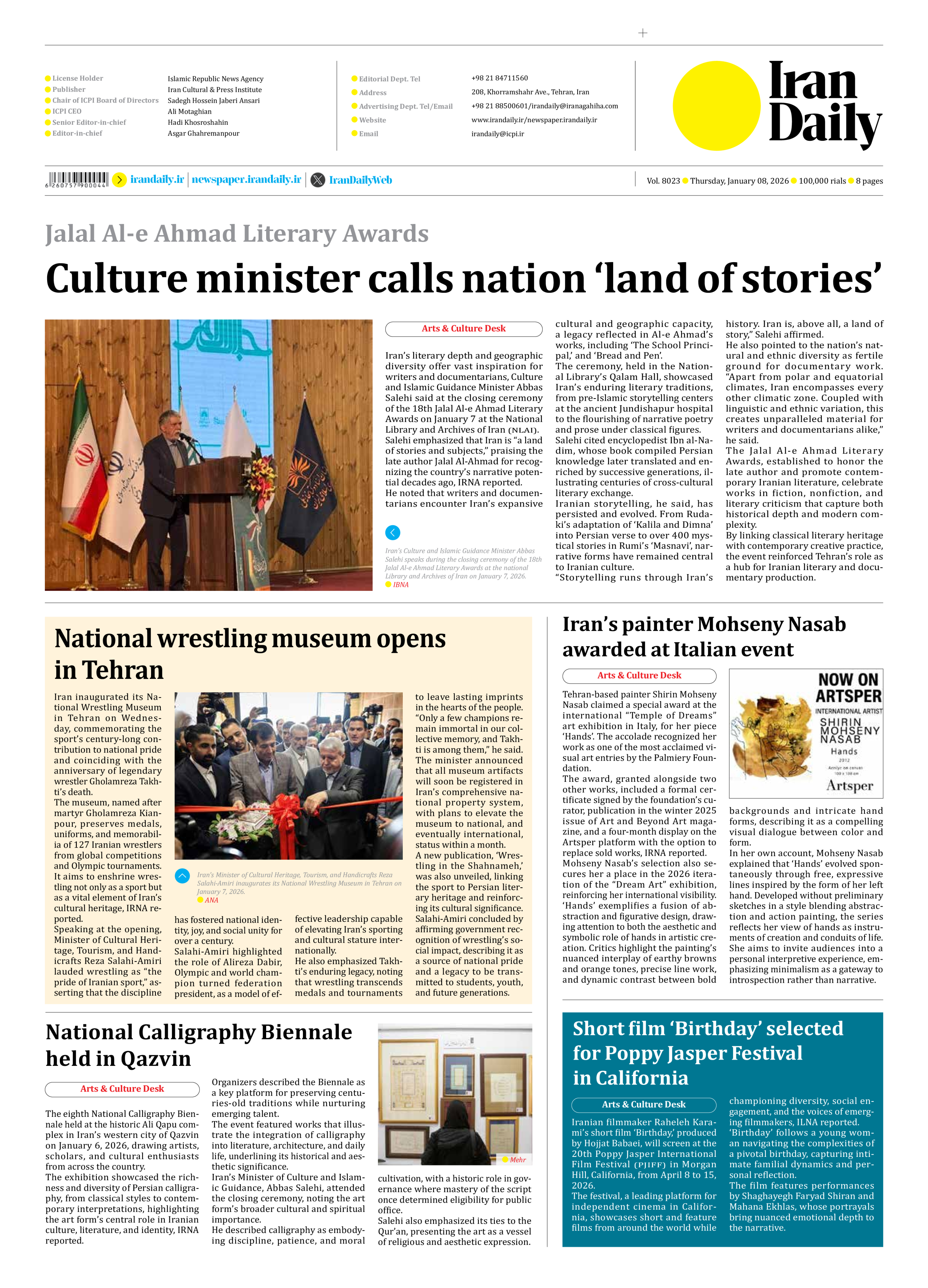
The eighth National Calligraphy Biennale held at the historic Ali Qapu complex in Iran’s western city of Qazvin on January 6, 2026, drawing artists, scholars, and cultural enthusiasts from across the country.
The exhibition showcased the richness and diversity of Persian calligraphy, from classical styles to contemporary interpretations, highlighting the art form’s central role in Iranian culture, literature, and identity, IRNA reported.
Organizers described the Biennale as a key platform for preserving centuries-old traditions while nurturing emerging talent.
The event featured works that illustrate the integration of calligraphy into literature, architecture, and daily life, underlining its historical and aesthetic significance.
Iran’s Minister of Culture and Islamic Guidance, Abbas Salehi, attended the closing ceremony, noting the art form’s broader cultural and spiritual importance.
He described calligraphy as embodying discipline, patience, and moral cultivation, with a historic role in governance where mastery of the script once determined eligibility for public office.
Salehi also emphasized its ties to the Qur’an, presenting the art as a vessel of religious and aesthetic expression.