







China expected to replace Venezuelan oil with Iranian crude, traders say
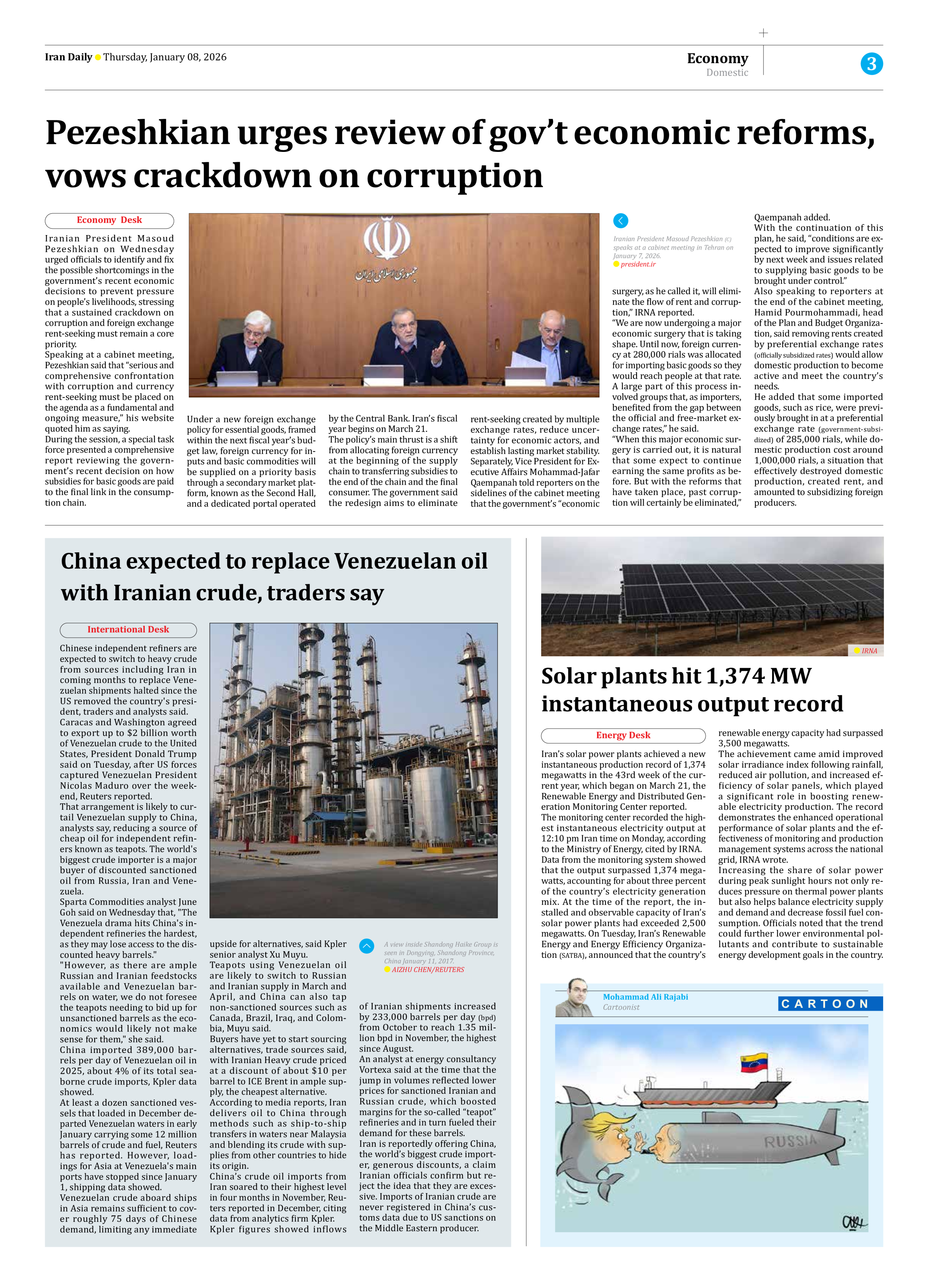
Chinese independent refiners are expected to switch to heavy crude from sources including Iran in coming months to replace Venezuelan shipments halted since the US removed the country's president, traders and analysts said.
Caracas and Washington agreed to export up to $2 billion worth of Venezuelan crude to the United States, President Donald Trump said on Tuesday, after US forces captured Venezuelan President Nicolas Maduro over the weekend, Reuters reported.
That arrangement is likely to curtail Venezuelan supply to China, analysts say, reducing a source of cheap oil for independent refiners known as teapots. The world's biggest crude importer is a major buyer of discounted sanctioned oil from Russia, Iran and Venezuela.
Sparta Commodities analyst June Goh said on Wednesday that, "The Venezuela drama hits China's independent refineries the hardest, as they may lose access to the discounted heavy barrels."
"However, as there are ample Russian and Iranian feedstocks available and Venezuelan barrels on water, we do not foresee the teapots needing to bid up for unsanctioned barrels as the economics would likely not make sense for them," she said.
China imported 389,000 barrels per day of Venezuelan oil in 2025, about 4% of its total seaborne crude imports, Kpler data showed.
At least a dozen sanctioned vessels that loaded in December departed Venezuelan waters in early January carrying some 12 million barrels of crude and fuel, Reuters has reported. However, loadings for Asia at Venezuela's main ports have stopped since January 1, shipping data showed.
Venezuelan crude aboard ships in Asia remains sufficient to cover roughly 75 days of Chinese demand, limiting any immediate upside for alternatives, said Kpler senior analyst Xu Muyu.
Teapots using Venezuelan oil are likely to switch to Russian and Iranian supply in March and April, and China can also tap non-sanctioned sources such as Canada, Brazil, Iraq, and Colombia, Muyu said.
Buyers have yet to start sourcing alternatives, trade sources said, with Iranian Heavy crude priced at a discount of about $10 per barrel to ICE Brent in ample supply, the cheapest alternative.
According to media reports, Iran delivers oil to China through methods such as ship-to-ship transfers in waters near Malaysia and blending its crude with supplies from other countries to hide its origin.
China’s crude oil imports from Iran soared to their highest level in four months in November, Reuters reported in December, citing data from analytics firm Kpler.
Kpler figures showed inflows of Iranian shipments increased by 233,000 barrels per day (bpd) from October to reach 1.35 million bpd in November, the highest since August.
An analyst at energy consultancy Vortexa said at the time that the jump in volumes reflected lower prices for sanctioned Iranian and Russian crude, which boosted margins for the so-called “teapot” refineries and in turn fueled their demand for these barrels.
Iran is reportedly offering China, the world’s biggest crude importer, generous discounts, a claim Iranian officials confirm but reject the idea that they are excessive. Imports of Iranian crude are never registered in China’s customs data due to US sanctions on the Middle Eastern producer.