







Iran rail freight up 12% in eight months as railway signs development deal with MIDCO
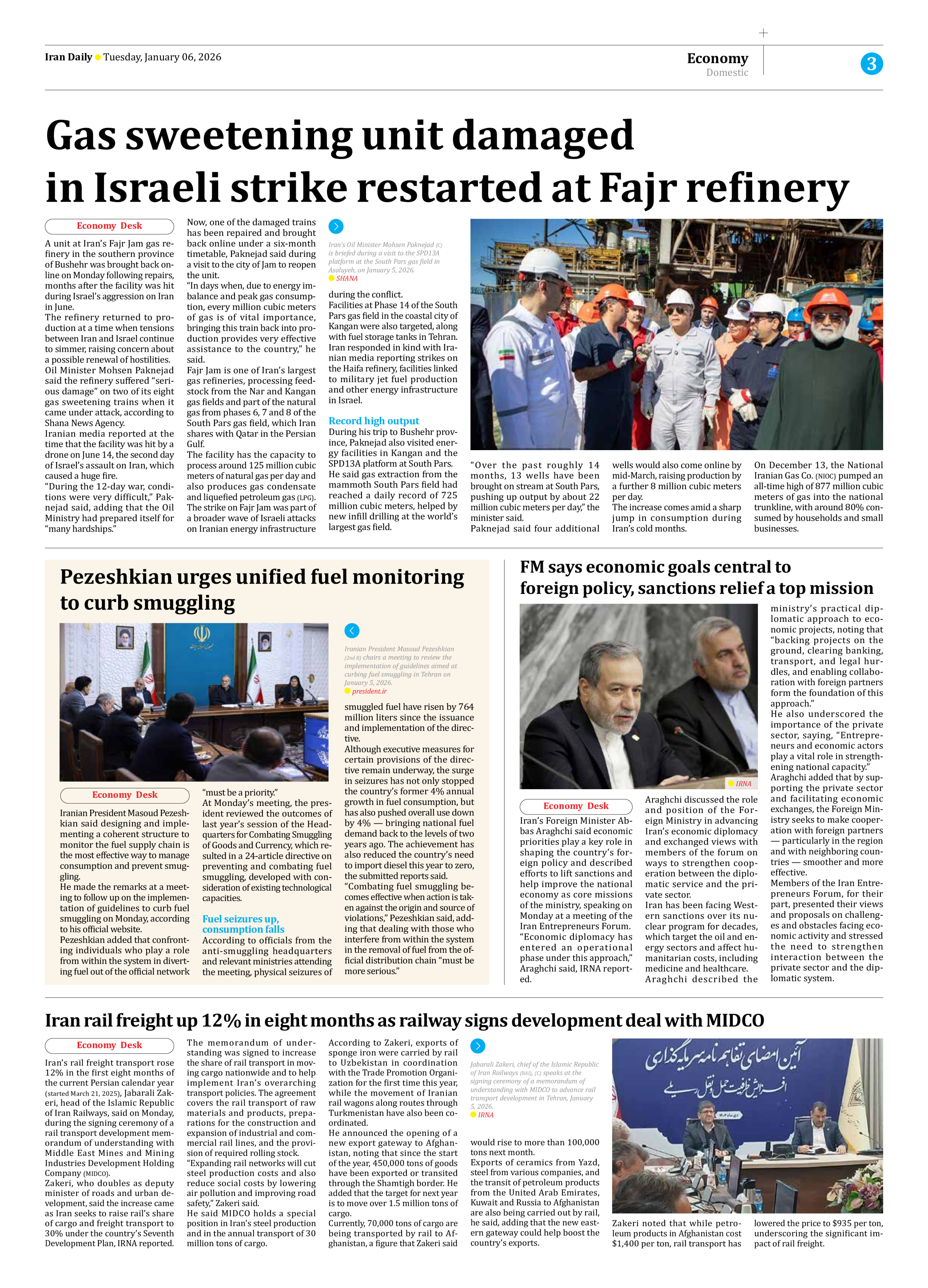
Iran’s rail freight transport rose 12% in the first eight months of the current Persian calendar year (started March 21, 2025), Jabarali Zakeri, head of the Islamic Republic of Iran Railways, said on Monday, during the signing ceremony of a rail transport development memorandum of understanding with Middle East Mines and Mining Industries Development Holding Company (MIDCO).
Zakeri, who doubles as deputy minister of roads and urban development, said the increase came as Iran seeks to raise rail’s share of cargo and freight transport to 30% under the country’s Seventh Development Plan, IRNA reported.
The memorandum of understanding was signed to increase the share of rail transport in moving cargo nationwide and to help implement Iran’s overarching transport policies. The agreement covers the rail transport of raw materials and products, preparations for the construction and expansion of industrial and commercial rail lines, and the provision of required rolling stock.
“Expanding rail networks will cut steel production costs and also reduce social costs by lowering air pollution and improving road safety,” Zakeri said.
He said MIDCO holds a special position in Iran’s steel production and in the annual transport of 30 million tons of cargo.
According to Zakeri, exports of sponge iron were carried by rail to Uzbekistan in coordination with the Trade Promotion Organization for the first time this year, while the movement of Iranian rail wagons along routes through Turkmenistan have also been coordinated.
He announced the opening of a new export gateway to Afghanistan, noting that since the start of the year, 450,000 tons of goods have been exported or transited through the Shamtigh border. He added that the target for next year is to move over 1.5 million tons of cargo.
Currently, 70,000 tons of cargo are being transported by rail to Afghanistan, a figure that Zakeri said would rise to more than 100,000 tons next month.
Exports of ceramics from Yazd, steel from various companies, and the transit of petroleum products from the United Arab Emirates, Kuwait and Russia to Afghanistan are also being carried out by rail, he said, adding that the new eastern gateway could help boost the country’s exports.
Zakeri noted that while petroleum products in Afghanistan cost $1,400 per ton, rail transport has lowered the price to $935 per ton, underscoring the significant impact of rail freight.