







Exploring Sheikh Shahabeddin’s mausoleum in Ahar
Sheikh Shahabeddin Mahmood Ahari was a renowned mystic and scholar of the 7th and 8th centuries, and this mausoleum was constructed over his grave long after his death. According to existing sources, the construction of the mausoleum in Ahar, East Azarbaijan Province, is attributed to the Safavid monarch Shah Abbas I, while the raw brick enclosure surrounding it is credited to Amir-Taymur Gurkan. The building underwent restoration near the end of the 12th century under the supervision of Mostafa Qoil Khan, the governor of the region.
The author of Asar-e-Bastani-e Azerbaijan identifies Sheikh Shahabeddin as a descendant of Sheikh Shahabeddin Sohrevardi. He further notes that Sheikh Shahabeddin served as the spiritual master of Seyed Jamaleddin Tabrizi. The current structure of the mausoleum is generally attributed to the Safavid period, although some experts believe that certain parts, such as the stone enclosure of the tomb and the eastern entrance, may date back to pre-Safavid times.
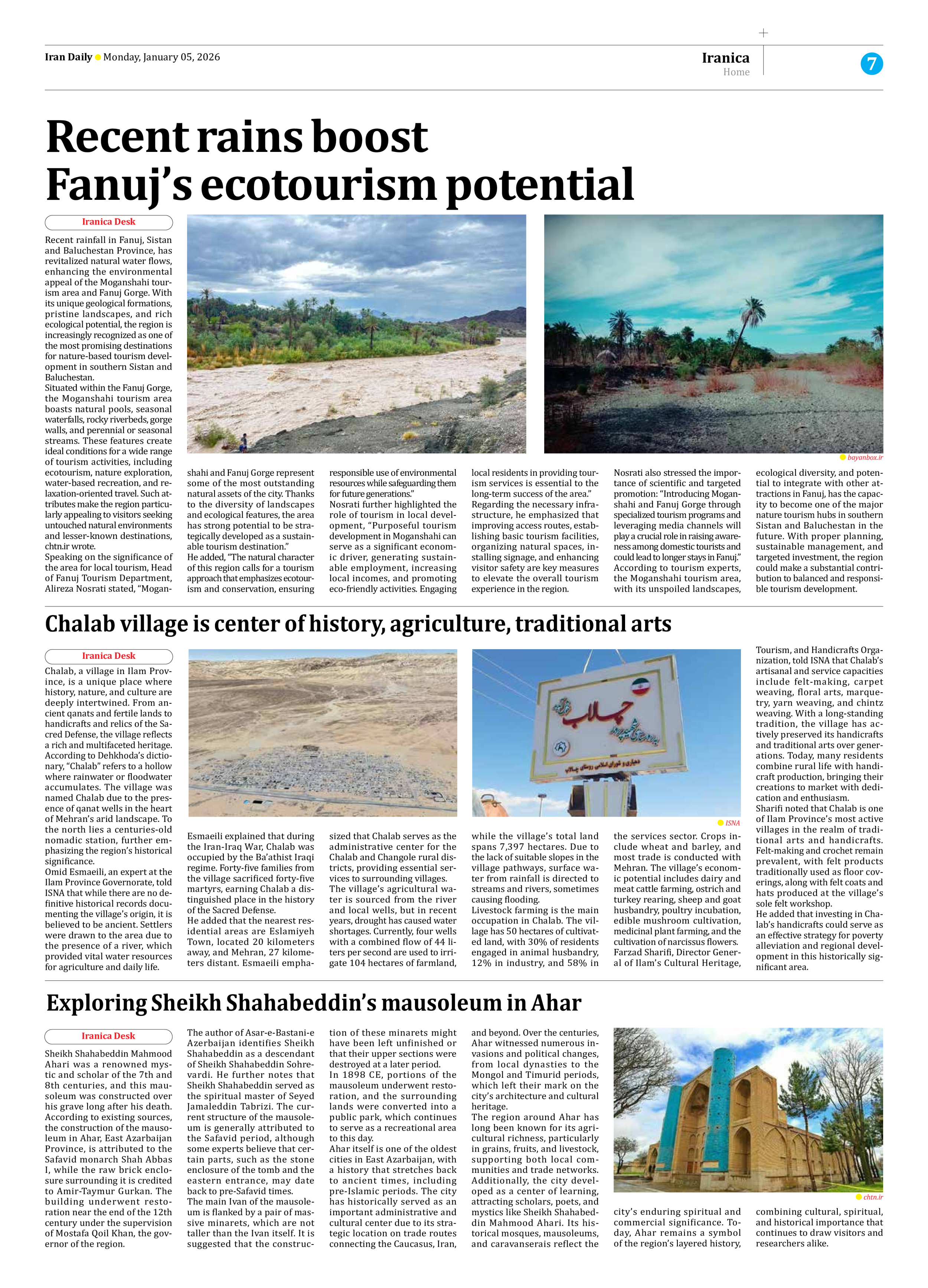
The main Ivan of the mausoleum is flanked by a pair of massive minarets, which are not taller than the Ivan itself. It is suggested that the construction of these minarets might have been left unfinished or that their upper sections were destroyed at a later period.
In 1898 CE, portions of the mausoleum underwent restoration, and the surrounding lands were converted into a public park, which continues to serve as a recreational area to this day.
Ahar itself is one of the oldest cities in East Azarbaijan, with a history that stretches back to ancient times, including pre-Islamic periods. The city has historically served as an important administrative and cultural center due to its strategic location on trade routes connecting the Caucasus, Iran, and beyond. Over the centuries, Ahar witnessed numerous invasions and political changes, from local dynasties to the Mongol and Timurid periods, which left their mark on the city’s architecture and cultural heritage.
The region around Ahar has long been known for its agricultural richness, particularly in grains, fruits, and livestock, supporting both local communities and trade networks. Additionally, the city developed as a center of learning, attracting scholars, poets, and mystics like Sheikh Shahabeddin Mahmood Ahari. Its historical mosques, mausoleums, and caravanserais reflect the city’s enduring spiritual and commercial significance. Today, Ahar remains a symbol of the region’s layered history, combining cultural, spiritual, and historical importance that continues to draw visitors and researchers alike.