







Iran, India aim to shield Chabahar from third-country pressure: Envoy
Iran and India are seeking practical solutions to continue developing Iran’s strategic Chabahar Port and prevent it from becoming a “hostage to decisions of third countries,” Iran’s ambassador to India said, underscoring Tehran’s readiness to accelerate joint infrastructure projects despite Western sanctions.
In his first interview with an Indian newspaper, Hindustan Times, Iranian ambassador Mohammad Fathali said Tehran and New Delhi were pursuing dialogue and close coordination to ensure the continued development of the port.
He said Iran was ready to advance joint infrastructure projects, particularly the southeastern port of Chabahar, at a faster pace.
“In trade, Iran emphasizes expanding cooperation in energy, petrochemicals, transportation, ports, agriculture, pharmaceuticals, technology, and knowledge-based companies,” Fathali said. “Joint infrastructure projects – especially the Chabahar Port and its role in connecting India to Central Asia, Afghanistan, and Russia – remain one of the key pillars of bilateral cooperation, and Iran is ready to advance these projects at a faster pace.”
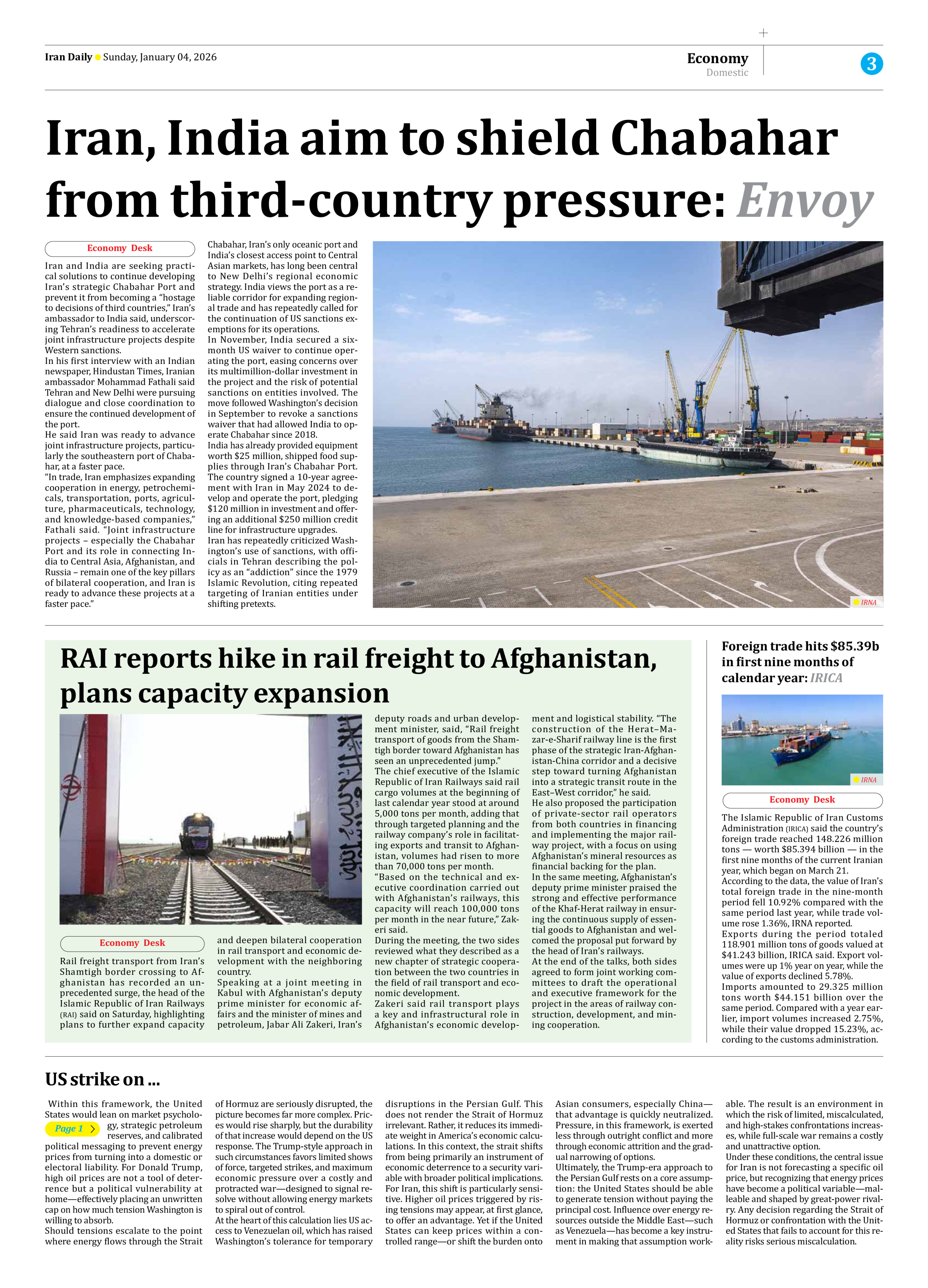
Chabahar, Iran’s only oceanic port and India’s closest access point to Central Asian markets, has long been central to New Delhi’s regional economic strategy. India views the port as a reliable corridor for expanding regional trade and has repeatedly called for the continuation of US sanctions exemptions for its operations.
In November, India secured a six-month US waiver to continue operating the port, easing concerns over its multimillion-dollar investment in the project and the risk of potential sanctions on entities involved. The move followed Washington’s decision in September to revoke a sanctions waiver that had allowed India to operate Chabahar since 2018.
India has already provided equipment worth $25 million, shipped food supplies through Iran’s Chabahar Port. The country signed a 10-year agreement with Iran in May 2024 to develop and operate the port, pledging $120 million in investment and offering an additional $250 million credit line for infrastructure upgrades.
Iran has repeatedly criticized Washington’s use of sanctions, with officials in Tehran describing the policy as an “addiction” since the 1979 Islamic Revolution, citing repeated targeting of Iranian entities under shifting pretexts.