







London to screen restored Iranian New Wave classics
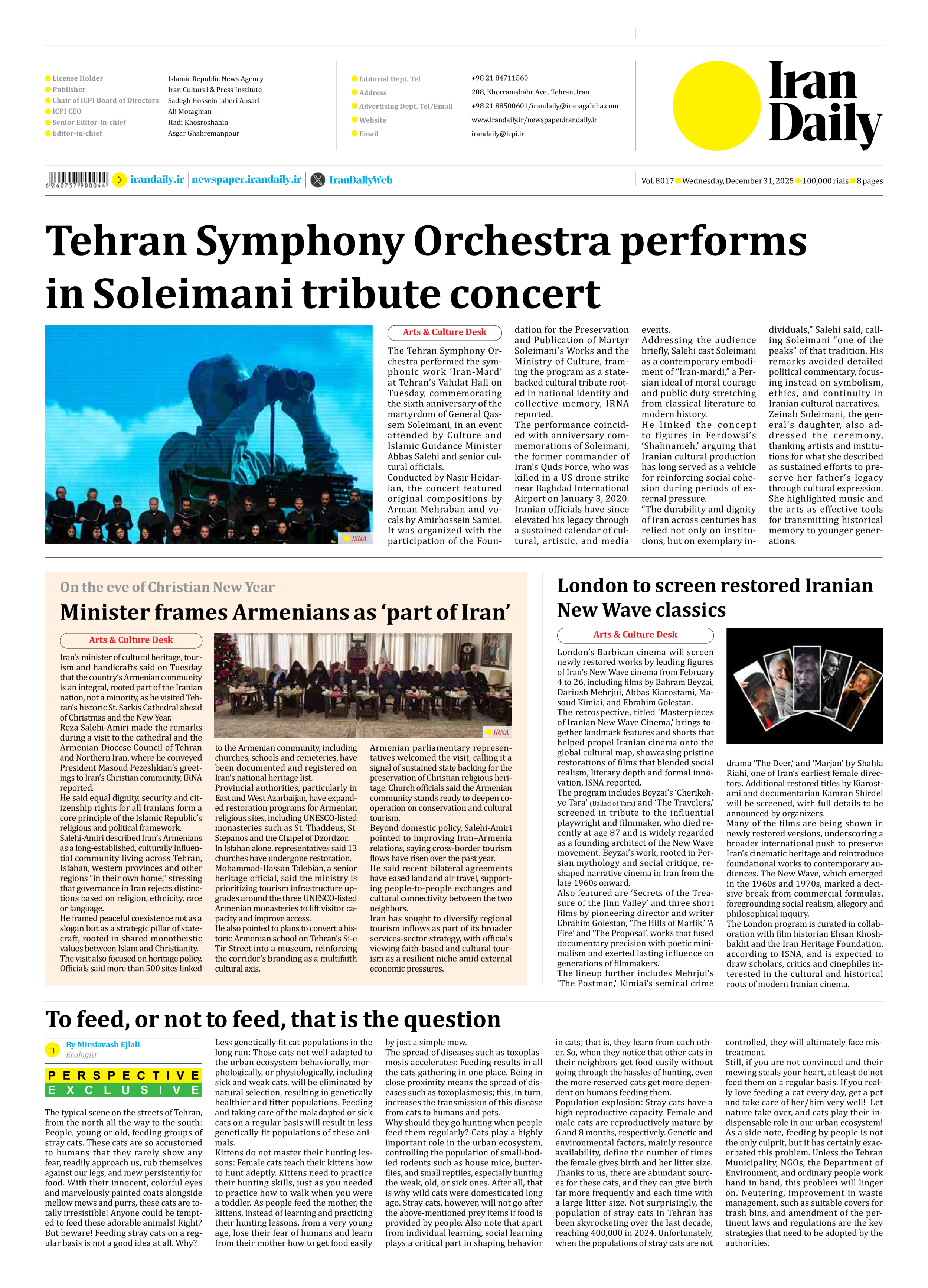
London’s Barbican cinema will screen newly restored works by leading figures of Iran’s New Wave cinema from February 4 to 26, including films by Bahram Beyzai, Dariush Mehrjui, Abbas Kiarostami, Masoud Kimiai, and Ebrahim Golestan.
The retrospective, titled ‘Masterpieces of Iranian New Wave Cinema,’ brings together landmark features and shorts that helped propel Iranian cinema onto the global cultural map, showcasing pristine restorations of films that blended social realism, literary depth and formal innovation, ISNA reported.
The program includes Beyzai’s ‘Cherikeh-ye Tara’ (Ballad of Tara) and ‘The Travelers,’ screened in tribute to the influential playwright and filmmaker, who died recently at age 87 and is widely regarded as a founding architect of the New Wave movement. Beyzai’s work, rooted in Persian mythology and social critique, reshaped narrative cinema in Iran from the late 1960s onward.
Also featured are ‘Secrets of the Treasure of the Jinn Valley’ and three short films by pioneering director and writer Ebrahim Golestan, ‘The Hills of Marlik,’ ‘A Fire’ and ‘The Proposal’, works that fused documentary precision with poetic minimalism and exerted lasting influence on generations of filmmakers.
The lineup further includes Mehrjui’s ‘The Postman,’ Kimiai’s seminal crime drama ‘The Deer,’ and ‘Marjan’ by Shahla Riahi, one of Iran’s earliest female directors. Additional restored titles by Kiarostami and documentarian Kamran Shirdel will be screened, with full details to be announced by organizers.
Many of the films are being shown in newly restored versions, underscoring a broader international push to preserve Iran’s cinematic heritage and reintroduce foundational works to contemporary audiences. The New Wave, which emerged in the 1960s and 1970s, marked a decisive break from commercial formulas, foregrounding social realism, allegory and philosophical inquiry.
The London program is curated in collaboration with film historian Ehsan Khoshbakht and the Iran Heritage Foundation, according to ISNA, and is expected to draw scholars, critics and cinephiles interested in the cultural and historical roots of modern Iranian cinema.