







Role of historical, cultural heritage in contemporary life
By Hekmatollah Mollasalehi
Professor of Archaeology, University of Tehran
Historical buildings, urban and rural textures, archaeological sites, tangible and intangible cultural artifacts, and especially the remnants of past eras, are not merely relics of bygone times — they are reflections of history, culture, and human presence in the world. These treasures bear witness to human experience, creativity, and the ways in which people have existed and engaged with their environments throughout history. Cultural heritage, whether material or immaterial, carries messages and values that allow contemporary humans to gain a deeper understanding of their own existence and humanity.
Artistic and archaeological works, such as the prehistoric cave paintings in Altamira and Lascaux, remain vibrant and inspiring from an aesthetic and artistic perspective, regardless of their original ritualistic or magical meanings. They demonstrate that human creativity and beauty transcend time, sparking reflection and inspiration in today’s world. The discovery and interpretation of ancient civilizations — from Egypt and Mesopotamia to Iran, India, China, and ancient Rome—enable modern humans to better comprehend the course of human history and confront their understanding of themselves and society.
Despite these insights, one of the pressing issues for contemporary societies, especially in Iran, is the inability to preserve and safeguard this invaluable heritage. The destruction of historical buildings and urban textures, leveling of archaeological sites, looting of artifacts, and lack of historical awareness reflect widespread historical neglect. Such destruction not only erases cognitive and cultural resources but also severs the living human connection with the heritage of previous generations, depriving future generations of the opportunity to learn from historical experiences and values. Regional examples, such as the Taliban’s destruction of heritage in Afghanistan or the devastation of cultural sites in Iraq and Syria, underscore the vulnerability of historical and cultural assets in the modern era.
In the modern West, the establishment of museums and heritage preservation organizations has enabled the protection of significant portions of historical artifacts, while archaeology has developed as a method to understand history, culture, and human development. These efforts highlight the importance of systematic and informed approaches to cultural heritage and demonstrate how modern humans can distance themselves from everyday life to engage with the past as both a source of knowledge and inspiration.
Today, humans and societies face rapid modernizing transformations, accelerated lifestyles, and technological advancements, which have created a profound distance from the past and historical heritage. Many populations, from East to West, have become disconnected from their ancient roots, responding to cultural, social, and technological changes with little reflection. This detachment from cultural heritage increases vulnerability to crises and diminishes historical and cultural awareness.
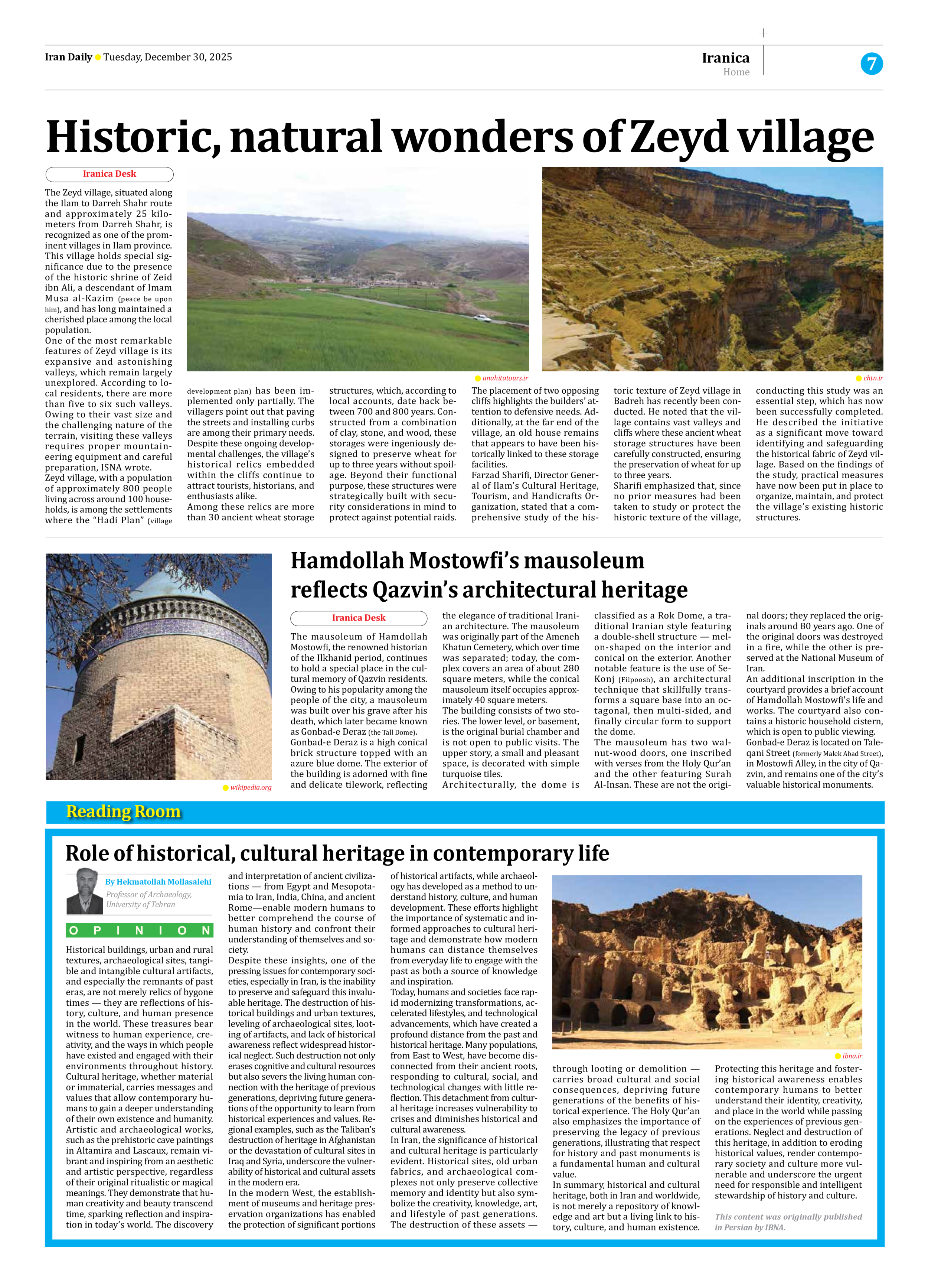
In Iran, the significance of historical and cultural heritage is particularly evident. Historical sites, old urban fabrics, and archaeological complexes not only preserve collective memory and identity but also symbolize the creativity, knowledge, art, and lifestyle of past generations. The destruction of these assets — through looting or demolition — carries broad cultural and social consequences, depriving future generations of the benefits of historical experience. The Holy Qur’an also emphasizes the importance of preserving the legacy of previous generations, illustrating that respect for history and past monuments is a fundamental human and cultural value.
In summary, historical and cultural heritage, both in Iran and worldwide, is not merely a repository of knowledge and art but a living link to history, culture, and human existence. Protecting this heritage and fostering historical awareness enables contemporary humans to better understand their identity, creativity, and place in the world while passing on the experiences of previous generations. Neglect and destruction of this heritage, in addition to eroding historical values, render contemporary society and culture more vulnerable and underscore the urgent need for responsible and intelligent stewardship of history and culture.
This content was originally published
in Persian by IBNA.