







Historic, natural wonders of Zeyd village
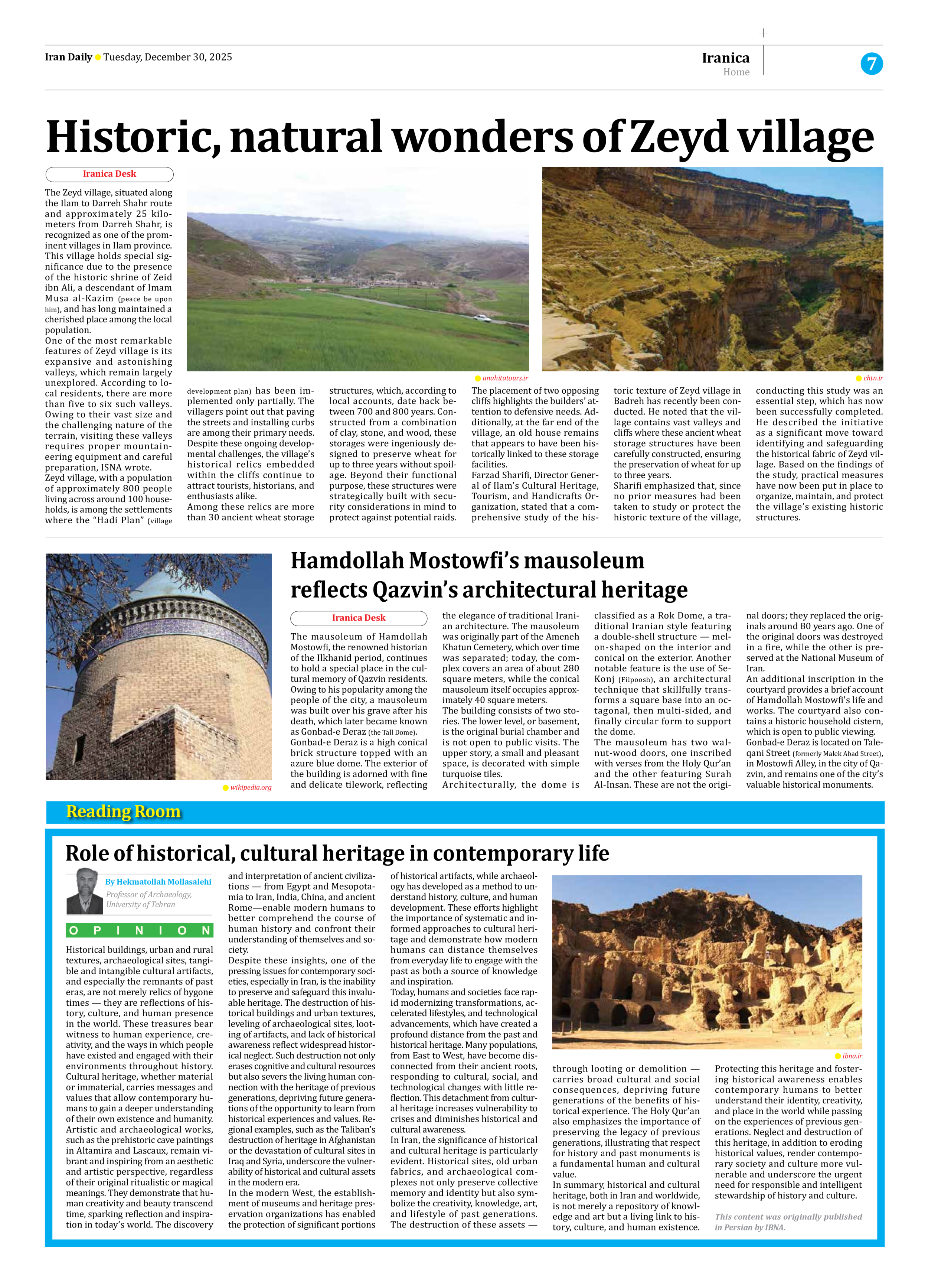
The Zeyd village, situated along the Ilam to Darreh Shahr route and approximately 25 kilometers from Darreh Shahr, is recognized as one of the prominent villages in Ilam province. This village holds special significance due to the presence of the historic shrine of Zeid ibn Ali, a descendant of Imam Musa al-Kazim (peace be upon him), and has long maintained a cherished place among the local population.
One of the most remarkable features of Zeyd village is its expansive and astonishing valleys, which remain largely unexplored. According to local residents, there are more than five to six such valleys. Owing to their vast size and the challenging nature of the terrain, visiting these valleys requires proper mountaineering equipment and careful preparation, ISNA wrote.
Zeyd village, with a population of approximately 800 people living across around 100 households, is among the settlements where the “Hadi Plan” (village development plan) has been implemented only partially. The villagers point out that paving the streets and installing curbs are among their primary needs. Despite these ongoing developmental challenges, the village’s historical relics embedded within the cliffs continue to attract tourists, historians, and enthusiasts alike.
Among these relics are more than 30 ancient wheat storage structures, which, according to local accounts, date back between 700 and 800 years. Constructed from a combination of clay, stone, and wood, these storages were ingeniously designed to preserve wheat for up to three years without spoilage. Beyond their functional purpose, these structures were strategically built with security considerations in mind to protect against potential raids. The placement of two opposing cliffs highlights the builders’ attention to defensive needs. Additionally, at the far end of the village, an old house remains that appears to have been historically linked to these storage facilities.
Farzad Sharifi, Director General of Ilam’s Cultural Heritage, Tourism, and Handicrafts Organization, stated that a comprehensive study of the historic texture of Zeyd village in Badreh has recently been conducted. He noted that the village contains vast valleys and cliffs where these ancient wheat storage structures have been carefully constructed, ensuring the preservation of wheat for up to three years.
Sharifi emphasized that, since no prior measures had been taken to study or protect the historic texture of the village, conducting this study was an essential step, which has now been successfully completed. He described the initiative as a significant move toward identifying and safeguarding the historical fabric of Zeyd village. Based on the findings of the study, practical measures have now been put in place to organize, maintain, and protect the village’s existing historic structures.