







Recognizing cultural heritage; celebrating unity across borders
By Mohammad Hashemi
Guest contributor
When Tajikistan’s nomination of samanak — a traditional sweet wheat paste — was inscribed on UNESCO’s Representative List of the Intangible Cultural Heritage of Humanity on December 10, 2025, the announcement reverberated across the broader Persianate world. The nomination, formally titled “Culture of Sumanak cooking,” was adopted during the 20th Session of the Intergovernmental Committee on the Protection of Intangible Cultural Heritage in New Delhi, marking a moment of cultural recognition for a practice shared across several neighboring societies.
In Iran, Afghanistan, and Central Asia, samanu (or sumanak) is familiar not as a uniquely national emblem but as a regional tradition rooted in the ritual of spring, wheat cultivation, and collective preparation. Persian language coverage of the registration largely highlighted this shared continuity rather than framing it as a competitive claim, underlining the practice’s deep roots across borders.
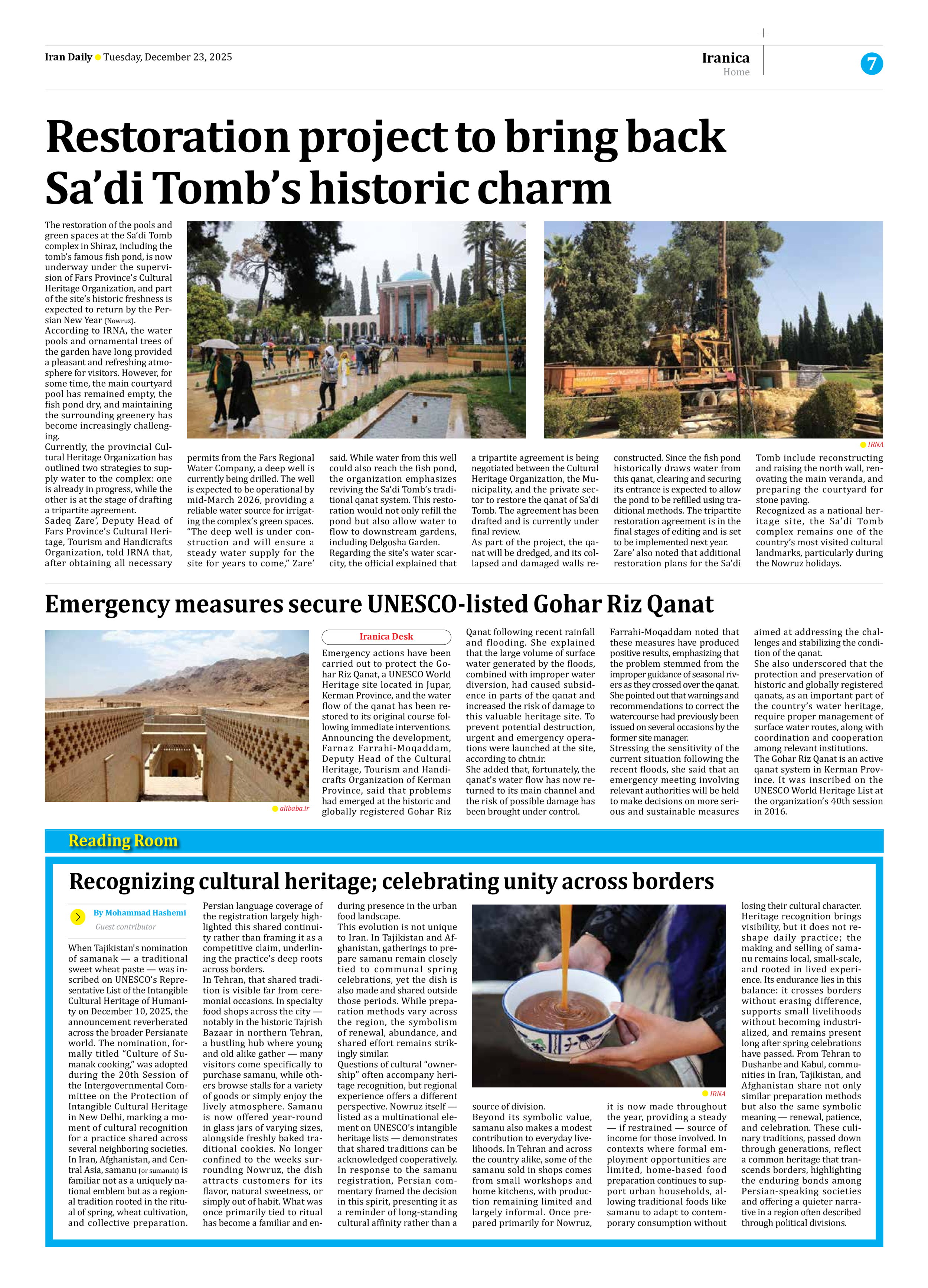
In Tehran, that shared tradition is visible far from ceremonial occasions. In specialty food shops across the city — notably in the historic Tajrish Bazaar in northern Tehran, a bustling hub where young and old alike gather — many visitors come specifically to purchase samanu, while others browse stalls for a variety of goods or simply enjoy the lively atmosphere. Samanu is now offered year-round in glass jars of varying sizes, alongside freshly baked traditional cookies. No longer confined to the weeks surrounding Nowruz, the dish attracts customers for its flavor, natural sweetness, or simply out of habit. What was once primarily tied to ritual has become a familiar and enduring presence in the urban food landscape.
This evolution is not unique to Iran. In Tajikistan and Afghanistan, gatherings to prepare samanu remain closely tied to communal spring celebrations, yet the dish is also made and shared outside those periods. While preparation methods vary across the region, the symbolism of renewal, abundance, and shared effort remains strikingly similar.
Questions of cultural “ownership” often accompany heritage recognition, but regional experience offers a different perspective. Nowruz itself — listed as a multinational element on UNESCO’s intangible heritage lists — demonstrates that shared traditions can be acknowledged cooperatively. In response to the samanu registration, Persian commentary framed the decision in this spirit, presenting it as a reminder of long-standing cultural affinity rather than a source of division.
Beyond its symbolic value, samanu also makes a modest contribution to everyday livelihoods. In Tehran and across the country alike, some of the samanu sold in shops comes from small workshops and home kitchens, with production remaining limited and largely informal. Once prepared primarily for Nowruz, it is now made throughout the year, providing a steady — if restrained — source of income for those involved. In contexts where formal employment opportunities are limited, home-based food preparation continues to support urban households, allowing traditional foods like samanu to adapt to contemporary consumption without losing their cultural character.
Heritage recognition brings visibility, but it does not reshape daily practice; the making and selling of samanu remains local, small-scale, and rooted in lived experience. Its endurance lies in this balance: it crosses borders without erasing difference, supports small livelihoods without becoming industrialized, and remains present long after spring celebrations have passed. From Tehran to Dushanbe and Kabul, communities in Iran, Tajikistan, and Afghanistan share not only similar preparation methods but also the same symbolic meaning — renewal, patience, and celebration. These culinary traditions, passed down through generations, reflect a common heritage that transcends borders, highlighting the enduring bonds among Persian-speaking societies and offering a quieter narrative in a region often described through political divisions.