







Mansour Castle bridges history, nature in Taleqan
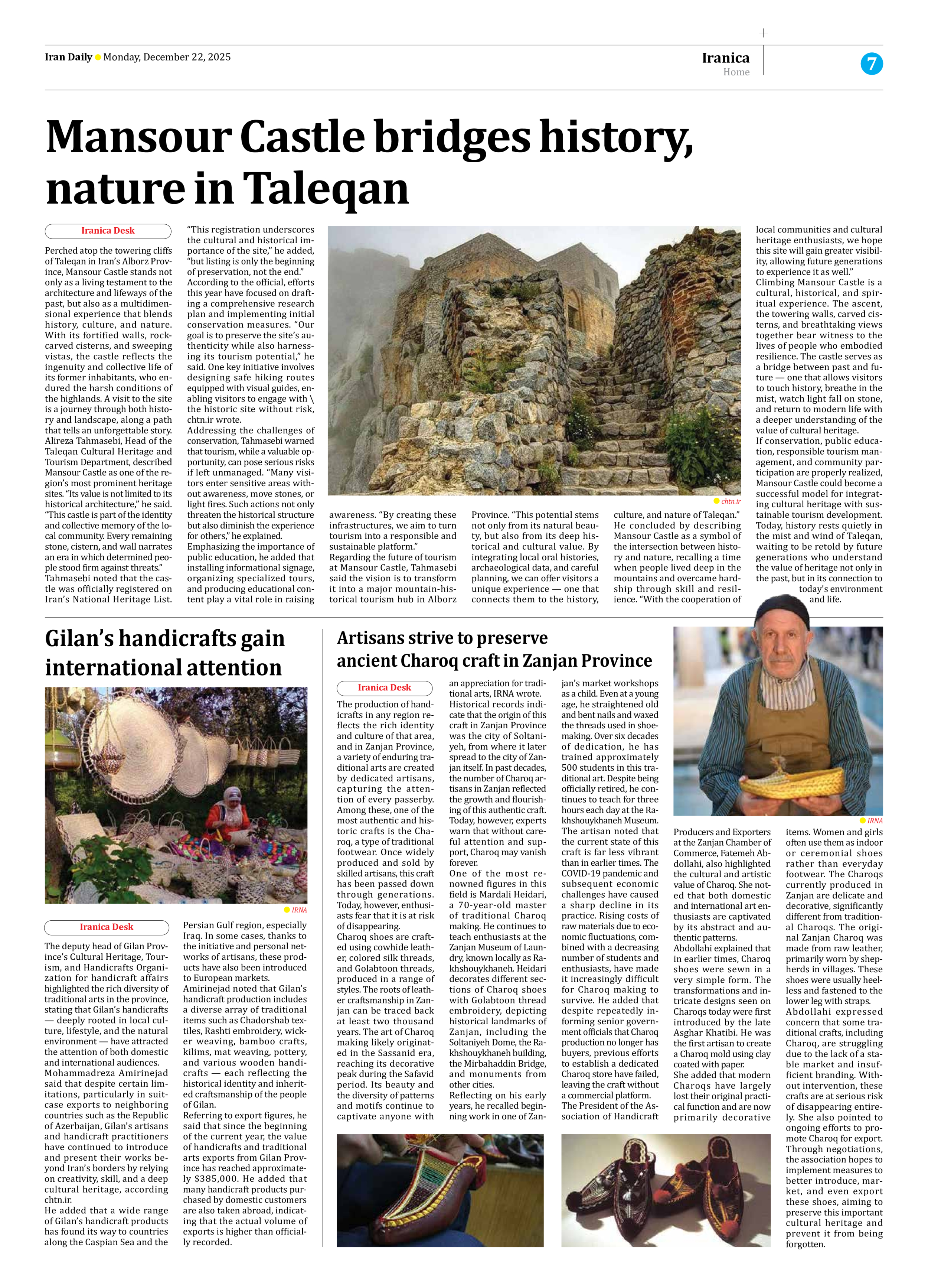
Perched atop the towering cliffs of Taleqan in Iran’s Alborz Province, Mansour Castle stands not only as a living testament to the architecture and lifeways of the past, but also as a multidimensional experience that blends history, culture, and nature. With its fortified walls, rock-carved cisterns, and sweeping vistas, the castle reflects the ingenuity and collective life of its former inhabitants, who endured the harsh conditions of the highlands. A visit to the site is a journey through both history and landscape, along a path that tells an unforgettable story.
Alireza Tahmasebi, Head of the Taleqan Cultural Heritage and Tourism Department, described Mansour Castle as one of the region’s most prominent heritage sites. “Its value is not limited to its historical architecture,” he said. “This castle is part of the identity and collective memory of the local community. Every remaining stone, cistern, and wall narrates an era in which determined people stood firm against threats.”
Tahmasebi noted that the castle was officially registered on Iran’s National Heritage List. “This registration underscores the cultural and historical importance of the site,” he added, “but listing is only the beginning of preservation, not the end.”
According to the official, efforts this year have focused on drafting a comprehensive research plan and implementing initial conservation measures. “Our goal is to preserve the site’s authenticity while also harnessing its tourism potential,” he said. One key initiative involves designing safe hiking routes equipped with visual guides, enabling visitors to engage with \the historic site without risk, chtn.ir wrote.
Addressing the challenges of conservation, Tahmasebi warned that tourism, while a valuable opportunity, can pose serious risks if left unmanaged. “Many visitors enter sensitive areas without awareness, move stones, or light fires. Such actions not only threaten the historical structure but also diminish the experience for others,” he explained.
Emphasizing the importance of public education, he added that installing informational signage, organizing specialized tours, and producing educational content play a vital role in raising awareness. “By creating these infrastructures, we aim to turn tourism into a responsible and sustainable platform.”
Regarding the future of tourism at Mansour Castle, Tahmasebi said the vision is to transform it into a major mountain-historical tourism hub in Alborz Province. “This potential stems not only from its natural beauty, but also from its deep historical and cultural value. By integrating local oral histories, archaeological data, and careful planning, we can offer visitors a unique experience — one that connects them to the history, culture, and nature of Taleqan.”
He concluded by describing Mansour Castle as a symbol of the intersection between history and nature, recalling a time when people lived deep in the mountains and overcame hardship through skill and resilience. “With the cooperation of local communities and cultural heritage enthusiasts, we hope this site will gain greater visibility, allowing future generations to experience it as well.”
Climbing Mansour Castle is a cultural, historical, and spiritual experience. The ascent, the towering walls, carved cisterns, and breathtaking views together bear witness to the lives of people who embodied resilience. The castle serves as a bridge between past and future — one that allows visitors to touch history, breathe in the mist, watch light fall on stone, and return to modern life with a deeper understanding of the value of cultural heritage.
If conservation, public education, responsible tourism management, and community participation are properly realized, Mansour Castle could become a successful model for integrating cultural heritage with sustainable tourism development. Today, history rests quietly in the mist and wind of Taleqan, waiting to be retold by future generations who understand the value of heritage not only in the past, but in its connection to today’s environment and life.