







Exploring Iran’s coastal archaeology along Persian Gulf
Iran’s historical focus on land-based archaeology has left a significant gap in understanding the interactions between ancient civilizations and the sea, despite mounting evidence indicating that the Persian Gulf was one of the most vital cultural and civilizational hubs of the region.
Abbas Moghaddam, a leading Iranian archaeologist, emphasized that extensive research potential still exists for uncovering the maritime past of the Persian Gulf. “Historically, Iranian archaeology has concentrated on the Zagros Mountains and the inland plains, which has resulted in relatively little theoretical attention to maritime areas. Today, this oversight presents a new scientific horizon that demands exploration,” he said.
Referring to studies conducted in the early 20th century, Moghaddam noted that foreign archaeologists often assumed that high sea levels rendered prehistoric coastal settlements in the Persian Gulf largely untraceable. “These views were influential in their time and limited large-scale research planning in the region,” he explained, according to chtn.ir.
He added that most archaeological studies in the Persian Gulf have been limited, sporadic, and largely opportunistic. “To date, no comprehensive, systematic program has been established to examine the extensive coastlines of the Persian Gulf. Nevertheless, even these limited studies have yielded highly valuable findings,” he noted.
Highlighting one of the most significant discoveries in the field, Moghaddam described a city stretching approximately 30 kilometers and directly connected to the sea. “This site contains diverse structural components that can provide critical insights into how humans lived, earned their livelihoods, and interacted with the maritime environment,” he said.
He further emphasized that a precise understanding of maritime-centered settlements can only be achieved through methodical, scientific excavation. “Without such excavations, it is impossible to fully grasp the role of the sea in shaping ancient civilizations, even though existing evidence clearly shows that Iranian societies maintained broad and meaningful maritime connections,” he stated.
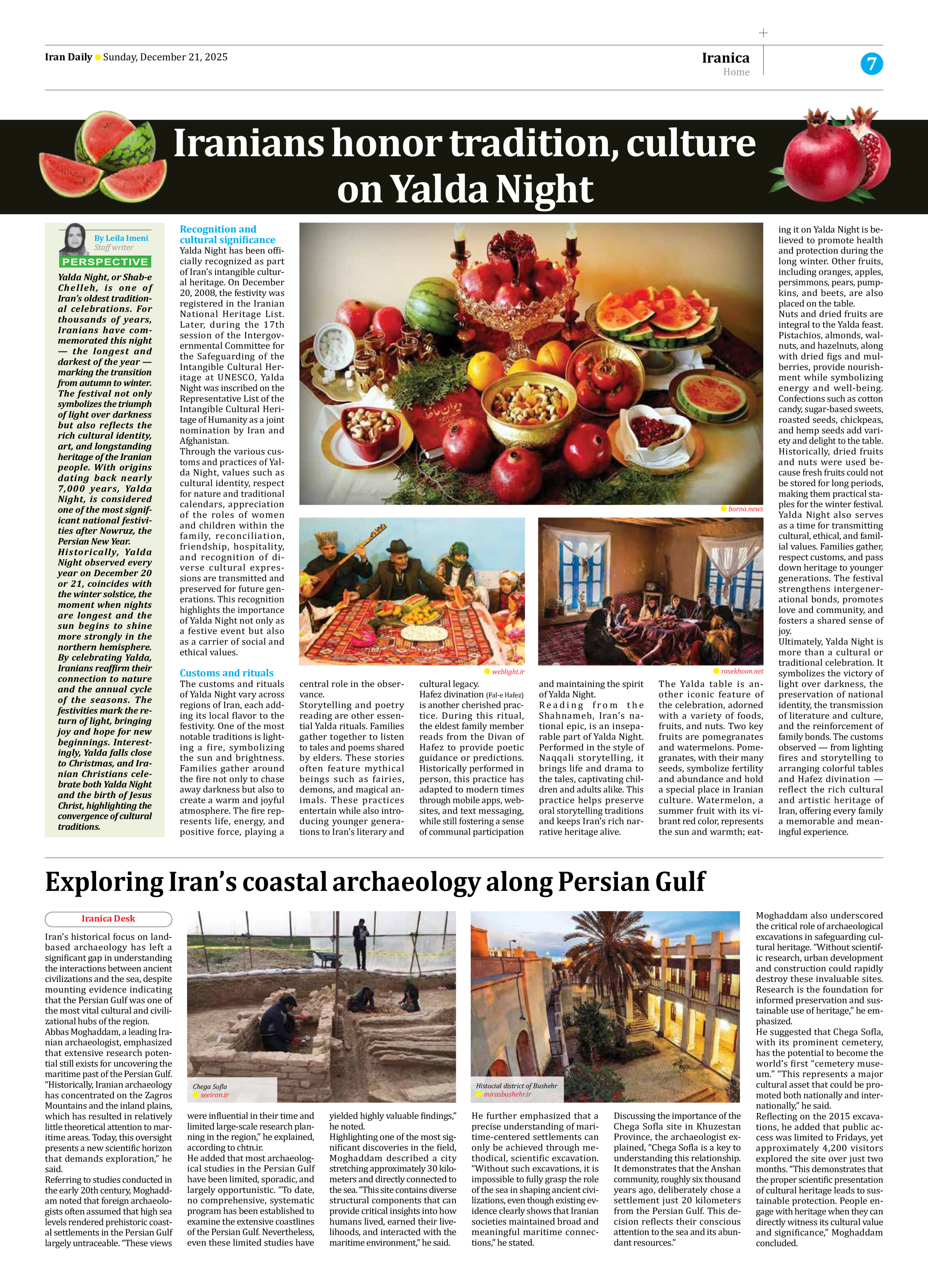
Discussing the importance of the Chega Sofla site in Khuzestan Province, the archaeologist explained, “Chega Sofla is a key to understanding this relationship. It demonstrates that the Anshan community, roughly six thousand years ago, deliberately chose a settlement just 20 kilometers from the Persian Gulf. This decision reflects their conscious attention to the sea and its abundant resources.”
Moghaddam also underscored the critical role of archaeological excavations in safeguarding cultural heritage. “Without scientific research, urban development and construction could rapidly destroy these invaluable sites. Research is the foundation for informed preservation and sustainable use of heritage,” he emphasized.
He suggested that Chega Sofla, with its prominent cemetery, has the potential to become the world’s first “cemetery museum.” “This represents a major cultural asset that could be promoted both nationally and internationally,” he said.
Reflecting on the 2015 excavations, he added that public access was limited to Fridays, yet approximately 4,200 visitors explored the site over just two months. “This demonstrates that the proper scientific presentation of cultural heritage leads to sustainable protection. People engage with heritage when they can directly witness its cultural value and significance,” Moghaddam concluded.