







Iranians honor tradition, culture on Yalda Night
Yalda Night, or Shab-e Chelleh, is one of Iran’s oldest traditional celebrations. For thousands of years, Iranians have commemorated this night — the longest and darkest of the year — marking the transition from autumn to winter. The festival not only symbolizes the triumph of light over darkness but also reflects the rich cultural identity, art, and longstanding heritage of the Iranian people. With origins dating back nearly 7,000 years, Yalda Night, is considered one of the most significant national festivities after Nowruz, the Persian New Year. Historically, Yalda Night observed every year on December 20 or 21, coincides with the winter solstice, the moment when nights are longest and the sun begins to shine more strongly in the northern hemisphere. By celebrating Yalda, Iranians reaffirm their connection to nature and the annual cycle of the seasons. The festivities mark the return of light, bringing joy and hope for new beginnings. Interestingly, Yalda falls close to Christmas, and Iranian Christians celebrate both Yalda Night and the birth of Jesus Christ, highlighting the convergence of cultural traditions.
By Leila Imeni
Staff writer
Recognition and cultural significance
Yalda Night has been officially recognized as part of Iran’s intangible cultural heritage. On December 20, 2008, the festivity was registered in the Iranian National Heritage List. Later, during the 17th session of the Intergovernmental Committee for the Safeguarding of the Intangible Cultural Heritage at UNESCO, Yalda Night was inscribed on the Representative List of the Intangible Cultural Heritage of Humanity as a joint nomination by Iran and Afghanistan.
Through the various customs and practices of Yalda Night, values such as cultural identity, respect for nature and traditional calendars, appreciation of the roles of women and children within the family, reconciliation, friendship, hospitality, and recognition of diverse cultural expressions are transmitted and preserved for future generations. This recognition highlights the importance of Yalda Night not only as a festive event but also as a carrier of social and ethical values.
Customs and rituals
The customs and rituals of Yalda Night vary across regions of Iran, each adding its local flavor to the festivity. One of the most notable traditions is lighting a fire, symbolizing the sun and brightness. Families gather around the fire not only to chase away darkness but also to create a warm and joyful atmosphere. The fire represents life, energy, and positive force, playing a central role in the observance.
Storytelling and poetry reading are other essential Yalda rituals. Families gather together to listen to tales and poems shared by elders. These stories often feature mythical beings such as fairies, demons, and magical animals. These practices entertain while also introducing younger generations to Iran’s literary and cultural legacy.
Hafez divination (Fal-e Hafez) is another cherished practice. During this ritual, the eldest family member reads from the Divan of Hafez to provide poetic guidance or predictions. Historically performed in person, this practice has adapted to modern times through mobile apps, websites, and text messaging, while still fostering a sense of communal participation and maintaining the spirit of Yalda Night.
Reading from the Shahnameh, Iran’s national epic, is an inseparable part of Yalda Night. Performed in the style of Naqqali storytelling, it brings life and drama to the tales, captivating children and adults alike. This practice helps preserve oral storytelling traditions and keeps Iran’s rich narrative heritage alive.
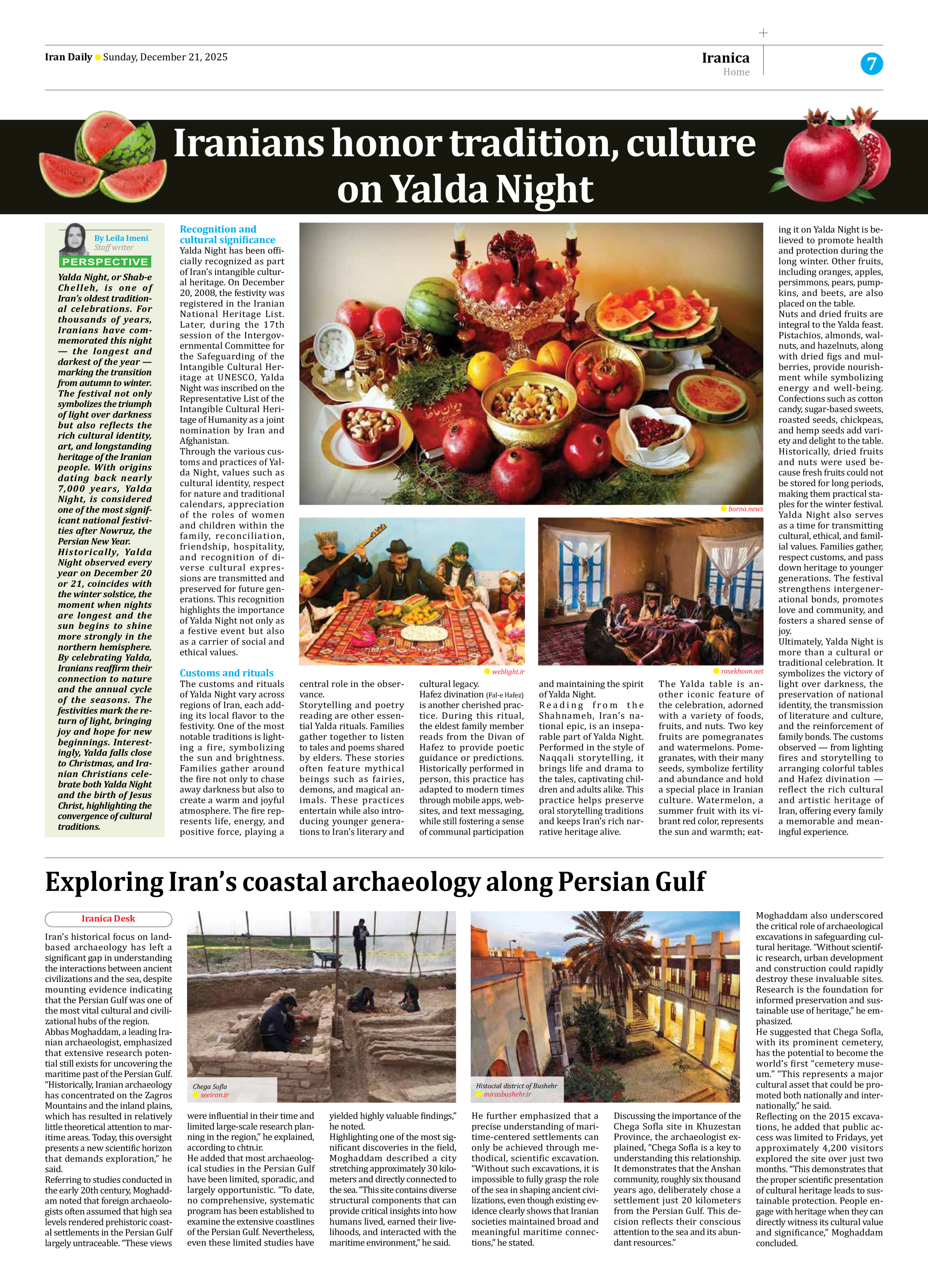
The Yalda table is another iconic feature of the celebration, adorned with a variety of foods, fruits, and nuts. Two key fruits are pomegranates and watermelons. Pomegranates, with their many seeds, symbolize fertility and abundance and hold a special place in Iranian culture. Watermelon, a summer fruit with its vibrant red color, represents the sun and warmth; eating it on Yalda Night is believed to promote health and protection during the long winter. Other fruits, including oranges, apples, persimmons, pears, pumpkins, and beets, are also placed on the table.
Nuts and dried fruits are integral to the Yalda feast. Pistachios, almonds, walnuts, and hazelnuts, along with dried figs and mulberries, provide nourishment while symbolizing energy and well-being. Confections such as cotton candy, sugar-based sweets, roasted seeds, chickpeas, and hemp seeds add variety and delight to the table. Historically, dried fruits and nuts were used because fresh fruits could not be stored for long periods, making them practical staples for the winter festival.
Yalda Night also serves as a time for transmitting cultural, ethical, and familial values. Families gather, respect customs, and pass down heritage to younger generations. The festival strengthens intergenerational bonds, promotes love and community, and fosters a shared sense of joy.
Ultimately, Yalda Night is more than a cultural or traditional celebration. It symbolizes the victory of light over darkness, the preservation of national identity, the transmission of literature and culture, and the reinforcement of family bonds. The customs observed — from lighting fires and storytelling to arranging colorful tables and Hafez divination — reflect the rich cultural and artistic heritage of Iran, offering every family a memorable and meaningful experience.