







Copy in clipboard...
Over 1,000 km of gas pipelines to be launched by mid-March: Minister
Paknejad said key projects included more than 300 km of gas pipelines in western and southwestern regions, 170 km in northern provinces, the start-up of 154 km of pipelines in the south of Sistan-Baluchestan province in the southeast, and more than 50 km in Ardabil province in the northwest among others, IRIB News reported.
He said that expanding transmission infrastructure and strengthening the resilience of the gas network were among the Oil Ministry’s top priorities and were being pursued with determination under its executive plans.
“The development of the gas transmission network plays a crucial role in boosting the country’s energy security and network reliability, particularly during periods of peak demand,” the minister said, adding such measures would make domestic energy supply infrastructure “more robust.”
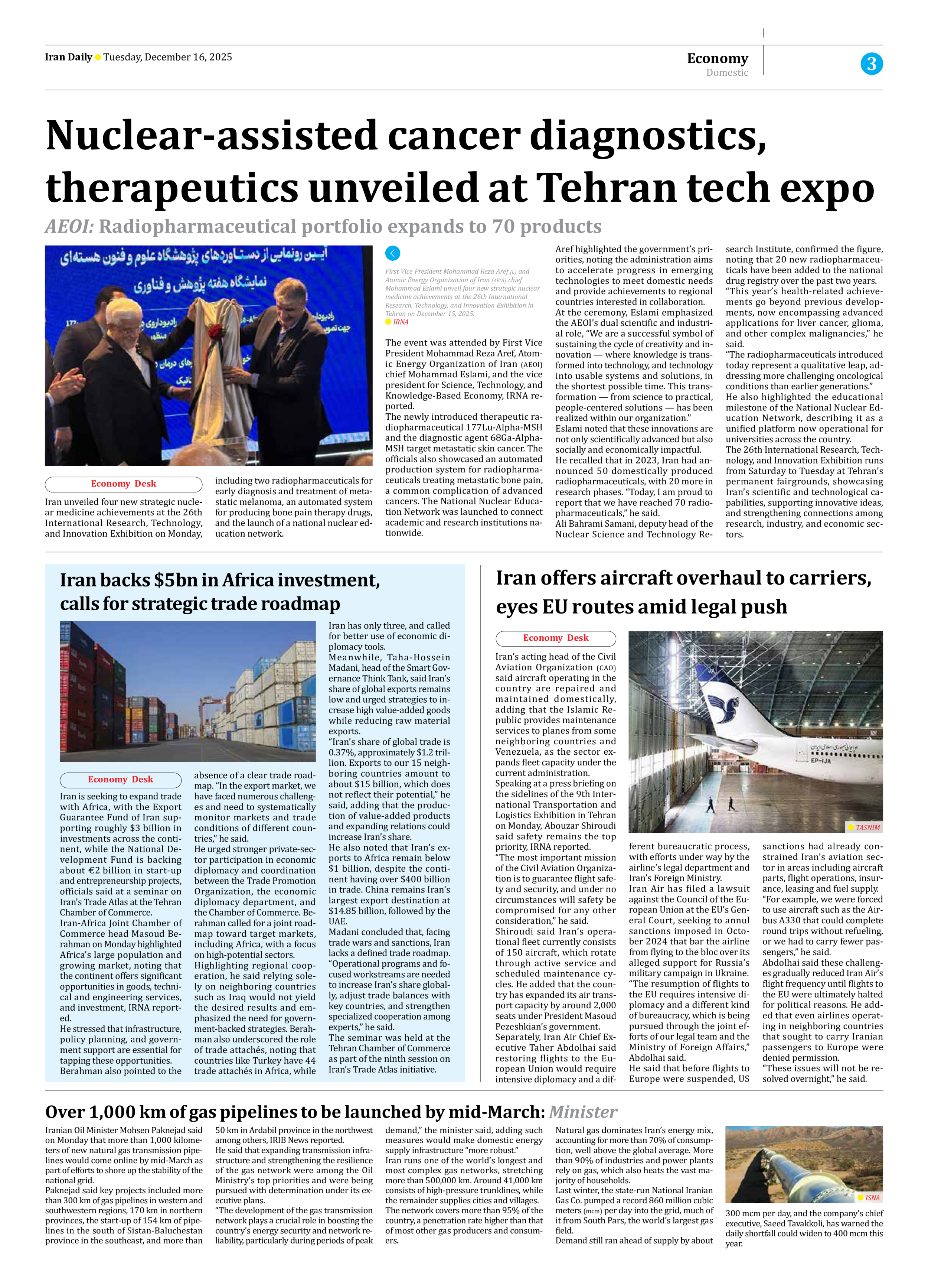
Iran runs one of the world’s longest and most complex gas networks, stretching more than 500,000 km. Around 41,000 km consists of high-pressure trunklines, while the remainder supplies cities and villages.
The network covers more than 95% of the country, a penetration rate higher than that of most other gas producers and consumers.
Natural gas dominates Iran’s energy mix, accounting for more than 70% of consumption, well above the global average. More than 90% of industries and power plants rely on gas, which also heats the vast majority of households.
Last winter, the state-run National Iranian Gas Co. pumped a record 860 million cubic meters (mcm) per day into the grid, much of it from South Pars, the world’s largest gas field.
Demand still ran ahead of supply by about 300 mcm per day, and the company’s chief executive, Saeed Tavakkoli, has warned the daily shortfall could widen to 400 mcm this year.