







Iran offers aircraft overhaul to carriers, eyes EU routes amid legal push
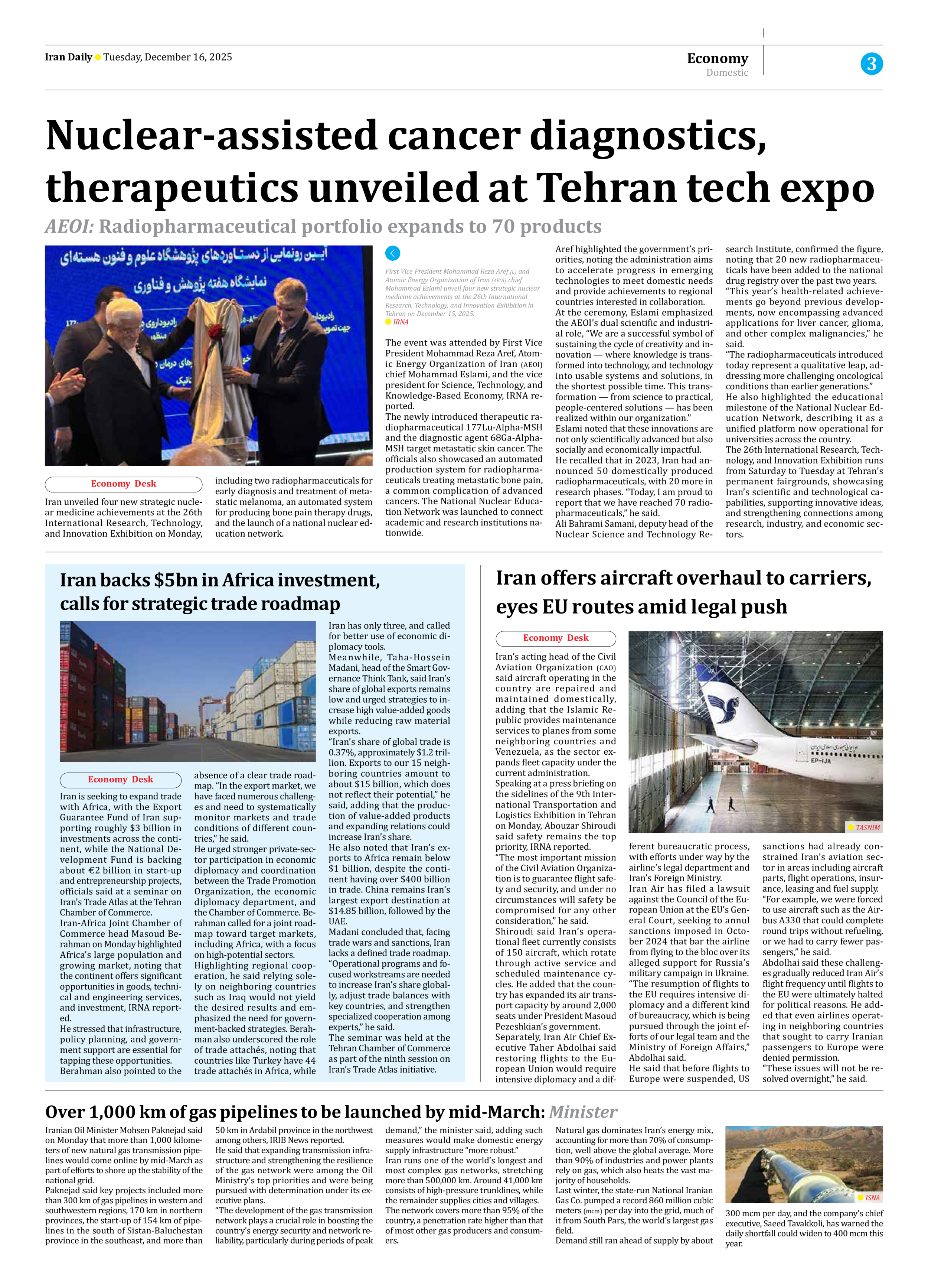
Iran’s acting head of the Civil Aviation Organization (CAO) said aircraft operating in the country are repaired and maintained domestically, adding that the Islamic Republic provides maintenance services to planes from some neighboring countries and Venezuela, as the sector expands fleet capacity under the current administration.
Speaking at a press briefing on the sidelines of the 9th International Transportation and Logistics Exhibition in Tehran on Monday, Abouzar Shiroudi said safety remains the top priority, IRNA reported.
“The most important mission of the Civil Aviation Organization is to guarantee flight safety and security, and under no circumstances will safety be compromised for any other consideration,” he said.
Shiroudi said Iran’s operational fleet currently consists of 150 aircraft, which rotate through active service and scheduled maintenance cycles. He added that the country has expanded its air transport capacity by around 2,000 seats under President Masoud Pezeshkian’s government.
Separately, Iran Air Chief Executive Taher Abdolhai said restoring flights to the European Union would require intensive diplomacy and a different bureaucratic process, with efforts under way by the airline’s legal department and Iran’s Foreign Ministry.
Iran Air has filed a lawsuit against the Council of the European Union at the EU’s General Court, seeking to annul sanctions imposed in October 2024 that bar the airline from flying to the bloc over its alleged support for Russia’s military campaign in Ukraine.
“The resumption of flights to the EU requires intensive diplomacy and a different kind of bureaucracy, which is being pursued through the joint efforts of our legal team and the Ministry of Foreign Affairs,” Abdolhai said.
He said that before flights to Europe were suspended, US sanctions had already constrained Iran’s aviation sector in areas including aircraft parts, flight operations, insurance, leasing and fuel supply.
“For example, we were forced to use aircraft such as the Airbus A330 that could complete round trips without refueling, or we had to carry fewer passengers,” he said.
Abdolhai said these challenges gradually reduced Iran Air’s flight frequency until flights to the EU were ultimately halted for political reasons. He added that even airlines operating in neighboring countries that sought to carry Iranian passengers to Europe were denied permission.
“These issues will not be resolved overnight,” he said.