







Local cuisine reflects deep cultural roots in Boshruyeh
Food, culinary traditions, and related fields such as sweets and desserts are among the most essential cultural assets of any geographical region. This culinary sphere may be exclusive to a specific area or shared with neighboring communities, and today, local and traditional cuisine has become one of the key pillars of tourism.
In a written note published by chtn.ir, Seyyed Amir Soleymani Robati, head of the Bashruyeh’s Department of Cultural Heritage, Tourism and Handicrafts, stated that the diversity of traditional dishes typically reflects the historical depth of a region’s culture. Therefore, when we encounter a wide range of foods and their derivatives in a historic city, the origins of this richness must be sought in centuries of cultural development.
According to Soleymani, generations of people have contributed to the cultural growth of Bashruyeh, South Khorasan Province. Over time — shaped by human experience, interaction with other regions, and cultural influences across fields such as art, economy, science, and architecture — local residents have applied their utmost skill to their culinary practices.
Throughout the centuries, they defined their food culture thoughtfully and creatively by considering seasonal eating patterns, balancing flavors through various condiments, using local desserts to achieve dietary moderation, and even integrating elements of traditional medicine into their cuisine.
Ethnographic studies have identified more than 40 local dishes, over 10 native desserts, and more than 10 traditional sweets in Bashruyeh. Fortunately, with the recent growth of tourism and renewed attention to local culture, many of these foods have returned to dining tables. Documenting their preparation methods has also helped prevent them from falling into obscurity.
What stands out most — and even evokes astonishment — is the remarkable culinary diversity of Bashruyeh in comparison to its population during the later Islamic period. Historical accounts indicate that in the Qajar era, the city had no more than 3,000 to 4,000 inhabitants. Given this modest population, Bashruyeh cannot be compared to major Islamic cities such as Yazd, Isfahan, or Kerman.
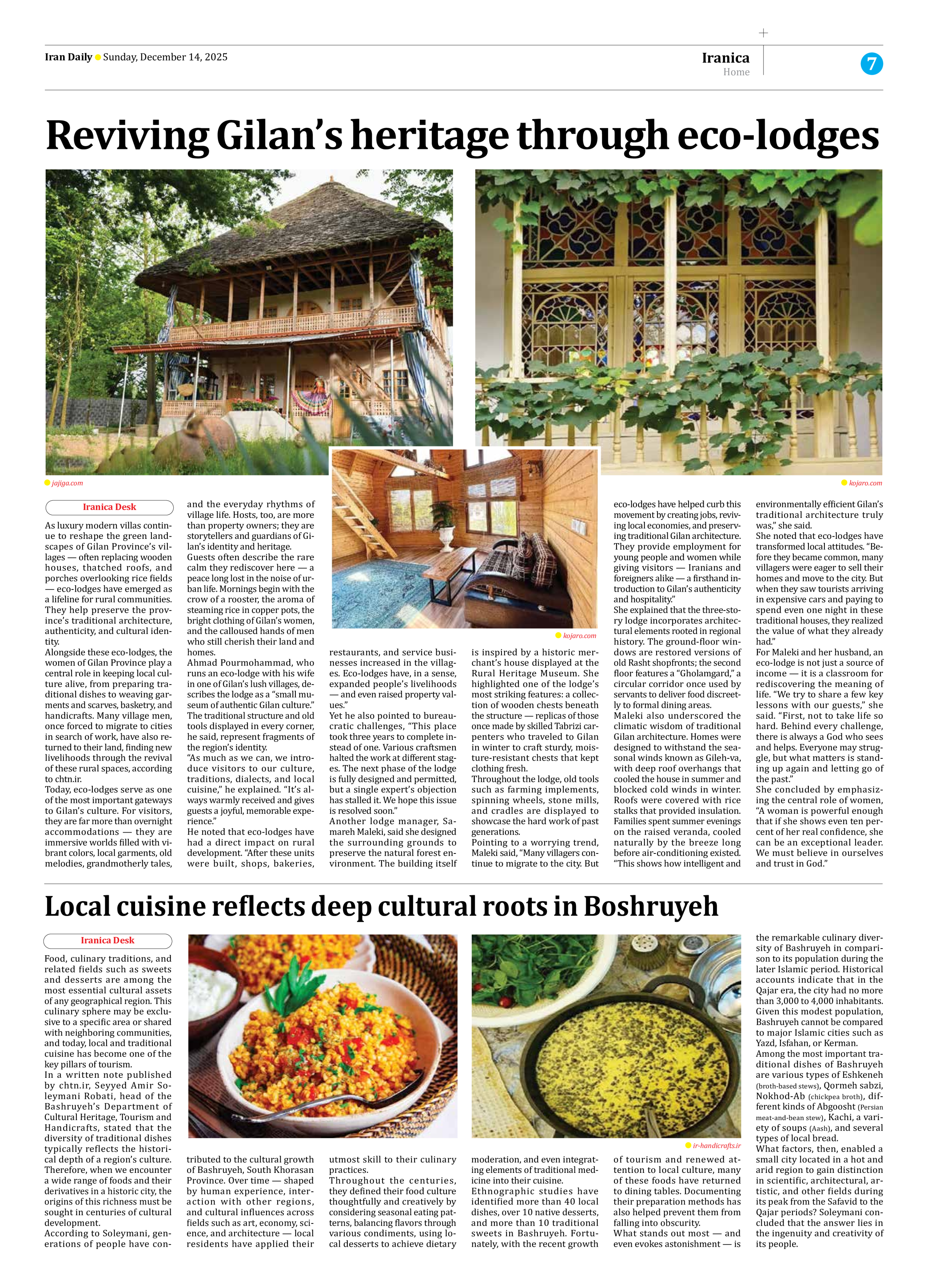
Among the most important traditional dishes of Bashruyeh are various types of Eshkeneh (broth-based stews), Qormeh sabzi, Nokhod-Ab (chickpea broth), different kinds of Abgoosht (Persian meat-and-bean stew), Kachi, a variety of soups (Aash), and several types of local bread.
What factors, then, enabled a small city located in a hot and arid region to gain distinction in scientific, architectural, artistic, and other fields during its peak from the Safavid to the Qajar periods? Soleymani concluded that the answer lies in the ingenuity and creativity of its people.