







Arrival of migratory swans marks promising season for Solduz Wetland
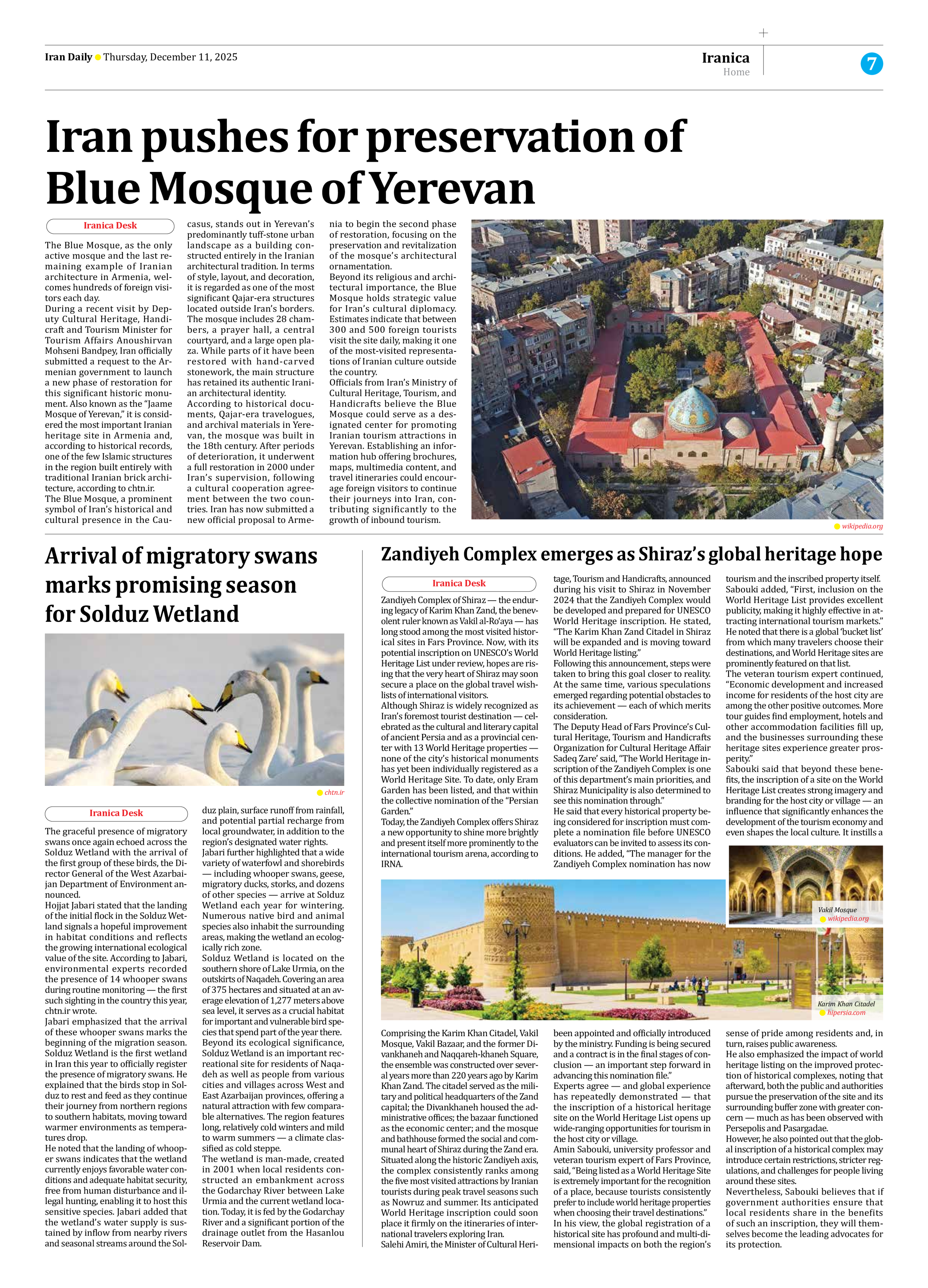
The graceful presence of migratory swans once again echoed across the Solduz Wetland with the arrival of the first group of these birds, the Director General of the West Azarbaijan Department of Environment announced.
Hojjat Jabari stated that the landing of the initial flock in the Solduz Wetland signals a hopeful improvement in habitat conditions and reflects the growing international ecological value of the site. According to Jabari, environmental experts recorded the presence of 14 whooper swans during routine monitoring — the first such sighting in the country this year, chtn.ir wrote.
Jabari emphasized that the arrival of these whooper swans marks the beginning of the migration season. Solduz Wetland is the first wetland in Iran this year to officially register the presence of migratory swans. He explained that the birds stop in Solduz to rest and feed as they continue their journey from northern regions to southern habitats, moving toward warmer environments as temperatures drop.
He noted that the landing of whooper swans indicates that the wetland currently enjoys favorable water conditions and adequate habitat security, free from human disturbance and illegal hunting, enabling it to host this sensitive species. Jabari added that the wetland’s water supply is sustained by inflow from nearby rivers and seasonal streams around the Solduz plain, surface runoff from rainfall, and potential partial recharge from local groundwater, in addition to the region’s designated water rights.
Jabari further highlighted that a wide variety of waterfowl and shorebirds — including whooper swans, geese, migratory ducks, storks, and dozens of other species — arrive at Solduz Wetland each year for wintering. Numerous native bird and animal species also inhabit the surrounding areas, making the wetland an ecologically rich zone.
Solduz Wetland is located on the southern shore of Lake Urmia, on the outskirts of Naqadeh. Covering an area of 375 hectares and situated at an average elevation of 1,277 meters above sea level, it serves as a crucial habitat for important and vulnerable bird species that spend part of the year there.
Beyond its ecological significance, Solduz Wetland is an important recreational site for residents of Naqadeh as well as people from various cities and villages across West and East Azarbaijan provinces, offering a natural attraction with few comparable alternatives. The region features long, relatively cold winters and mild to warm summers — a climate classified as cold steppe.
The wetland is man-made, created in 2001 when local residents constructed an embankment across the Godarchay River between Lake Urmia and the current wetland location. Today, it is fed by the Godarchay River and a significant portion of the drainage outlet from the Hasanlou Reservoir Dam.