





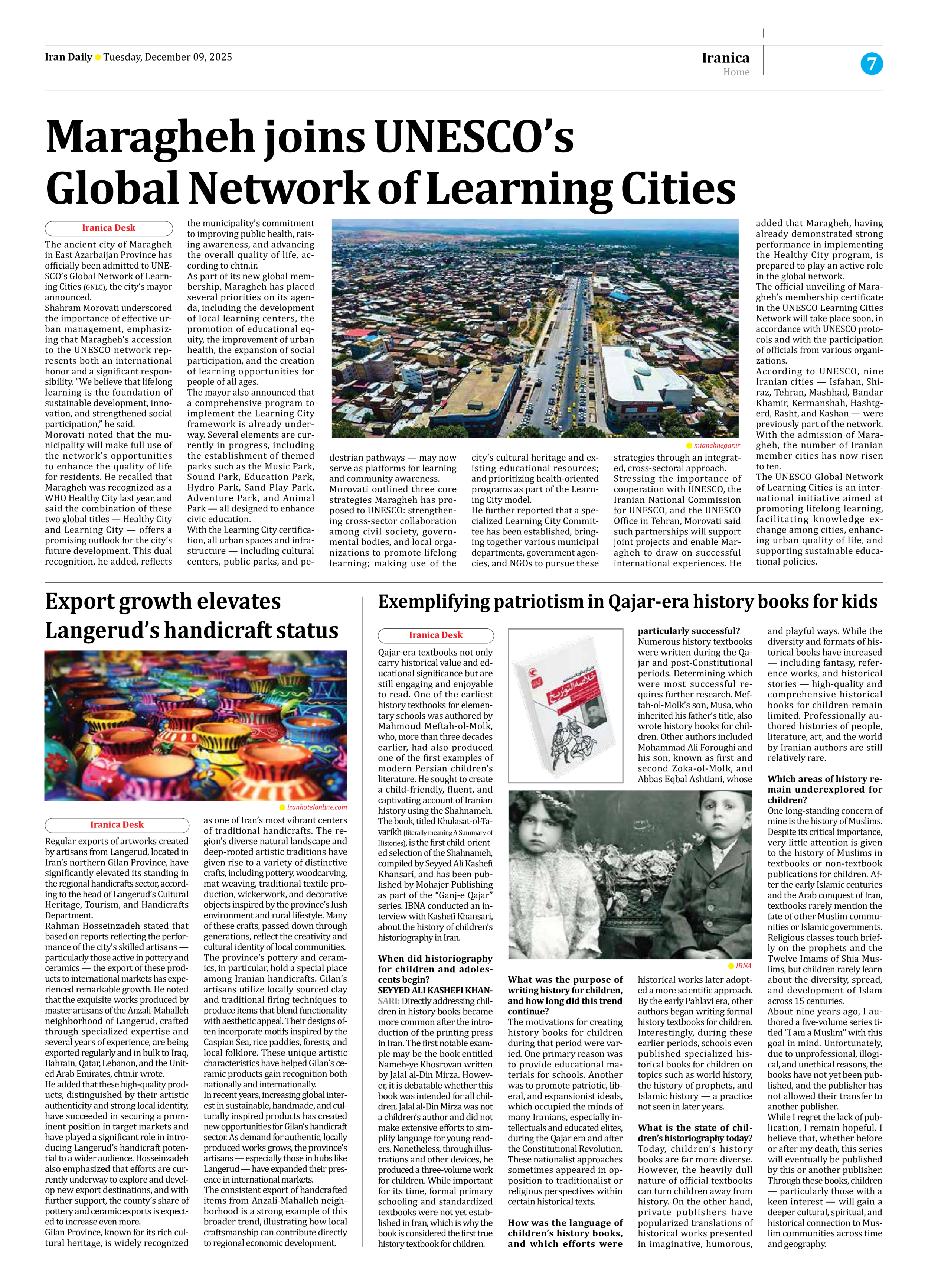


Export growth elevates Langerud’s handicraft status
Regular exports of artworks created by artisans from Langerud, located in Iran’s northern Gilan Province, have significantly elevated its standing in the regional handicrafts sector, according to the head of Langerud’s Cultural Heritage, Tourism, and Handicrafts Department.
Rahman Hosseinzadeh stated that based on reports reflecting the performance of the city’s skilled artisans — particularly those active in pottery and ceramics — the export of these products to international markets has experienced remarkable growth. He noted that the exquisite works produced by master artisans of the Anzali-Mahalleh neighborhood of Langerud, crafted through specialized expertise and several years of experience, are being exported regularly and in bulk to Iraq, Bahrain, Qatar, Lebanon, and the United Arab Emirates, chtn.ir wrote.
He added that these high-quality products, distinguished by their artistic authenticity and strong local identity, have succeeded in securing a prominent position in target markets and have played a significant role in introducing Langerud’s handicraft potential to a wider audience. Hosseinzadeh also emphasized that efforts are currently underway to explore and develop new export destinations, and with further support, the county’s share of pottery and ceramic exports is expected to increase even more.
Gilan Province, known for its rich cultural heritage, is widely recognized as one of Iran’s most vibrant centers of traditional handicrafts. The region’s diverse natural landscape and deep-rooted artistic traditions have given rise to a variety of distinctive crafts, including pottery, woodcarving, mat weaving, traditional textile production, wickerwork, and decorative objects inspired by the province’s lush environment and rural lifestyle. Many of these crafts, passed down through generations, reflect the creativity and cultural identity of local communities.
The province’s pottery and ceramics, in particular, hold a special place among Iranian handicrafts. Gilan’s artisans utilize locally sourced clay and traditional firing techniques to produce items that blend functionality with aesthetic appeal. Their designs often incorporate motifs inspired by the Caspian Sea, rice paddies, forests, and local folklore. These unique artistic characteristics have helped Gilan’s ceramic products gain recognition both nationally and internationally.
In recent years, increasing global interest in sustainable, handmade, and culturally inspired products has created new opportunities for Gilan’s handicraft sector. As demand for authentic, locally produced works grows, the province’s artisans — especially those in hubs like Langerud — have expanded their presence in international markets.
The consistent export of handcrafted items from Anzali-Mahalleh neighborhood is a strong example of this broader trend, illustrating how local craftsmanship can contribute directly to regional economic development.