







Revived Shir Chaharsouq Cistern emerges as cultural landmark again
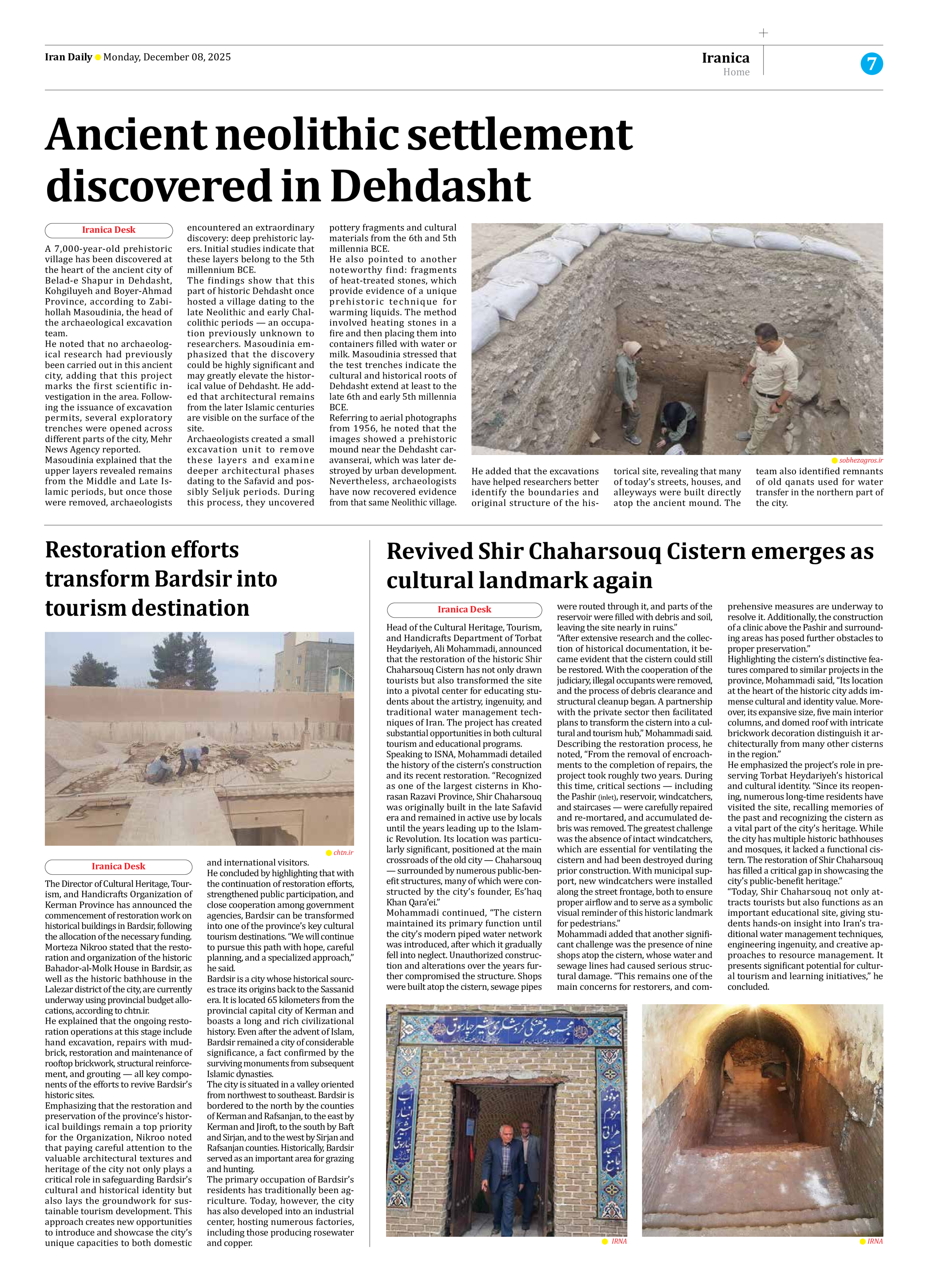
Head of the Cultural Heritage, Tourism, and Handicrafts Department of Torbat Heydariyeh, Ali Mohammadi, announced that the restoration of the historic Shir Chaharsouq Cistern has not only drawn tourists but also transformed the site into a pivotal center for educating students about the artistry, ingenuity, and traditional water management techniques of Iran. The project has created substantial opportunities in both cultural tourism and educational programs.
Speaking to ISNA, Mohammadi detailed the history of the cistern’s construction and its recent restoration. “Recognized as one of the largest cisterns in Khorasan Razavi Province, Shir Chaharsouq was originally built in the late Safavid era and remained in active use by locals until the years leading up to the Islamic Revolution. Its location was particularly significant, positioned at the main crossroads of the old city — Chaharsouq — surrounded by numerous public-benefit structures, many of which were constructed by the city’s founder, Es’haq Khan Qara’ei.”
Mohammadi continued, “The cistern maintained its primary function until the city’s modern piped water network was introduced, after which it gradually fell into neglect. Unauthorized construction and alterations over the years further compromised the structure. Shops were built atop the cistern, sewage pipes were routed through it, and parts of the reservoir were filled with debris and soil, leaving the site nearly in ruins.”
“After extensive research and the collection of historical documentation, it became evident that the cistern could still be restored. With the cooperation of the judiciary, illegal occupants were removed, and the process of debris clearance and structural cleanup began. A partnership with the private sector then facilitated plans to transform the cistern into a cultural and tourism hub,” Mohammadi said.
Describing the restoration process, he noted, “From the removal of encroachments to the completion of repairs, the project took roughly two years. During this time, critical sections — including the Pashir (inlet), reservoir, windcatchers, and staircases — were carefully repaired and re-mortared, and accumulated debris was removed. The greatest challenge was the absence of intact windcatchers, which are essential for ventilating the cistern and had been destroyed during prior construction. With municipal support, new windcatchers were installed along the street frontage, both to ensure proper airflow and to serve as a symbolic visual reminder of this historic landmark for pedestrians.”
Mohammadi added that another significant challenge was the presence of nine shops atop the cistern, whose water and sewage lines had caused serious structural damage. “This remains one of the main concerns for restorers, and comprehensive measures are underway to resolve it. Additionally, the construction of a clinic above the Pashir and surrounding areas has posed further obstacles to proper preservation.”
Highlighting the cistern’s distinctive features compared to similar projects in the province, Mohammadi said, “Its location at the heart of the historic city adds immense cultural and identity value. Moreover, its expansive size, five main interior columns, and domed roof with intricate brickwork decoration distinguish it architecturally from many other cisterns in the region.”
He emphasized the project’s role in preserving Torbat Heydariyeh’s historical and cultural identity. “Since its reopening, numerous long-time residents have visited the site, recalling memories of the past and recognizing the cistern as a vital part of the city’s heritage. While the city has multiple historic bathhouses and mosques, it lacked a functional cistern. The restoration of Shir Chaharsouq has filled a critical gap in showcasing the city’s public-benefit heritage.”
“Today, Shir Chaharsouq not only attracts tourists but also functions as an important educational site, giving students hands-on insight into Iran’s traditional water management techniques, engineering ingenuity, and creative approaches to resource management. It presents significant potential for cultural tourism and learning initiatives,” he concluded.