







Rooieen hamlet keeps Chadorshab weaving alive
The Chadorshab is a richly patterned, colorful textile that once played a central role in the daily lives of rural women — from traditional clothing and bridal trousseaus to household coverings and decorative uses. Its vibrant motifs and lively hues were more than mere decoration; they were a reflection of the creativity, identity, and resilience of generations of women in rural Iran.
In the hamlet of Rooieen, nestled in North Khorasan Province, Chadorshab weaving is not just an art form — it is a way of life. This craft has been passed down from mother to daughter, and daughter to granddaughter, linking generations in a living chain of tradition and cultural memory, chtn.ir wrote.
Wooden looms once stood prominently in the verandas of village homes, where women would spend hours weaving these intricate textiles alongside their daily chores. The rhythmic motion of the loom, combined with the interplay of bright colors and traditional patterns, has long shaped the village’s cultural identity, creating a tangible link between the past and present.
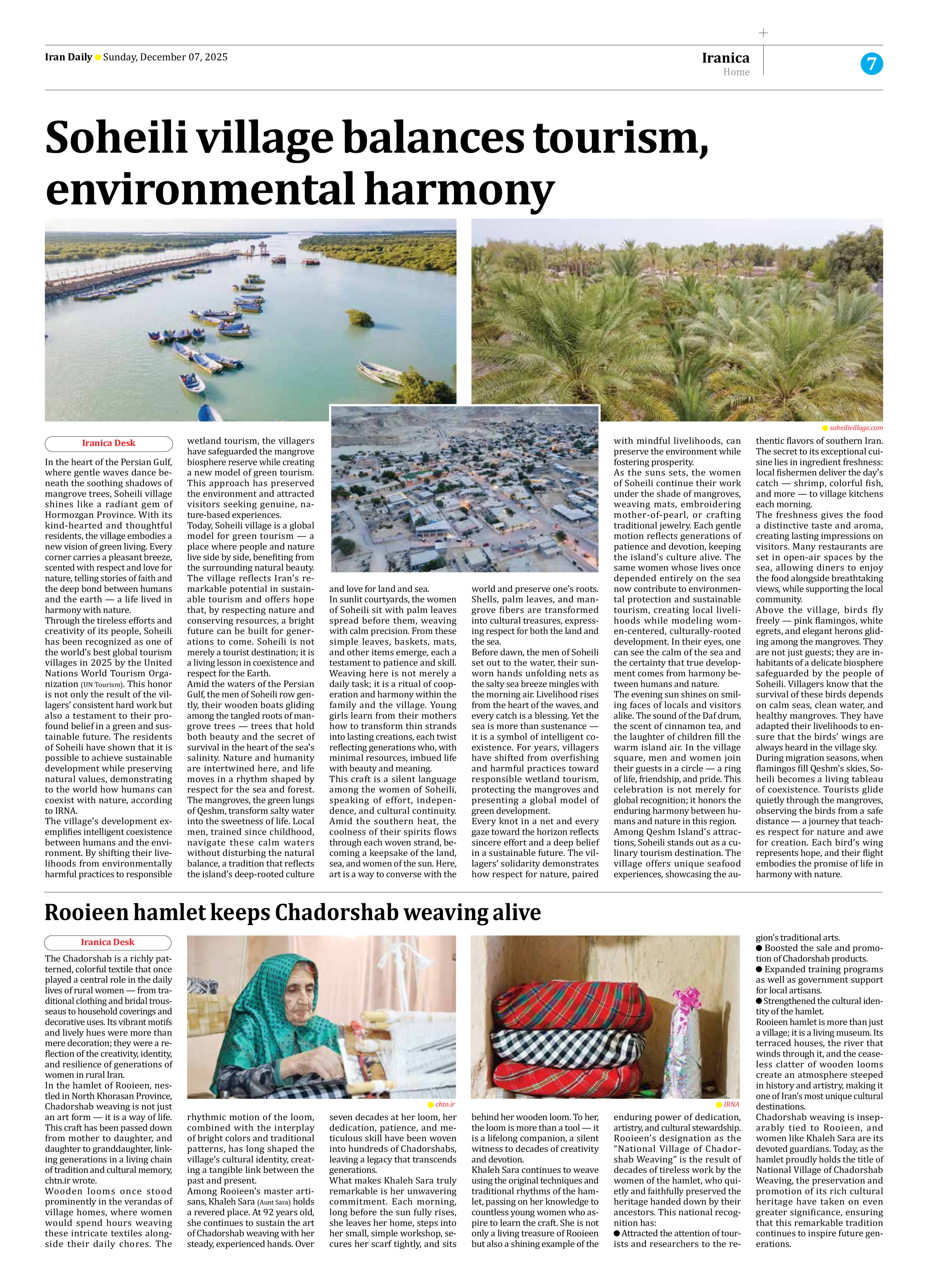
Among Rooieen’s master artisans, Khaleh Sara (Aunt Sara) holds a revered place. At 92 years old, she continues to sustain the art of Chadorshab weaving with her steady, experienced hands. Over seven decades at her loom, her dedication, patience, and meticulous skill have been woven into hundreds of Chadorshabs, leaving a legacy that transcends generations.
What makes Khaleh Sara truly remarkable is her unwavering commitment. Each morning, long before the sun fully rises, she leaves her home, steps into her small, simple workshop, secures her scarf tightly, and sits behind her wooden loom. To her, the loom is more than a tool — it is a lifelong companion, a silent witness to decades of creativity and devotion.
Khaleh Sara continues to weave using the original techniques and traditional rhythms of the hamlet, passing on her knowledge to countless young women who aspire to learn the craft. She is not only a living treasure of Rooieen but also a shining example of the enduring power of dedication, artistry, and cultural stewardship.
Rooieen’s designation as the “National Village of Chadorshab Weaving” is the result of decades of tireless work by the women of the hamlet, who quietly and faithfully preserved the heritage handed down by their ancestors. This national recognition has:
Attracted the attention of tourists and researchers to the region’s traditional arts.
Boosted the sale and promotion of Chadorshab products.
Expanded training programs as well as government support for local artisans.
Strengthened the cultural identity of the hamlet.
Rooieen hamlet is more than just a village; it is a living museum. Its terraced houses, the river that winds through it, and the ceaseless clatter of wooden looms create an atmosphere steeped in history and artistry, making it one of Iran’s most unique cultural destinations.
Chadorshab weaving is inseparably tied to Rooieen, and women like Khaleh Sara are its devoted guardians. Today, as the hamlet proudly holds the title of National Village of Chadorshab Weaving, the preservation and promotion of its rich cultural heritage have taken on even greater significance, ensuring that this remarkable tradition continues to inspire future generations.