







Soheili village balances tourism, environmental harmony
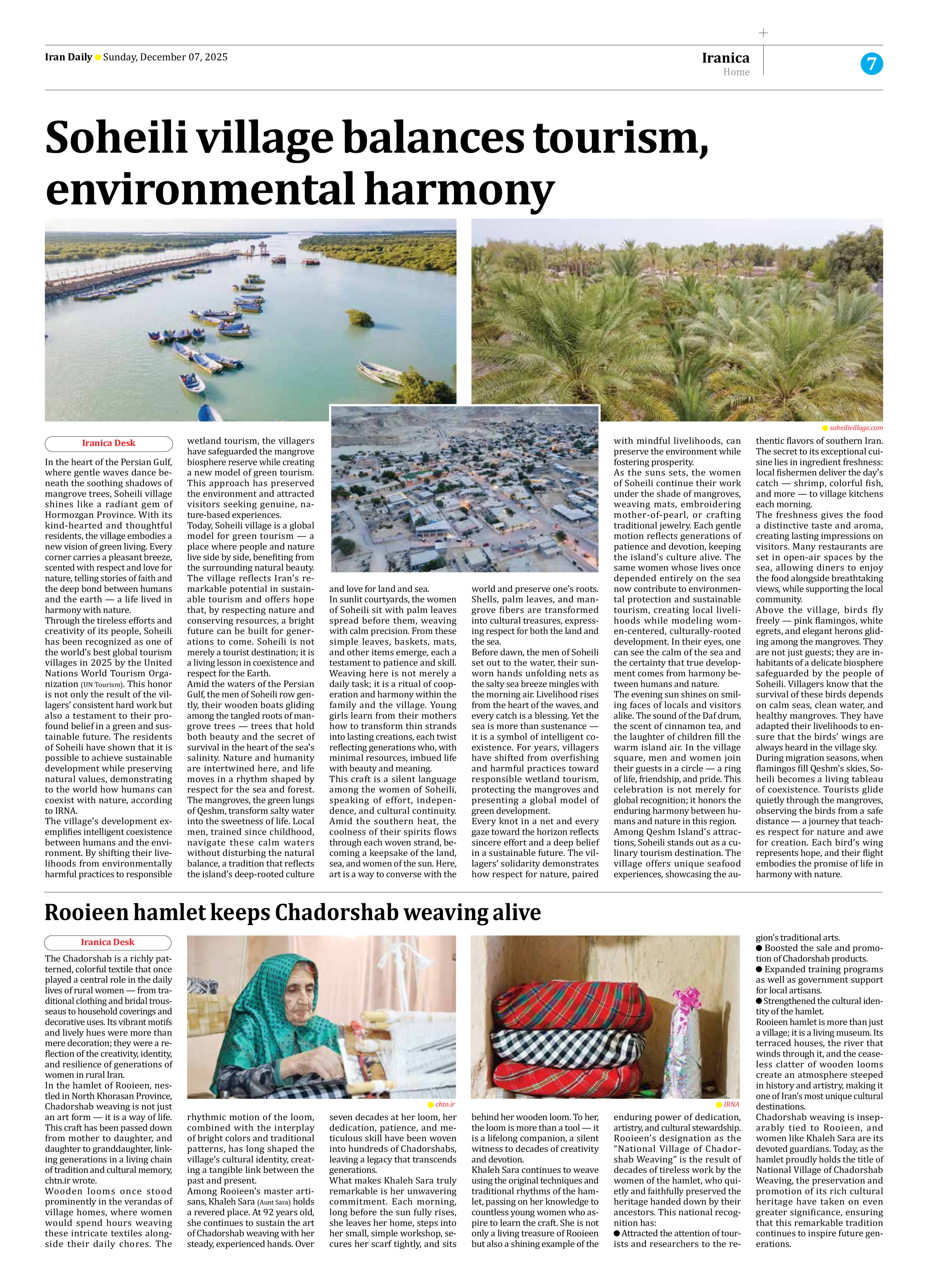
In the heart of the Persian Gulf, where gentle waves dance beneath the soothing shadows of mangrove trees, Soheili village shines like a radiant gem of Hormozgan Province. With its kind-hearted and thoughtful residents, the village embodies a new vision of green living. Every corner carries a pleasant breeze, scented with respect and love for nature, telling stories of faith and the deep bond between humans and the earth — a life lived in harmony with nature.
Through the tireless efforts and creativity of its people, Soheili has been recognized as one of the world’s best global tourism villages in 2025 by the United Nations World Tourism Organization (UN Tourism). This honor is not only the result of the villagers’ consistent hard work but also a testament to their profound belief in a green and sustainable future. The residents of Soheili have shown that it is possible to achieve sustainable development while preserving natural values, demonstrating to the world how humans can coexist with nature, according to IRNA.
The village’s development exemplifies intelligent coexistence between humans and the environment. By shifting their livelihoods from environmentally harmful practices to responsible wetland tourism, the villagers have safeguarded the mangrove biosphere reserve while creating a new model of green tourism. This approach has preserved the environment and attracted visitors seeking genuine, nature-based experiences.
Today, Soheili village is a global model for green tourism — a place where people and nature live side by side, benefiting from the surrounding natural beauty. The village reflects Iran’s remarkable potential in sustainable tourism and offers hope that, by respecting nature and conserving resources, a bright future can be built for generations to come. Soheili is not merely a tourist destination; it is a living lesson in coexistence and respect for the Earth.
Amid the waters of the Persian Gulf, the men of Soheili row gently, their wooden boats gliding among the tangled roots of mangrove trees — trees that hold both beauty and the secret of survival in the heart of the sea’s salinity. Nature and humanity are intertwined here, and life moves in a rhythm shaped by respect for the sea and forest. The mangroves, the green lungs of Qeshm, transform salty water into the sweetness of life. Local men, trained since childhood, navigate these calm waters without disturbing the natural balance, a tradition that reflects the island’s deep-rooted culture and love for land and sea.
In sunlit courtyards, the women of Soheili sit with palm leaves spread before them, weaving with calm precision. From these simple leaves, baskets, mats, and other items emerge, each a testament to patience and skill. Weaving here is not merely a daily task; it is a ritual of cooperation and harmony within the family and the village. Young girls learn from their mothers how to transform thin strands into lasting creations, each twist reflecting generations who, with minimal resources, imbued life with beauty and meaning.
This craft is a silent language among the women of Soheili, speaking of effort, independence, and cultural continuity. Amid the southern heat, the coolness of their spirits flows through each woven strand, becoming a keepsake of the land, sea, and women of the sun. Here, art is a way to converse with the world and preserve one’s roots. Shells, palm leaves, and mangrove fibers are transformed into cultural treasures, expressing respect for both the land and the sea.
Before dawn, the men of Soheili set out to the water, their sun-worn hands unfolding nets as the salty sea breeze mingles with the morning air. Livelihood rises from the heart of the waves, and every catch is a blessing. Yet the sea is more than sustenance — it is a symbol of intelligent coexistence. For years, villagers have shifted from overfishing and harmful practices toward responsible wetland tourism, protecting the mangroves and presenting a global model of green development.
Every knot in a net and every gaze toward the horizon reflects sincere effort and a deep belief in a sustainable future. The villagers’ solidarity demonstrates how respect for nature, paired with mindful livelihoods, can preserve the environment while fostering prosperity.
As the suns sets, the women of Soheili continue their work under the shade of mangroves, weaving mats, embroidering mother-of-pearl, or crafting traditional jewelry. Each gentle motion reflects generations of patience and devotion, keeping the island’s culture alive. The same women whose lives once depended entirely on the sea now contribute to environmental protection and sustainable tourism, creating local livelihoods while modeling women-centered, culturally-rooted development. In their eyes, one can see the calm of the sea and the certainty that true development comes from harmony between humans and nature.
The evening sun shines on smiling faces of locals and visitors alike. The sound of the Daf drum, the scent of cinnamon tea, and the laughter of children fill the warm island air. In the village square, men and women join their guests in a circle — a ring of life, friendship, and pride. This celebration is not merely for global recognition; it honors the enduring harmony between humans and nature in this region.
Among Qeshm Island’s attractions, Soheili stands out as a culinary tourism destination. The village offers unique seafood experiences, showcasing the authentic flavors of southern Iran. The secret to its exceptional cuisine lies in ingredient freshness: local fishermen deliver the day’s catch — shrimp, colorful fish, and more — to village kitchens each morning.
The freshness gives the food a distinctive taste and aroma, creating lasting impressions on visitors. Many restaurants are set in open-air spaces by the sea, allowing diners to enjoy the food alongside breathtaking views, while supporting the local community.
Above the village, birds fly freely — pink flamingos, white egrets, and elegant herons gliding among the mangroves. They are not just guests; they are inhabitants of a delicate biosphere safeguarded by the people of Soheili. Villagers know that the survival of these birds depends on calm seas, clean water, and healthy mangroves. They have adapted their livelihoods to ensure that the birds’ wings are always heard in the village sky.
During migration seasons, when flamingos fill Qeshm’s skies, Soheili becomes a living tableau of coexistence. Tourists glide quietly through the mangroves, observing the birds from a safe distance — a journey that teaches respect for nature and awe for creation. Each bird’s wing represents hope, and their flight embodies the promise of life in harmony with nature.