





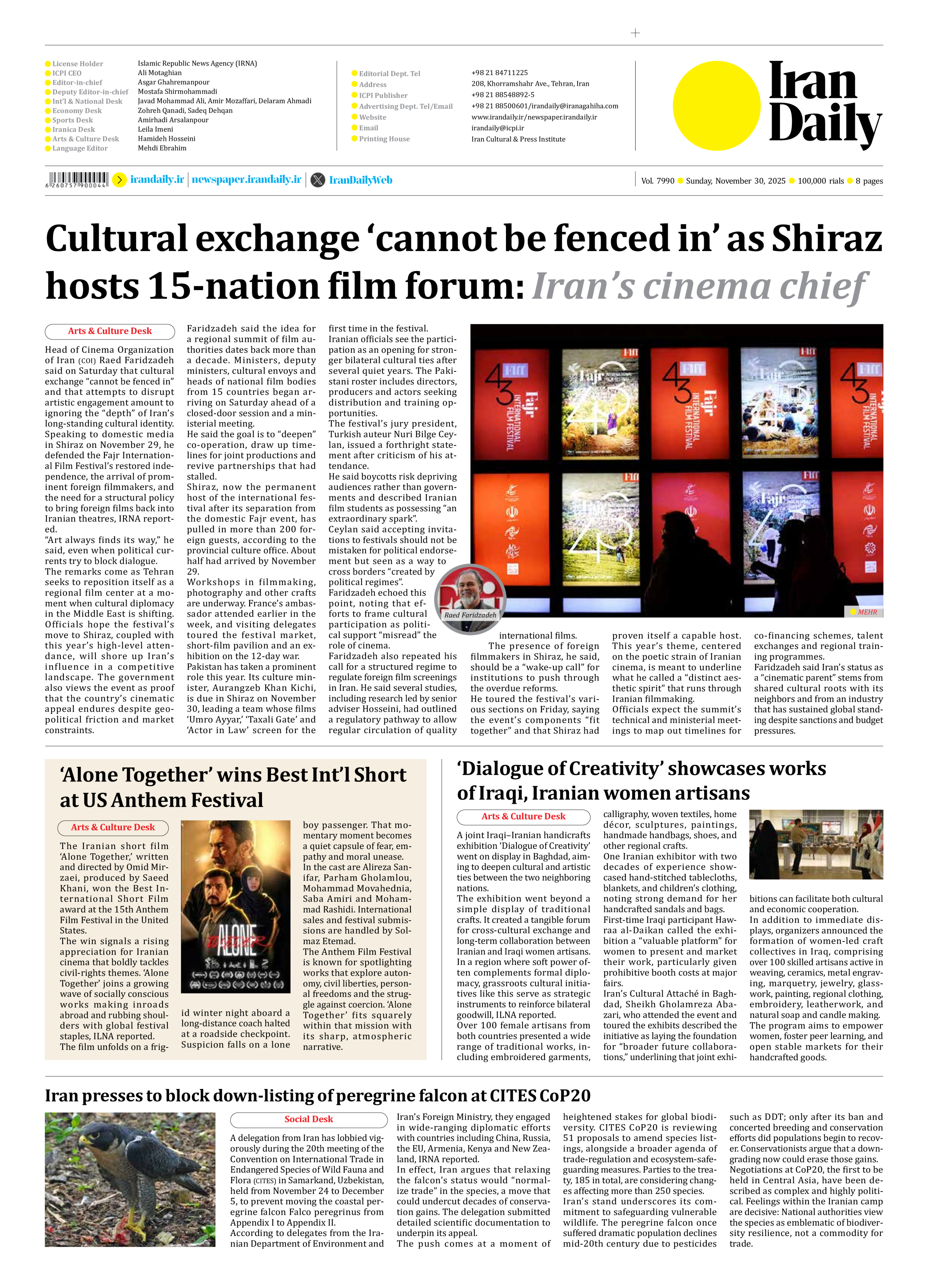


Iran presses to block down‑listing of peregrine falcon at CITES CoP20
A delegation from Iran has lobbied vigorously during the 20th meeting of the Convention on International Trade in Endangered Species of Wild Fauna and Flora (CITES) in Samarkand, Uzbekistan, held from November 24 to December 5, to prevent moving the coastal peregrine falcon Falco peregrinus from Appendix I to Appendix II.
According to delegates from the Iranian Department of Environment and Iran’s Foreign Ministry, they engaged in wide‑ranging diplomatic efforts with countries including China, Russia, the EU, Armenia, Kenya and New Zealand, IRNA reported.
In effect, Iran argues that relaxing the falcon’s status would “normalize trade” in the species, a move that could undercut decades of conservation gains. The delegation submitted detailed scientific documentation to underpin its appeal.
The push comes at a moment of heightened stakes for global biodiversity. CITES CoP20 is reviewing 51 proposals to amend species listings, alongside a broader agenda of trade‑regulation and ecosystem‑safeguarding measures. Parties to the treaty, 185 in total, are considering changes affecting more than 250 species.
Iran’s stand underscores its commitment to safeguarding vulnerable wildlife. The peregrine falcon once suffered dramatic population declines mid‑20th century due to pesticides such as DDT; only after its ban and concerted breeding and conservation efforts did populations begin to recover. Conservationists argue that a downgrading now could erase those gains.
Negotiations at CoP20, the first to be held in Central Asia, have been described as complex and highly political. Feelings within the Iranian camp are decisive: National authorities view the species as emblematic of biodiversity resilience, not a commodity for trade.