







Copy in clipboard...
Toxic air continues, shutting schools, offices
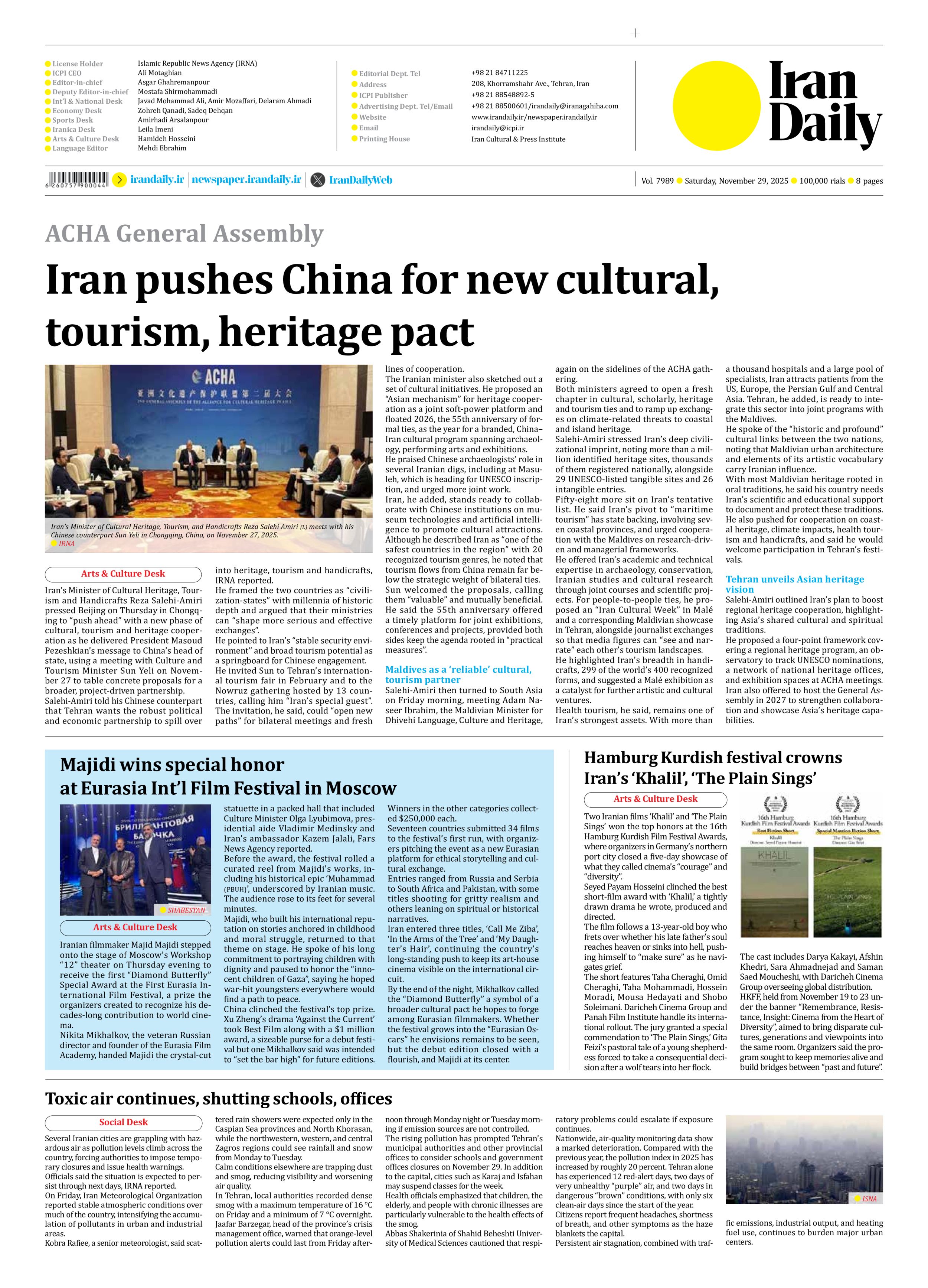
Several Iranian cities are grappling with hazardous air as pollution levels climb across the country, forcing authorities to impose temporary closures and issue health warnings.
Officials said the situation is expected to persist through next days, IRNA reported.
On Friday, Iran Meteorological Organization reported stable atmospheric conditions over much of the country, intensifying the accumulation of pollutants in urban and industrial areas.
Kobra Rafiee, a senior meteorologist, said scattered rain showers were expected only in the Caspian Sea provinces and North Khorasan, while the northwestern, western, and central Zagros regions could see rainfall and snow from Monday to Tuesday.
Calm conditions elsewhere are trapping dust and smog, reducing visibility and worsening air quality.
In Tehran, local authorities recorded dense smog with a maximum temperature of 16 °C on Friday and a minimum of 7 °C overnight. Jaafar Barzegar, head of the province’s crisis management office, warned that orange‑level pollution alerts could last from Friday afternoon through Monday night or Tuesday morning if emission sources are not controlled.
The rising pollution has prompted Tehran’s municipal authorities and other provincial offices to consider schools and government offices closures on November 29. In addition to the capital, cities such as Karaj and Isfahan may suspend classes for the week.
Health officials emphasized that children, the elderly, and people with chronic illnesses are particularly vulnerable to the health effects of the smog.
Abbas Shakerinia of Shahid Beheshti University of Medical Sciences cautioned that respiratory problems could escalate if exposure continues.
Nationwide, air-quality monitoring data show a marked deterioration. Compared with the previous year, the pollution index in 2025 has increased by roughly 20 percent. Tehran alone has experienced 12 red‑alert days, two days of very unhealthy “purple” air, and two days in dangerous “brown” conditions, with only six clean-air days since the start of the year.
Citizens report frequent headaches, shortness of breath, and other symptoms as the haze blankets the capital.
Persistent air stagnation, combined with traffic emissions, industrial output, and heating fuel use, continues to burden major urban centers.