







Ilam’s jewelry reflects centuries of artistic tradition
The jewelry of ancient Iran has captivated the hearts and attention of people worldwide. Experts regard Iranian jewelry as unique exemplars of creativity that highlight the extraordinary craftsmanship of their makers. Ancient Iranian tribes inhabiting the Persian plateau around 200 BCE began crafting jewelry using seeds and colorful beads, reflecting their deep interest in decoration and adornment. Jewelry making saw significant advancements during the Achaemenid dynasty, with gold pieces becoming common. Armlets, bracelets, and rings emerged as popular adornments during that era.
For centuries, the craft of traditional jewelry making has been one of the most celebrated handicrafts in Ilam and its surrounding cities. Like many other regions, Ilam’s women have always valued their beauty and appearance, often expressing their family and social status through distinctive choices of makeup and jewelry. Historically, women wore makeup and jewelry designed to enhance their natural beauty and emphasize their features. They adorned their ears, noses, necks, hands, and feet with various rings and captivating earrings. Additionally, some women occasionally bore tattoos on parts of their faces as part of their traditional adornment practices.
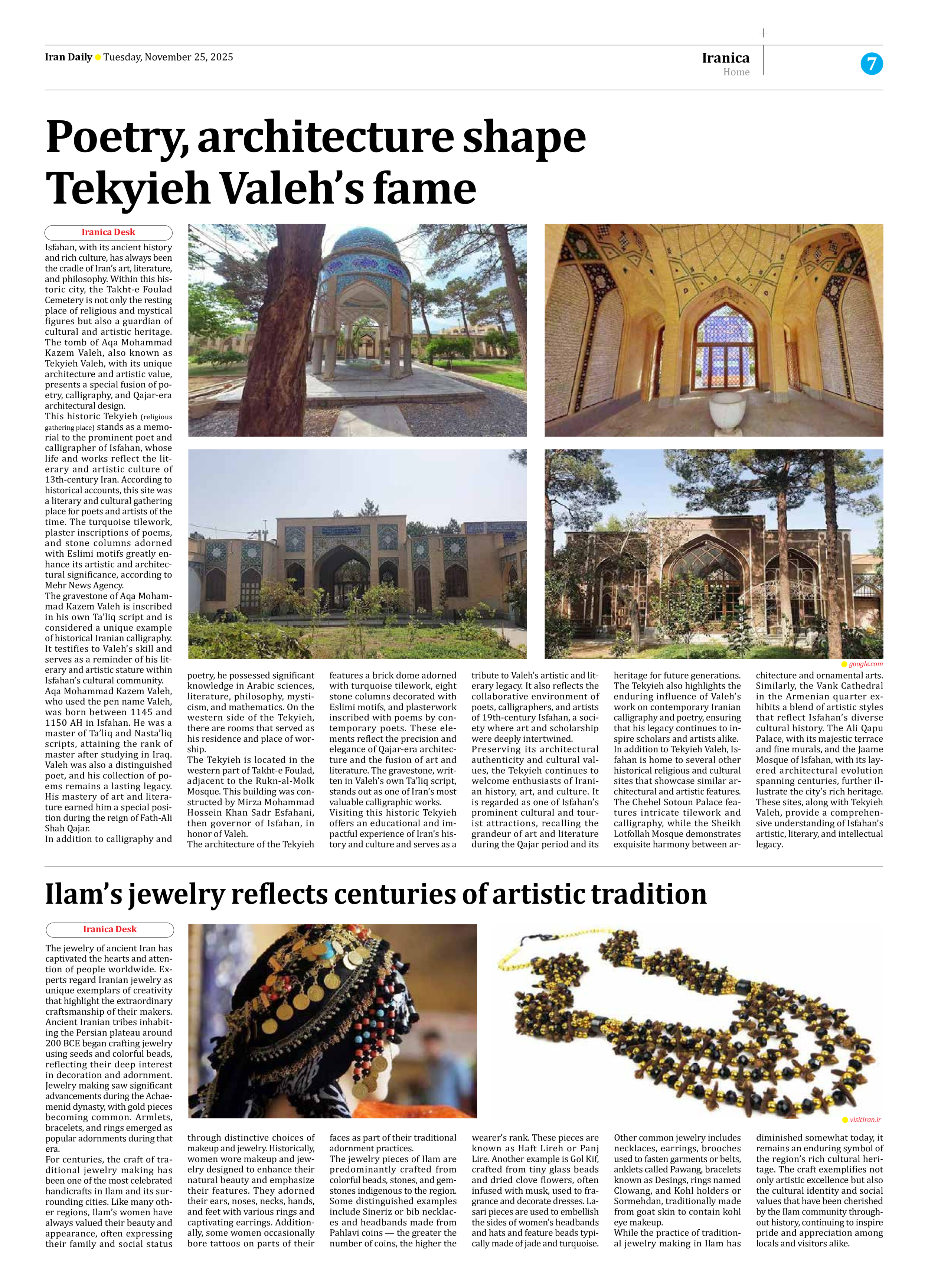
The jewelry pieces of Ilam are predominantly crafted from colorful beads, stones, and gemstones indigenous to the region. Some distinguished examples include Sineriz or bib necklaces and headbands made from Pahlavi coins — the greater the number of coins, the higher the wearer’s rank. These pieces are known as Haft Lireh or Panj Lire. Another example is Gol Kif, crafted from tiny glass beads and dried clove flowers, often infused with musk, used to fragrance and decorate dresses. Lasari pieces are used to embellish the sides of women’s headbands and hats and feature beads typically made of jade and turquoise. Other common jewelry includes necklaces, earrings, brooches used to fasten garments or belts, anklets called Pawang, bracelets known as Desings, rings named Clowang, and Kohl holders or Sormehdan, traditionally made from goat skin to contain kohl eye makeup.
While the practice of traditional jewelry making in Ilam has diminished somewhat today, it remains an enduring symbol of the region’s rich cultural heritage. The craft exemplifies not only artistic excellence but also the cultural identity and social values that have been cherished by the Ilam community throughout history, continuing to inspire pride and appreciation among locals and visitors alike.