





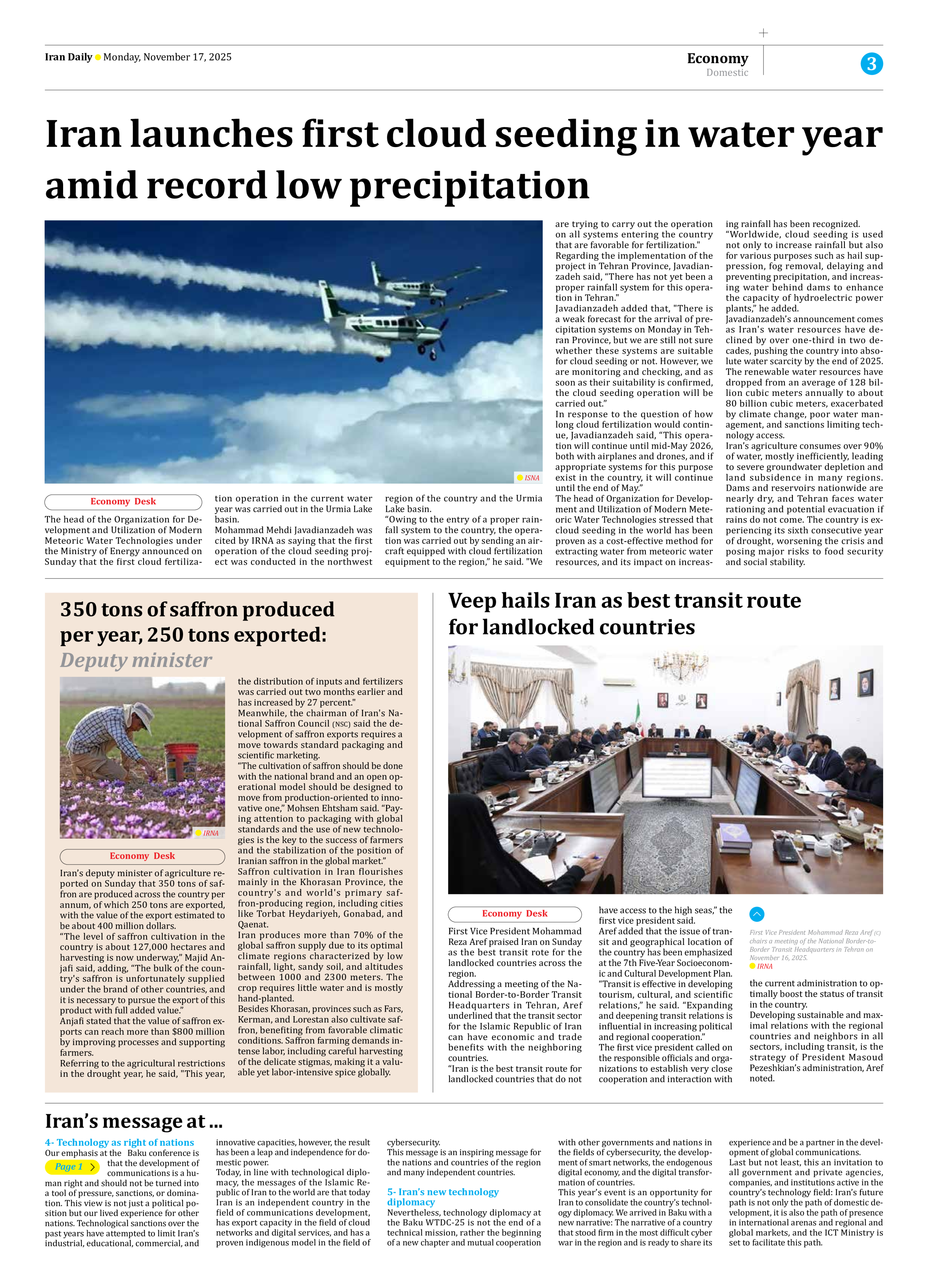


350 tons of saffron produced per year, 250 tons exported: Deputy minister
Iran’s deputy minister of agriculture reported on Sunday that 350 tons of saffron are produced across the country per annum, of which 250 tons are exported, with the value of the export estimated to be about 400 million dollars.
“The level of saffron cultivation in the country is about 127,000 hectares and harvesting is now underway,” Majid Anjafi said, adding, “The bulk of the country's saffron is unfortunately supplied under the brand of other countries, and it is necessary to pursue the export of this product with full added value.”
Anjafi stated that the value of saffron exports can reach more than $800 million by improving processes and supporting farmers.
Referring to the agricultural restrictions in the drought year, he said, "This year, the distribution of inputs and fertilizers was carried out two months earlier and has increased by 27 percent."
Meanwhile, the chairman of Iran's National Saffron Council (NSC) said the development of saffron exports requires a move towards standard packaging and scientific marketing.
“The cultivation of saffron should be done with the national brand and an open operational model should be designed to move from production-oriented to innovative one,” Mohsen Ehtsham said. “Paying attention to packaging with global standards and the use of new technologies is the key to the success of farmers and the stabilization of the position of Iranian saffron in the global market.”
Saffron cultivation in Iran flourishes mainly in the Khorasan Province, the country's and world's primary saffron-producing region, including cities like Torbat Heydariyeh, Gonabad, and Qaenat.
Iran produces more than 70% of the global saffron supply due to its optimal climate regions characterized by low rainfall, light, sandy soil, and altitudes between 1000 and 2300 meters. The crop requires little water and is mostly hand-planted.
Besides Khorasan, provinces such as Fars, Kerman, and Lorestan also cultivate saffron, benefiting from favorable climatic conditions. Saffron farming demands intense labor, including careful harvesting of the delicate stigmas, making it a valuable yet labor-intensive spice globally.