







Nomadism, pastoralism are dynamic parts of West and Central Asia’s cultural heritage
By Fumiko Ohinata
UNESCO Secretary-General for Intangible Cultural Heritage
Cultural heritage related to nomadism and pastoralism — whether expressed through skills, music, or handicrafts — represents a rich and dynamic part of the cultural heritage of West and Central Asia, a region that has long served as a crossroads of civilizations.
On behalf of the United Nations Educational, Scientific and Cultural Organization (UNESCO), it is a pleasure and an honor to participate in the expert meeting entitled “Developing Entrepreneurial Skills of Women Bearers of Intangible Cultural Heritage in Settled Nomadic Communities”, organized in the context of sustainable livelihoods and economic empowerment.
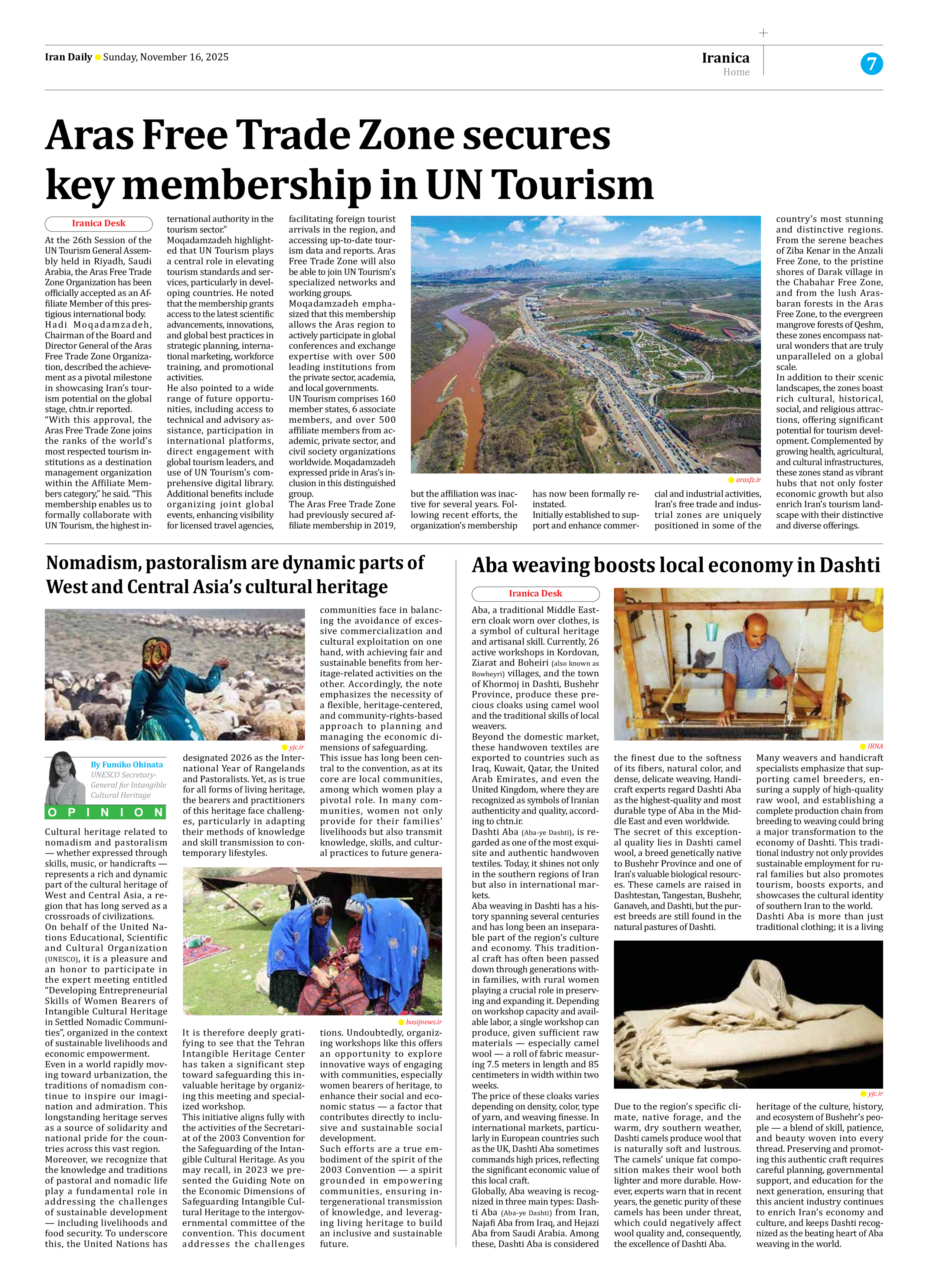
Even in a world rapidly moving toward urbanization, the traditions of nomadism continue to inspire our imagination and admiration. This longstanding heritage serves as a source of solidarity and national pride for the countries across this vast region.
Moreover, we recognize that the knowledge and traditions of pastoral and nomadic life play a fundamental role in addressing the challenges of sustainable development — including livelihoods and food security. To underscore this, the United Nations has designated 2026 as the International Year of Rangelands and Pastoralists. Yet, as is true for all forms of living heritage, the bearers and practitioners of this heritage face challenges, particularly in adapting their methods of knowledge and skill transmission to contemporary lifestyles.
It is therefore deeply gratifying to see that the Tehran Intangible Heritage Center has taken a significant step toward safeguarding this invaluable heritage by organizing this meeting and specialized workshop.
This initiative aligns fully with the activities of the Secretariat of the 2003 Convention for the Safeguarding of the Intangible Cultural Heritage. As you may recall, in 2023 we presented the Guiding Note on the Economic Dimensions of Safeguarding Intangible Cultural Heritage to the intergovernmental committee of the convention. This document addresses the challenges communities face in balancing the avoidance of excessive commercialization and cultural exploitation on one hand, with achieving fair and sustainable benefits from heritage-related activities on the other. Accordingly, the note emphasizes the necessity of a flexible, heritage-centered, and community-rights-based approach to planning and managing the economic dimensions of safeguarding.
This issue has long been central to the convention, as at its core are local communities, among which women play a pivotal role. In many communities, women not only provide for their families’ livelihoods but also transmit knowledge, skills, and cultural practices to future generations. Undoubtedly, organizing workshops like this offers an opportunity to explore innovative ways of engaging with communities, especially women bearers of heritage, to enhance their social and economic status — a factor that contributes directly to inclusive and sustainable social development.
Such efforts are a true embodiment of the spirit of the 2003 Convention — a spirit grounded in empowering communities, ensuring intergenerational transmission of knowledge, and leveraging living heritage to build an inclusive and sustainable future.