







Aba weaving boosts local economy in Dashti
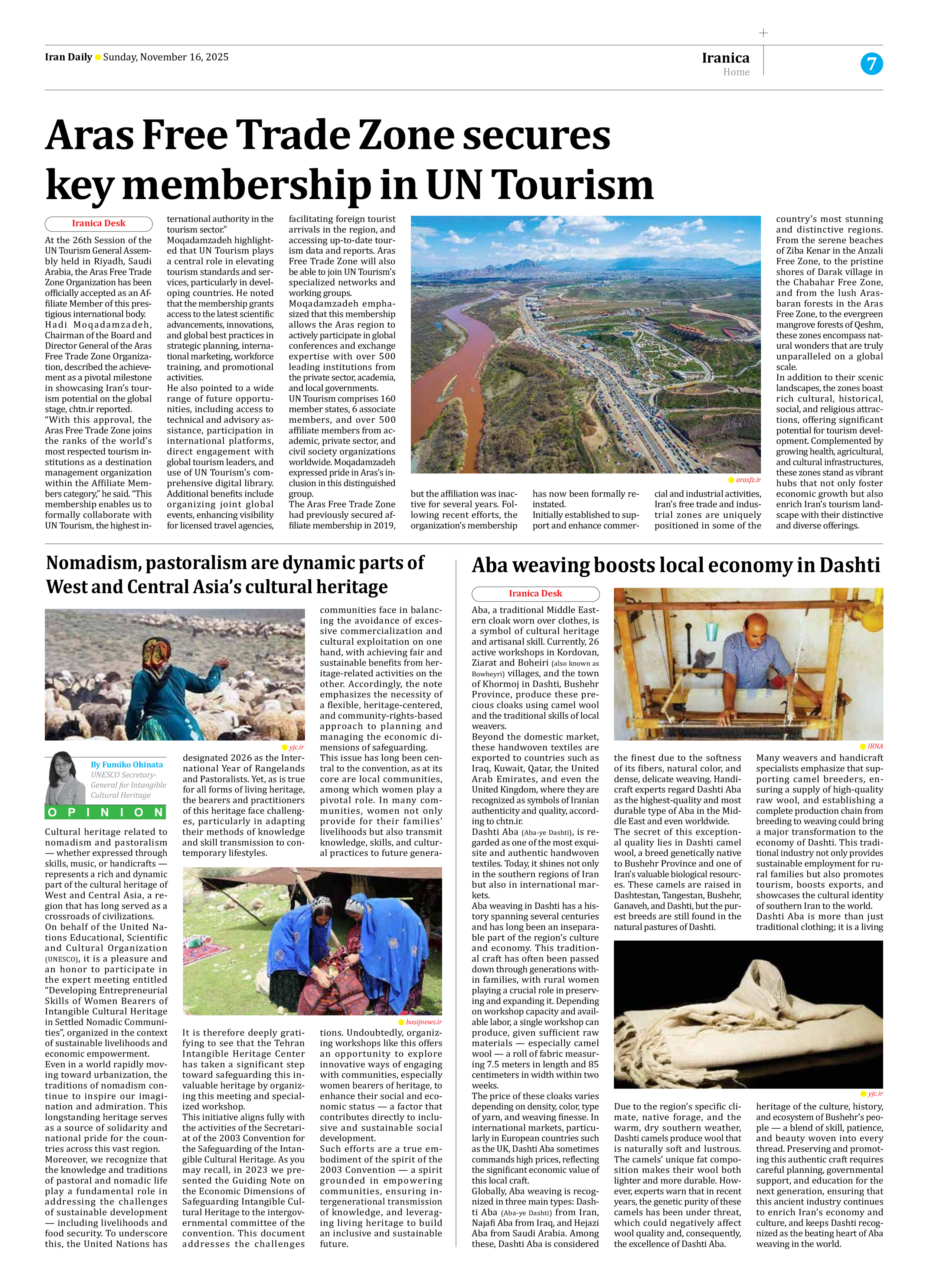
Aba, a traditional Middle Eastern cloak worn over clothes, is a symbol of cultural heritage and artisanal skill. Currently, 26 active workshops in Kordovan, Ziarat and Boheiri (also known as Bowheyri) villages, and the town of Khormoj in Dashti, Bushehr Province, produce these precious cloaks using camel wool and the traditional skills of local weavers.
Beyond the domestic market, these handwoven textiles are exported to countries such as Iraq, Kuwait, Qatar, the United Arab Emirates, and even the United Kingdom, where they are recognized as symbols of Iranian authenticity and quality, according to chtn.ir.
Dashti Aba (Aba-ye Dashti), is regarded as one of the most exquisite and authentic handwoven textiles. Today, it shines not only in the southern regions of Iran but also in international markets.
Aba weaving in Dashti has a history spanning several centuries and has long been an inseparable part of the region’s culture and economy. This traditional craft has often been passed down through generations within families, with rural women playing a crucial role in preserving and expanding it. Depending on workshop capacity and available labor, a single workshop can produce, given sufficient raw materials — especially camel wool — a roll of fabric measuring 7.5 meters in length and 85 centimeters in width within two weeks.
The price of these cloaks varies depending on density, color, type of yarn, and weaving finesse. In international markets, particularly in European countries such as the UK, Dashti Aba sometimes commands high prices, reflecting the significant economic value of this local craft.
Globally, Aba weaving is recognized in three main types: Dashti Aba (Aba-ye Dashti) from Iran, Najafi Aba from Iraq, and Hejazi Aba from Saudi Arabia. Among these, Dashti Aba is considered the finest due to the softness of its fibers, natural color, and dense, delicate weaving. Handicraft experts regard Dashti Aba as the highest-quality and most durable type of Aba in the Middle East and even worldwide.
The secret of this exceptional quality lies in Dashti camel wool, a breed genetically native to Bushehr Province and one of Iran’s valuable biological resources. These camels are raised in Dashtestan, Tangestan, Bushehr, Ganaveh, and Dashti, but the purest breeds are still found in the natural pastures of Dashti.
Due to the region’s specific climate, native forage, and the warm, dry southern weather, Dashti camels produce wool that is naturally soft and lustrous. The camels’ unique fat composition makes their wool both lighter and more durable. However, experts warn that in recent years, the genetic purity of these camels has been under threat, which could negatively affect wool quality and, consequently, the excellence of Dashti Aba.
Many weavers and handicraft specialists emphasize that supporting camel breeders, ensuring a supply of high-quality raw wool, and establishing a complete production chain from breeding to weaving could bring a major transformation to the economy of Dashti. This traditional industry not only provides sustainable employment for rural families but also promotes tourism, boosts exports, and showcases the cultural identity of southern Iran to the world.
Dashti Aba is more than just traditional clothing; it is a living heritage of the culture, history, and ecosystem of Bushehr’s people — a blend of skill, patience, and beauty woven into every thread. Preserving and promoting this authentic craft requires careful planning, governmental support, and education for the next generation, ensuring that this ancient industry continues to enrich Iran’s economy and culture, and keeps Dashti recognized as the beating heart of Aba weaving in the world.