







Nature reveals hidden wonders in Laft
Imagine the gentle breeze of the Persian Gulf brushing against your face, the soft rhythm of the waves syncing with your heartbeat, and the scent of damp earth mingling with the aroma of coastal plants filling your senses.
This is Laft — a historic village in Hormozgan Province, where every step through its narrow alleys tells the story of thousands of years of coastal life and human perseverance. The tall windcatchers and sun-dried clay houses not only reflect the artistry and traditional architecture of southern Iran but also stand as a testament to the ingenuity of people who built homes that speak with the wind in the heart of a hot and humid climate, IRNA wrote.
In Laft, every well and every stone carries a memory of the past — from the rain-harvesting wells that preserved precious water to the ancient fortresses once inhabited by Portuguese watchmen. Walking through this village is an experience that unites history and nature, where mangrove forests and coastal trees blend seamlessly with traditional architecture to create a scene both beautiful and unforgettable.
Laft is more than a geographical location, it is a living harmony of humanity and nature, past and present, culture and art. Every traveler who visits this village not only delights in its natural and historical charm but also connects with the soul and spirit of its people whose lives have long been intertwined with the sea and the land.
Laft village, with its diverse attractions, offers visitors a rare opportunity to explore the intertwined stories of history, culture, and nature in southern Iran. One of its most iconic features is the traditional windcatchers, which rise gracefully toward the sky, showcasing the artistic and engineering mastery of the people of southern Iran. These windcatchers not only provide natural ventilation for the homes, but also create a striking visual landscape — a photographer’s paradise that reveals the rhythm of daily life in the region.
At the heart of the village lie the Tala Wells, a collection of 366 ingeniously designed rainwater reservoirs. This ancient hydraulic system stands as an enduring example of early environmental engineering, demonstrating how people of the past skillfully adapted to water scarcity. Visiting these wells allows travelers to glimpse the resourcefulness and everyday life of those who once inhabited this remarkable coastal settlement.
Ancient castles and cemetery
Among Laft’s most prominent historical landmarks is the Portuguese Castle, a sturdy stone fortress that once housed barracks, an armory, and a church — silent witnesses to the era when the Portuguese controlled parts of the Persian Gulf. The fortress symbolizes the region’s strategic importance in maritime trade and defense centuries ago.
Nearby stands the Naderi Castle, built during the Afsharid period. Its architecture closely resembles that of the Portuguese forts, and it has been officially registered as a national heritage site of Iran. A visit to this site recalls the significant historical and political chapters of southern Iran’s past.
Close to these ancient structures lies the old cemetery of Laft, dating back to the 7th century CE. Located near the Shrine of Seyyed Shams al-Din, it invites visitors to walk among weathered gravestones that whisper stories of faith, tradition, and continuity. This quiet site offers a profound sense of connection with the lives and legacies of those who shaped the region’s history.
Hara forests
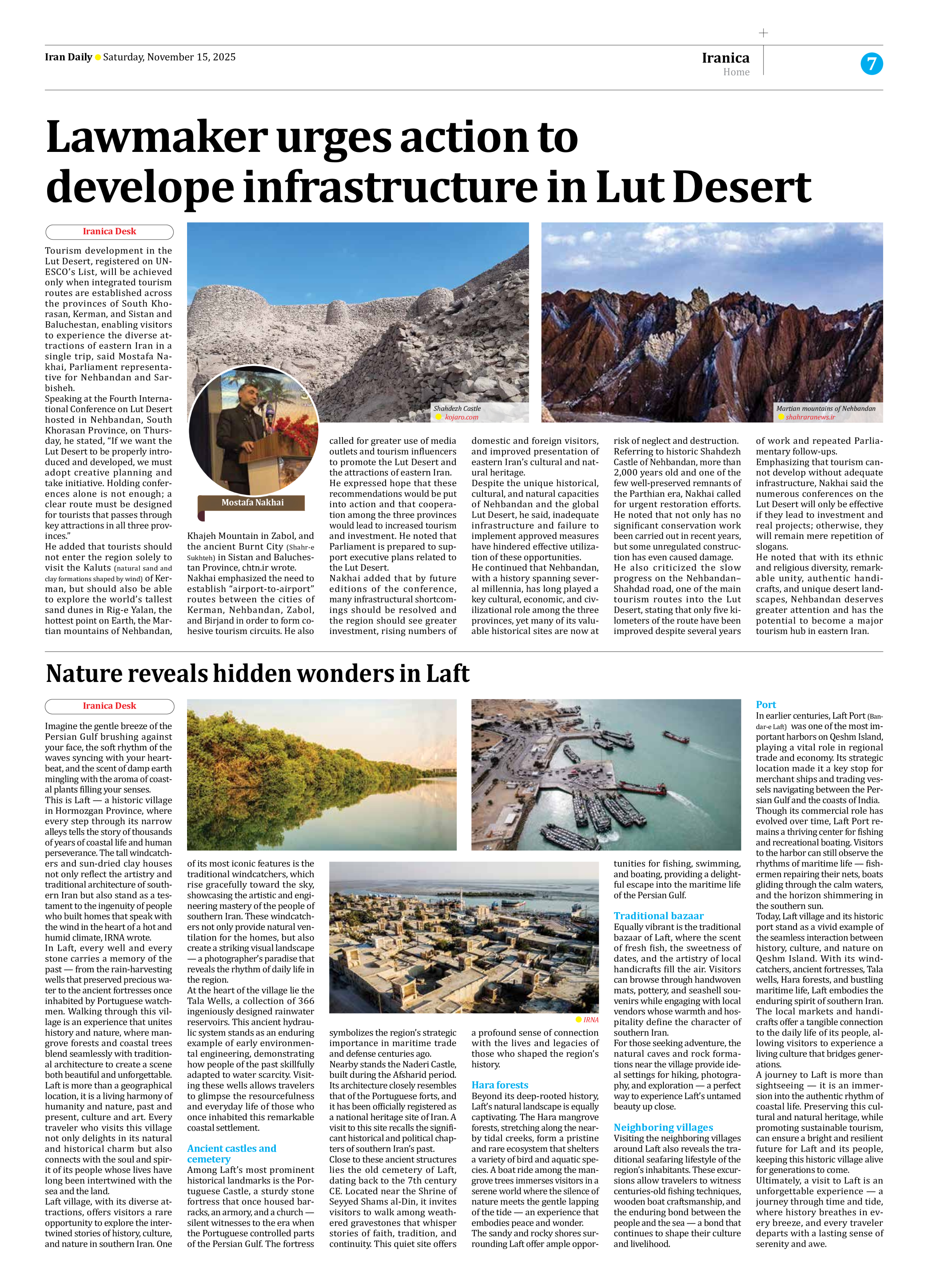
Beyond its deep-rooted history, Laft’s natural landscape is equally captivating. The Hara mangrove forests, stretching along the nearby tidal creeks, form a pristine and rare ecosystem that shelters a variety of bird and aquatic species. A boat ride among the mangrove trees immerses visitors in a serene world where the silence of nature meets the gentle lapping of the tide — an experience that embodies peace and wonder.
The sandy and rocky shores surrounding Laft offer ample opportunities for fishing, swimming, and boating, providing a delightful escape into the maritime life of the Persian Gulf.
Traditional bazaar
Equally vibrant is the traditional bazaar of Laft, where the scent of fresh fish, the sweetness of dates, and the artistry of local handicrafts fill the air. Visitors can browse through handwoven mats, pottery, and seashell souvenirs while engaging with local vendors whose warmth and hospitality define the character of southern Iran.
For those seeking adventure, the natural caves and rock formations near the village provide ideal settings for hiking, photography, and exploration — a perfect way to experience Laft’s untamed beauty up close.
Neighboring villages
Visiting the neighboring villages around Laft also reveals the traditional seafaring lifestyle of the region’s inhabitants. These excursions allow travelers to witness centuries-old fishing techniques, wooden boat craftsmanship, and the enduring bond between the people and the sea — a bond that continues to shape their culture and livelihood.
Port
In earlier centuries, Laft Port (Bandar-e Laft) was one of the most important harbors on Qeshm Island, playing a vital role in regional trade and economy. Its strategic location made it a key stop for merchant ships and trading vessels navigating between the Persian Gulf and the coasts of India.
Though its commercial role has evolved over time, Laft Port remains a thriving center for fishing and recreational boating. Visitors to the harbor can still observe the rhythms of maritime life — fishermen repairing their nets, boats gliding through the calm waters, and the horizon shimmering in the southern sun.
Today, Laft village and its historic port stand as a vivid example of the seamless interaction between history, culture, and nature on Qeshm Island. With its windcatchers, ancient fortresses, Tala wells, Hara forests, and bustling maritime life, Laft embodies the enduring spirit of southern Iran. The local markets and handicrafts offer a tangible connection to the daily life of its people, allowing visitors to experience a living culture that bridges generations.
A journey to Laft is more than sightseeing — it is an immersion into the authentic rhythm of coastal life. Preserving this cultural and natural heritage, while promoting sustainable tourism, can ensure a bright and resilient future for Laft and its people, keeping this historic village alive for generations to come.
Ultimately, a visit to Laft is an unforgettable experience — a journey through time and tide, where history breathes in every breeze, and every traveler departs with a lasting sense of serenity and awe.