







Copy in clipboard...
‘Irresponsible’: FM spox rejects G7 statement on anti-Iran US sanctions
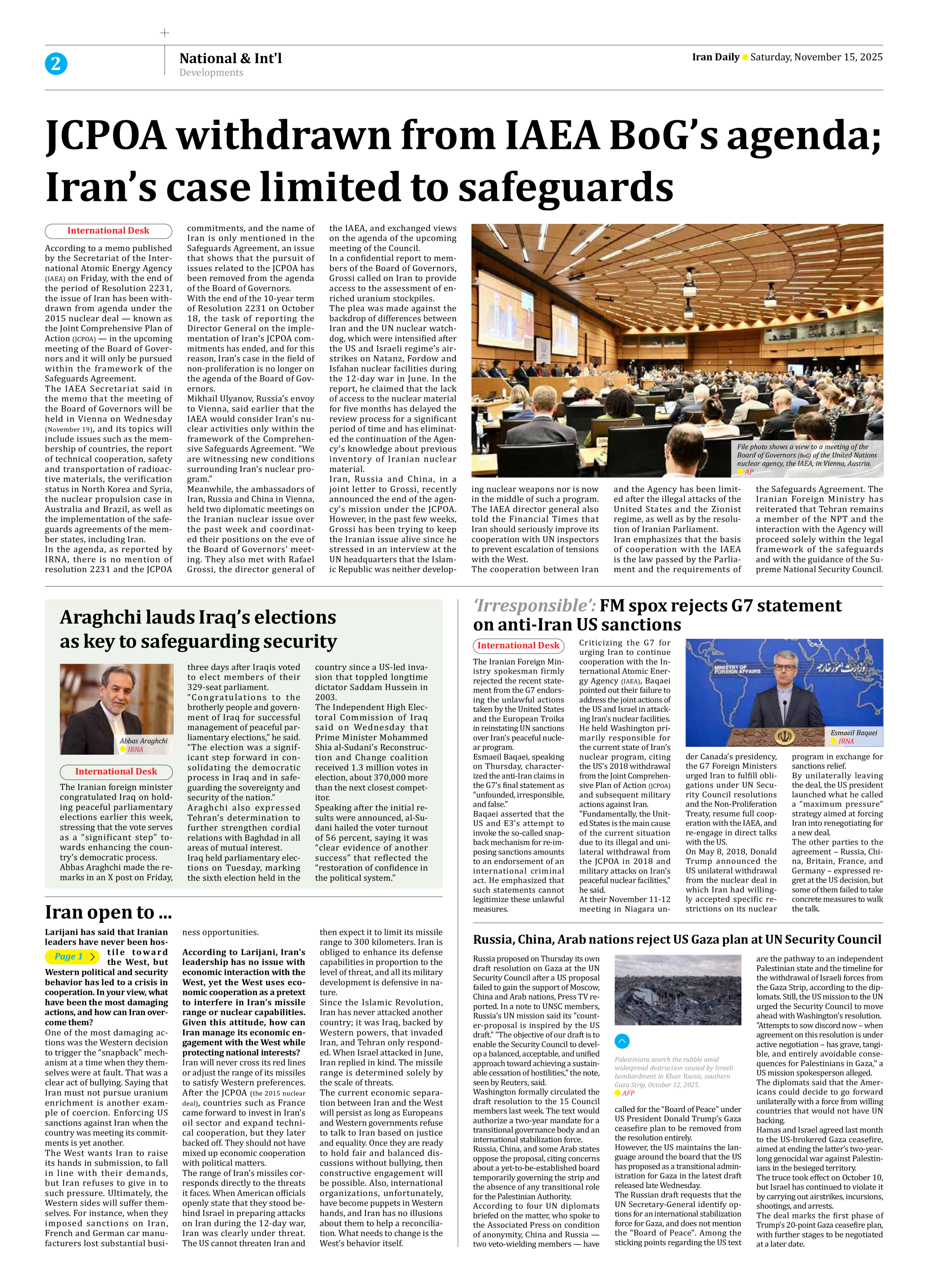
The Iranian Foreign Ministry spokesman firmly rejected the recent statement from the G7 endorsing the unlawful actions taken by the United States and the European Troika in reinstating UN sanctions over Iran’s peaceful nuclear program.
Esmaeil Baqaei, speaking on Thursday, characterized the anti-Iran claims in the G7’s final statement as "unfounded, irresponsible, and false."
Baqaei asserted that the US and E3’s attempt to invoke the so-called snapback mechanism for re-imposing sanctions amounts to an endorsement of an international criminal act. He emphasized that such statements cannot legitimize these unlawful measures.
Criticizing the G7 for urging Iran to continue cooperation with the International Atomic Energy Agency (IAEA), Baqaei pointed out their failure to address the joint actions of the US and Israel in attacking Iran’s nuclear facilities.
He held Washington primarily responsible for the current state of Iran’s nuclear program, citing the US's 2018 withdrawal from the Joint Comprehensive Plan of Action (JCPOA) and subsequent military actions against Iran.
"Fundamentally, the United States is the main cause of the current situation due to its illegal and unilateral withdrawal from the JCPOA in 2018 and military attacks on Iran's peaceful nuclear facilities," he said.
At their November 11-12 meeting in Niagara under Canada’s presidency, the G7 Foreign Ministers urged Iran to fulfill obligations under UN Security Council resolutions and the Non-Proliferation Treaty, resume full cooperation with the IAEA, and re-engage in direct talks with the US.
On May 8, 2018, Donald Trump announced the US unilateral withdrawal from the nuclear deal in which Iran had willingly accepted specific restrictions on its nuclear program in exchange for sanctions relief.
By unilaterally leaving the deal, the US president launched what he called a “maximum pressure” strategy aimed at forcing Iran into renegotiating for a new deal.
The other parties to the agreement – Russia, China, Britain, France, and Germany – expressed regret at the US decision, but some of them failed to take concrete measures to walk the talk.